

Buddhist Circuit
Across 3 states, IndiaSpiritual Journey
The Buddhist Circuit traces the key sites of the Buddha's life and the spread of his teachings across the Gangetic plains and central India — from his enlightenment at Bodh Gaya to his first sermon at Sarnath and final nirvana at Kushinagar, taking in the great monastic universities of Nalanda and Rajgir and the ancient stupas of Sanchi.
October to March

7 to 12 days
How hard it is
Easy — all by road and rail, on the plains
The route

.jpg?width=2048)

.jpg?width=2048)


- 1Bodh Gaya · BiharPlace of the Buddha's enlightenment; UNESCO Mahabodhi Temple.
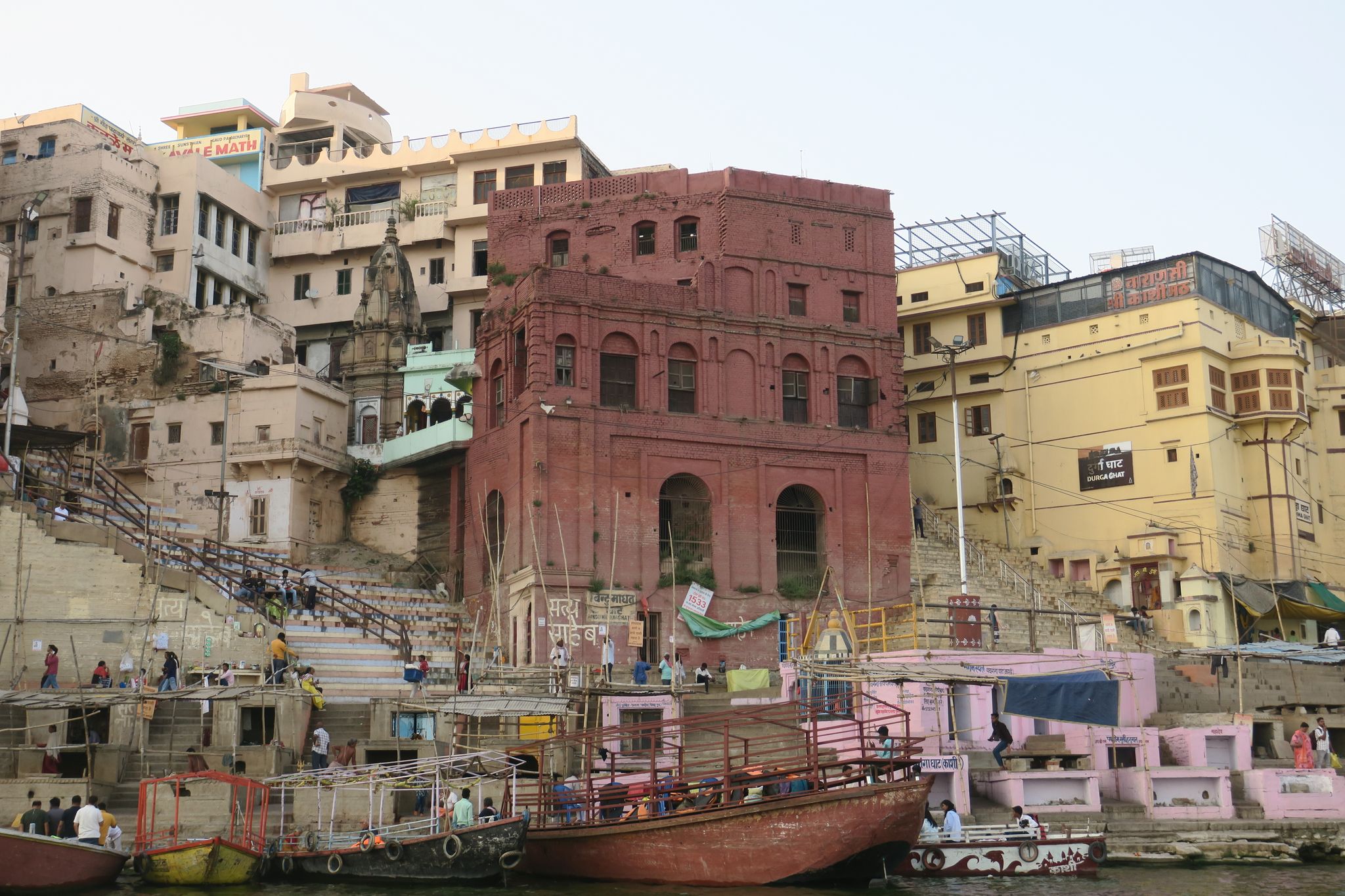
- 2Varanasi · Uttar PradeshGateway city beside Sarnath, on the sacred Ganga.
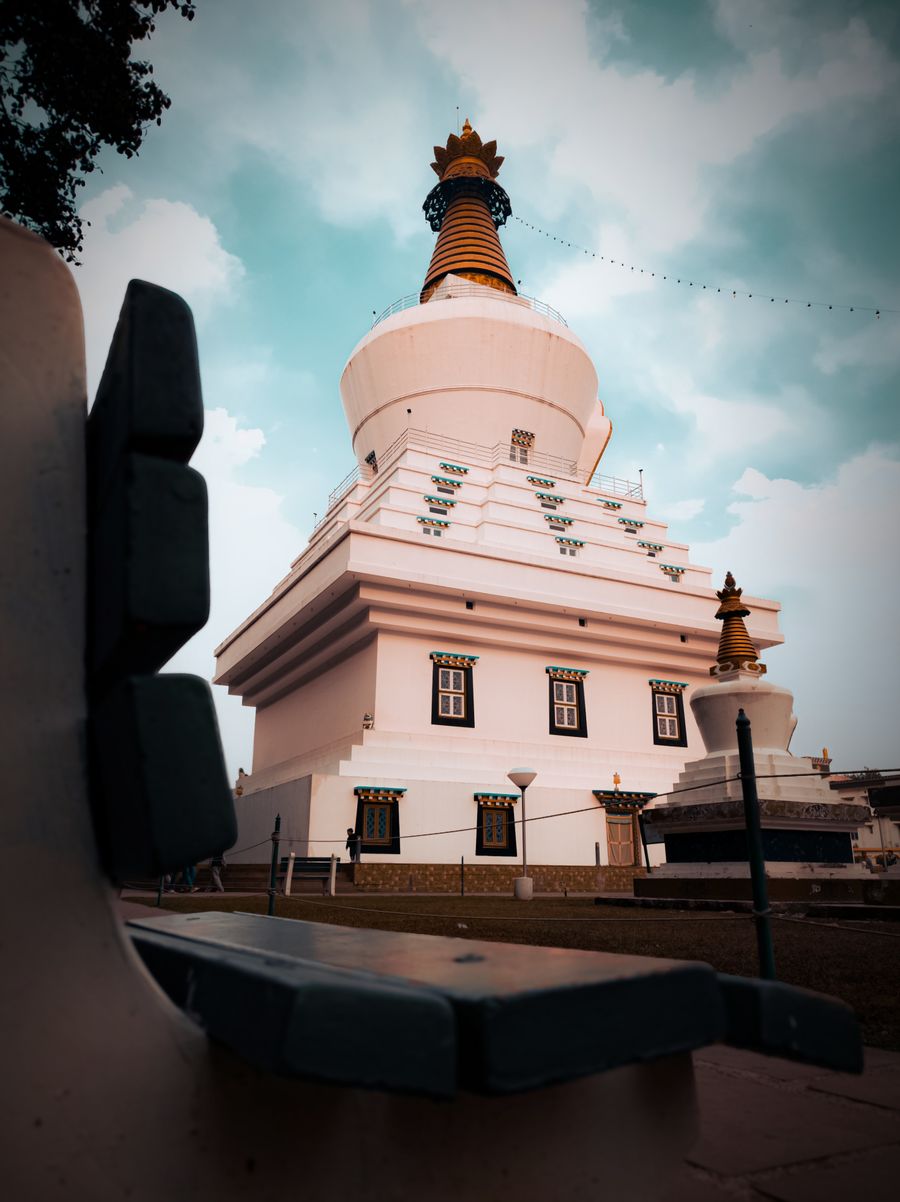
- 3Sarnath · Uttar PradeshSite of the Buddha's first sermon; Dhamek Stupa.
- 4Rajgir · BiharAncient capital where the Buddha taught; Vulture's Peak.
- 5Nalanda · BiharRuins of the great ancient Buddhist university (UNESCO).
- 6Kushinagar · Uttar PradeshSite of the Buddha's Mahaparinirvana (final nirvana).
- 7Sanchi · Madhya PradeshAshoka's Great Stupa; oldest Buddhist stone monuments (UNESCO).
Buddhist CircuitChecked
Pilgrimage route
The Buddhist Circuit traces the key sites of the Buddha's life and the spread of his teachings across the Gangetic plains and central India — from his enlightenment at Bodh Gaya to…
Best season
October to March
Duration
7 to 12 days
How hard it is
Easy — all by road and rail, on the plains
Before you go
Most people come to the Buddhist Circuit expecting temples. What you get instead is something quieter and, I think, better: you get the actual places where a man walked.
That is the peculiar power of this route. These are not mythological sites. Bodh Gaya is where Siddhartha sat down under a tree and decided not to get up until he understood something. Sarnath is where he first tried to explain it to five men who had previously thought he was a failure. Kushinagar is where, eighty years old and ill after a meal, he lay down between two sal trees and died. Archaeology and text agree on these locations to a degree that is unusual in the ancient world.
So the circuit is not grand. There is no Meenakshi Temple here, no Golden Temple. There are ruins, brick foundations, stupas, a great many trees, and monks from Thailand and Sri Lanka and Myanmar and Ladakh sitting on the ground in colours that do not match. It is one of the calmest journeys in India, and for travellers who find Indian pilgrimage overwhelming, it is often the perfect place to begin.
Go slowly. Sit down more than you think you need to. That is rather the point.
Along the way
The shrines and the country you cross to reach them.


.JPG?width=900)

The journey
What this journey actually is
The Buddhist Circuit traces the key sites of the Buddha's life and the spread of his teachings across the Gangetic plains and central India — from his enlightenment at Bodh Gaya to his first sermon at Sarnath and final nirvana at Kushinagar, taking in the great monastic universities of Nalanda and Rajgir and the ancient stupas of Sanchi.
Why pilgrims come
Buddhism recognises four sites as the great pilgrimage places, named by the Buddha himself in the Mahaparinibbana Sutta as the places a devout follower should visit: Lumbini, where he was born; Bodh Gaya, where he attained enlightenment; Sarnath, where he first taught; and Kushinagar, where he passed into final nirvana. Three of the four are in India — Lumbini lies just across the border in Nepal, and many pilgrims add it.
Bodh Gaya is the centre of the Buddhist world. The Mahabodhi Temple there is a UNESCO World Heritage Site, and the pipal tree in its courtyard is held to be descended from the one the Buddha sat under. Sarnath is where the wheel of dharma was first turned — the sermon to five ascetics that founded the sangha. Kushinagar holds the reclining Buddha and the site of the cremation.
Around these, the circuit gathers the places where the teaching became an institution: Rajgir, where kings listened and the first council was held after the Buddha''s death; Nalanda, the great monastic university that drew scholars from across Asia for seven centuries before it was destroyed; and Sanchi, where Ashoka built the stupas that are the oldest surviving Buddhist stone monuments anywhere.
For Buddhists across Asia this is a once-in-a-lifetime journey. For everyone else it is the closest thing India offers to walking through the biography of a religion.
What a day looks like
This is the gentlest yatra in India and its rhythm reflects that.
Days are mostly road transfers of three to five hours between sites, on flat plains highway, with an arrival by afternoon. There is no altitude, no trekking, no dawn scramble to beat traffic. You can sleep until seven and lose nothing.
At each site the pattern is the same: arrive, walk the ruins or the stupa, and then sit. That last part is not filler. At Bodh Gaya especially, the Mahabodhi complex is designed for sitting — hundreds of people meditating under the Bodhi tree at once, in a dozen traditions, mostly in silence. Morning and evening are best; the middle of the day is hot and busy.
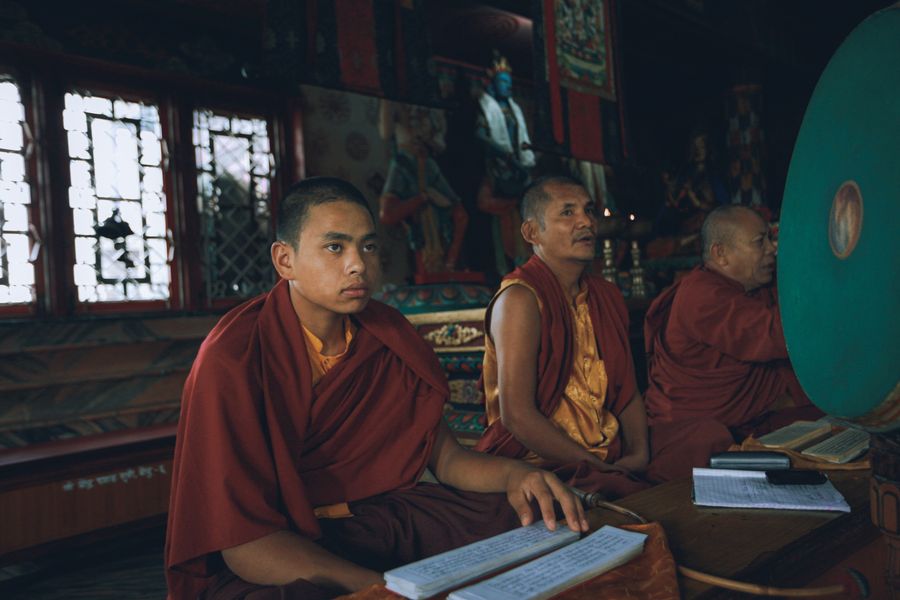
Chanting happens at dawn and dusk and it is worth arranging your day around. At Bodh Gaya you may hear four different liturgies going at once from the Thai, Bhutanese, Japanese and Tibetan monasteries that ring the town.
Bihar and eastern Uttar Pradesh in winter are cold in the mornings and warm by eleven. In summer they are punishing — forty-plus degrees, and no shade at the ruins. October to March, without exception.
If you have the days, give Bodh Gaya two nights rather than one. It is the only site on this circuit that people are sorry to leave.
Getting ready
Getting there, and getting around
The circuit falls into two clusters and one outlier, and understanding that shape saves you a lot of pointless driving.
The Bihar cluster
— Bodh Gaya, Rajgir, Nalanda — sits within about a hundred kilometres of Gaya. Gaya has an airport with seasonal international flights serving Buddhist pilgrims from Southeast Asia, and a mainline railway station. Patna is the larger airport, about two and a half hours from Bodh Gaya. Rajgir and Nalanda are an easy day from Bodh Gaya, and are usually done together since they are twenty minutes apart.
The Uttar Pradesh cluster
— Varanasi, Sarnath, Kushinagar — hangs off Varanasi, which has a good airport and is one of India''s best-connected rail hubs. Sarnath is only about ten kilometres from Varanasi city, effectively a half-day trip. Kushinagar is further, around five to six hours by road north-east, and has its own airport now, though flights are limited.
Sanchi is the outlier
, in Madhya Pradesh, a very long way west of everything else — roughly an hour from Bhopal, which is the sensible base. Do not try to drive to Sanchi from Bihar. Fly or take a train to Bhopal and treat it as a separate leg, either at the start or the end.
The natural order
is Bodh Gaya, Rajgir, Nalanda, then across to Varanasi and Sarnath, then up to Kushinagar. Roads in Bihar and eastern UP have improved a great deal but are still slow going in places; assume less distance per day than the map suggests.
Adding Nepal
Lumbini is near the Sonauli border crossing, reachable from Kushinagar or Gorakhpur, and requires the usual formalities for entering Nepal. Sravasti and Vaishali and Kesaria are the other classic additions if you have extra days and a real interest.
How to prepare
This is the easiest major pilgrimage in India to prepare for, which is one of the reasons I recommend it to first-time travellers. There is no altitude, no trek, no permit, no season-gate. What it asks of you is different.
Go between October and March
Bihar and eastern Uttar Pradesh in summer reach well past forty degrees, and every site on this circuit is an open ruin with no shade. Monsoon brings its own difficulties on these roads. December and January are cold in the mornings — genuinely cold, in the single digits — and perfect by mid-morning.
Read one short thing before you go
Not a scholarly history — just enough of the Buddha''s life to know what happened where. Otherwise Sarnath is a brick mound and Rajgir is a hill. With the story in your head, they become the places they are. Anything readable on the life of the Buddha will do the job.
Allow more time at Bodh Gaya than you think
Most itineraries give it a night. Give it two. It is the only place on this circuit where you will want to simply be present rather than look at things, and the Mahabodhi complex at five in the morning is a different world from the Mahabodhi complex at noon.
Set your expectations correctly
The towns on this circuit are ordinary small-town Bihar and UP, and some of them are poor. Accommodation ranges from very simple to comfortable, and the gap between the serenity inside the temple grounds and the noise outside the gate can be jarring. The monastery guesthouses maintained by various countries at Bodh Gaya are an option many pilgrims prefer.
Take the usual precautions with food and water
that you would anywhere in India — bottled or filtered water, hot freshly cooked food, and a little caution with street salads. Carry rehydration salts and something for an upset stomach.
Consider a guide at Nalanda and Sanchi
These are archaeological sites where almost everything visible is a foundation, and a good guide is the difference between a field of bricks and a seven-hundred-year-old university. At Bodh Gaya you need no such help.
If meditation interests you
, several centres at Bodh Gaya and Sarnath run sittings and short courses through the winter season, and some are open to complete beginners. If that is something you want, look into it before you travel rather than turning up hopeful.
And come with patience
The circuit rewards slowness more than any other in India.
What to pack
Light and simple. This is a plains journey in the cool season.
Cotton and light layers for the day, something genuinely warm for the mornings
December and January mornings in Bihar are cold and the temple courtyards are stone. A fleece or a shawl, and a light jacket.
Comfortable walking shoes you can take on and off easily
You will be removing them at every shrine. Slip-ons or shoes with quick laces will save you a hundred small irritations. A pair of socks in your bag for cold stone floors.
Modest clothing
— shoulders and knees covered — which in the Indian winter is what you will want to wear anyway. A shawl or large scarf is the most useful single item you can carry: warmth in the morning, cover in a shrine, something to sit on at the Bodhi tree.
A hat and sunscreen
The ruins at Sarnath, Nalanda and Sanchi have no shade at all and the winter sun is still strong at midday.
A small cushion or folded shawl to sit on
if you intend to meditate. The ground at Bodh Gaya is stone and marble, and an hour on it is longer than you think.
A reusable water bottle
and a means of purifying or refilling.
Basic medical kit
rehydration salts, something for stomach upset, painkillers, plasters, mosquito repellent, and your own prescriptions. Add a mask if dust bothers you; the roads are dusty in the dry season.
A torch
Power cuts are routine.
A book, and a notebook
This is a circuit with a lot of sitting in it, and many pilgrims find they want to write.
Leave behind
anything valuable or showy, and do not overpack — you will be moving between five or six places, and every one of them involves the bag going in and out of a vehicle.
On the ground
How to behave at the shrines
Buddhist sites are relaxed compared with Hindu temples, but they have their own courtesies, and at Bodh Gaya in particular you are surrounded by people in deep practice.
Shoes off at the Mahabodhi Temple
and at monastery shrine halls. There are stands. Socks are fine.
Dress modestly
— shoulders and knees covered. Nothing more is asked.
Walk clockwise
around stupas and shrines, keeping them on your right. This is the universal Buddhist form of reverence and you will see everyone doing it.
Do not point your feet at a Buddha image, a monk, or a shrine
If you sit on the ground — and you should, that is what the space is for — sit cross-legged or tuck your feet behind you. This is the etiquette rule that visitors most often break without knowing.
Do not touch or climb on statues, and do not take leaves from the Bodhi tree
Fallen leaves are gathered and distributed by temple staff; picking them off the tree is not acceptable, however much you want one.
Photography is generally allowed outdoors, restricted in shrine rooms, and often prohibited around the main image
Watch the signs. Never photograph a monk or a meditating pilgrim close-up without asking.
Keep quiet
This is the big one. Bodh Gaya''s inner precinct has hundreds of people meditating and chanting, and a loud conversation carries a long way in that courtyard. Phones on silent, voices down, and if you take a call, walk out.
Around monks
do not touch them, and women should not hand objects directly to a monk of most Theravada traditions — place the item down for him to pick up. Do not sit on a higher seat than a senior monk. If someone offers you a blessing thread or a moment of chanting, receiving it graciously is enough; nobody expects you to know the responses.
At Nalanda and Sanchi
, which are archaeological sites rather than living shrines, the rules are simpler: stay off the masonry, do not climb the stupas, and take nothing away. These are the oldest Buddhist monuments in existence.
And a note on begging and touts
Bodh Gaya and Gaya have a good deal of both, and it can be wearing. Be kind and be firm; giving to organised temple charity does more than handing money at the gate.
If it is your first time
Do not treat it as sightseeing
This is the mistake that hollows out the circuit. If you walk Bodh Gaya in forty minutes taking photographs, you have seen a temple. If you sit down for an hour under the tree with everyone else, you have understood why people come from Japan and Sri Lanka and Ladakh to sit on that particular piece of ground. The sites are not spectacular; the atmosphere is. It only arrives if you stop moving.
Be at the Mahabodhi Temple before dawn, once
It is the single best hour of this journey. The complex opens very early, the crowds have not come, monks are chanting in several traditions at once, and the light comes up on the tree. Do it on your second morning, after you have found your bearings.
Do not skip Rajgir because it is "just a hill"
The climb — or the ropeway — up Gridhrakuta, Vulture''s Peak, brings you to a small open rock ledge where the Buddha is said to have taught, looking out over the valley. It is one of the few places on the circuit where the geography itself does the work.
Do not expect Nalanda to be a building
It was destroyed in the twelfth century and what survives is foundations, stairwells and stupas across a large site. With a guide it is extraordinary — you can see the monks'' cells, the lecture areas, the drainage. Without one it is a lot of brick in the sun. There is a museum by the entrance; go in before you walk the ruins, not after.
Sanchi needs a decision, not an afterthought
It is hundreds of kilometres from the rest of the circuit. Either commit to it as a separate leg via Bhopal — and it is worth it, the carved gateways of the Great Stupa are among the finest sculpture in India — or leave it out cleanly.
Varanasi will overwhelm you, and Sarnath is ten kilometres away
Plan for that contrast rather than being blindsided by it. Many pilgrims do Sarnath in the morning, when it is quiet, and the Ganga aarti at Varanasi in the evening. It is a good day, but a big one.
Do not be shy of the monasteries at Bodh Gaya
Thailand, Bhutan, Japan, Myanmar, Tibet, Vietnam, Sri Lanka and others each maintain a temple there in their own architecture, and almost all welcome visitors. Walking between them in an afternoon is a tour of Buddhist Asia in about two square kilometres.
Talk to the pilgrims
Groups from across Asia travel this circuit, often having saved for years, and many speak some English and are delighted to be asked. It is the friendliest pilgrim crowd in India.
And know that this circuit is quiet in a way that can feel anticlimactic at first
No thundering aarti, no vast gopurams, no crush. Just old brick, old trees, and a lot of people being still. Give it three days and it gets under your skin.