

Kailash Mansarovar Yatra
Spiritual Journey
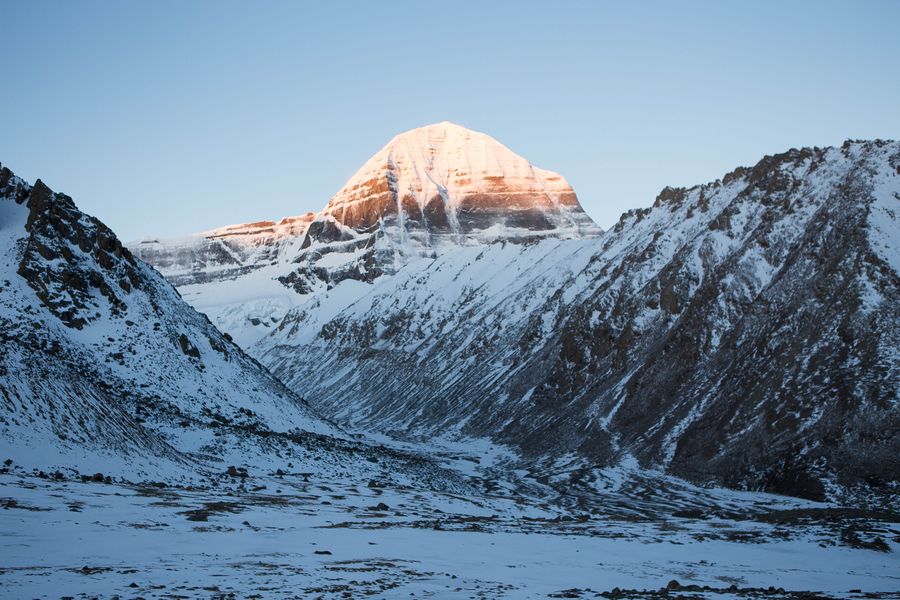
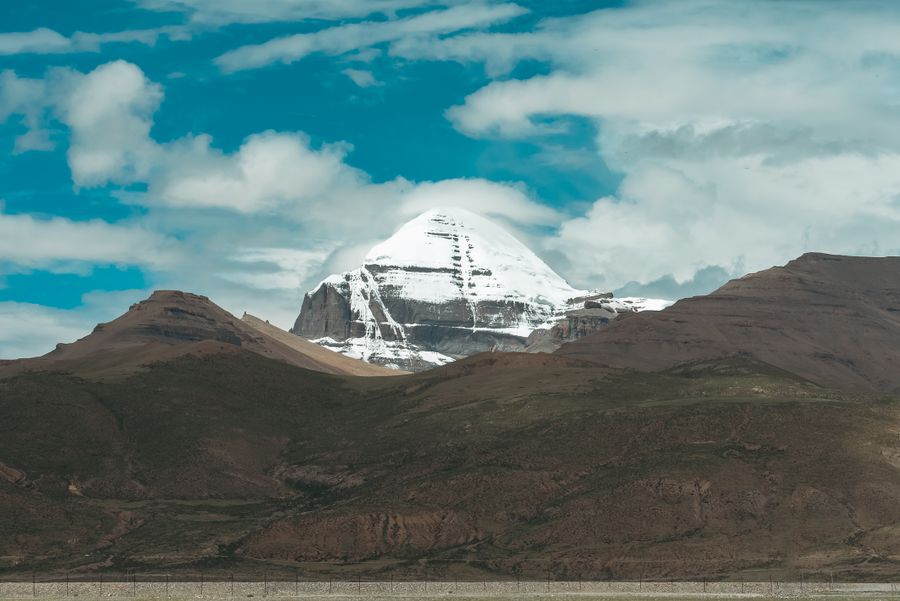
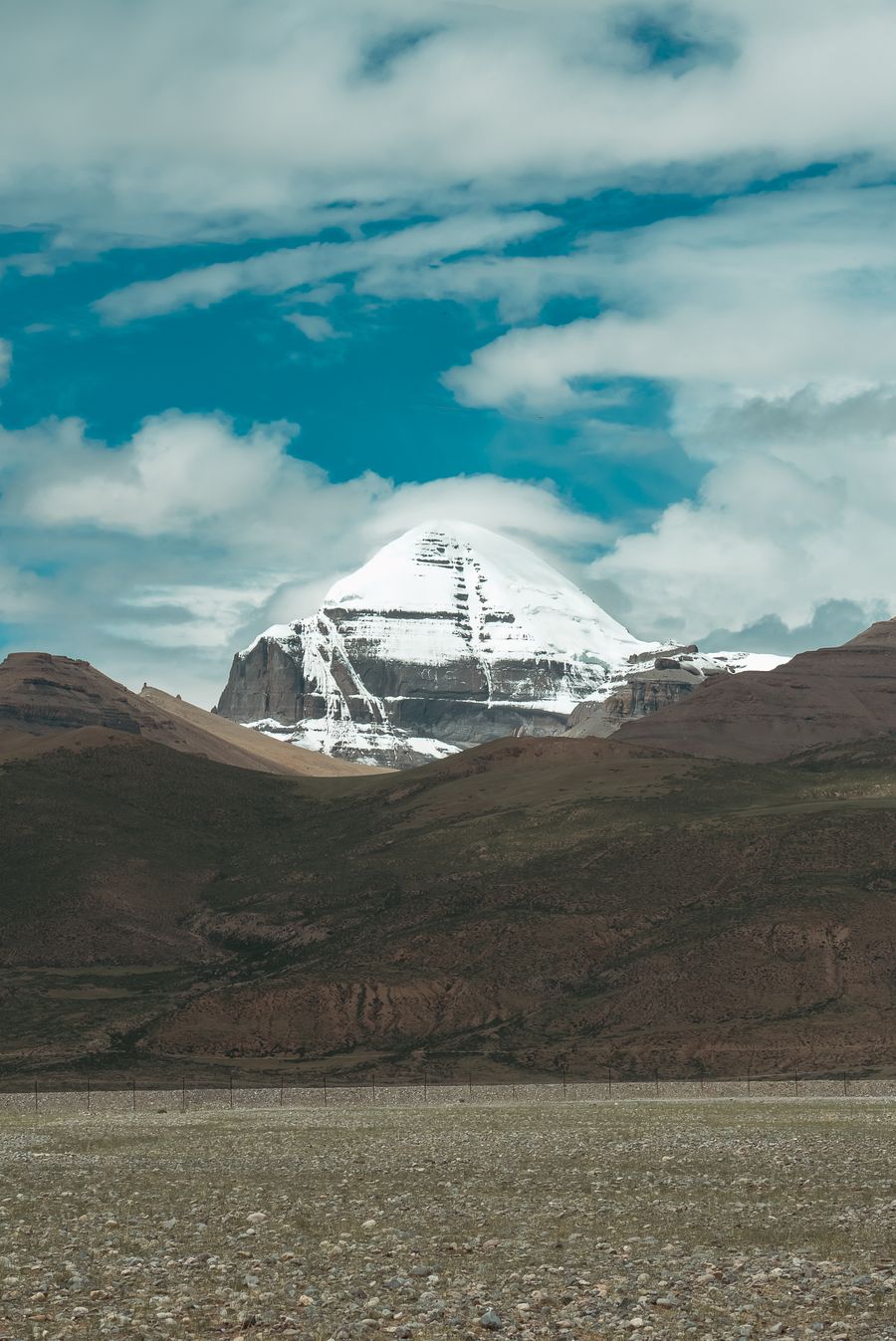
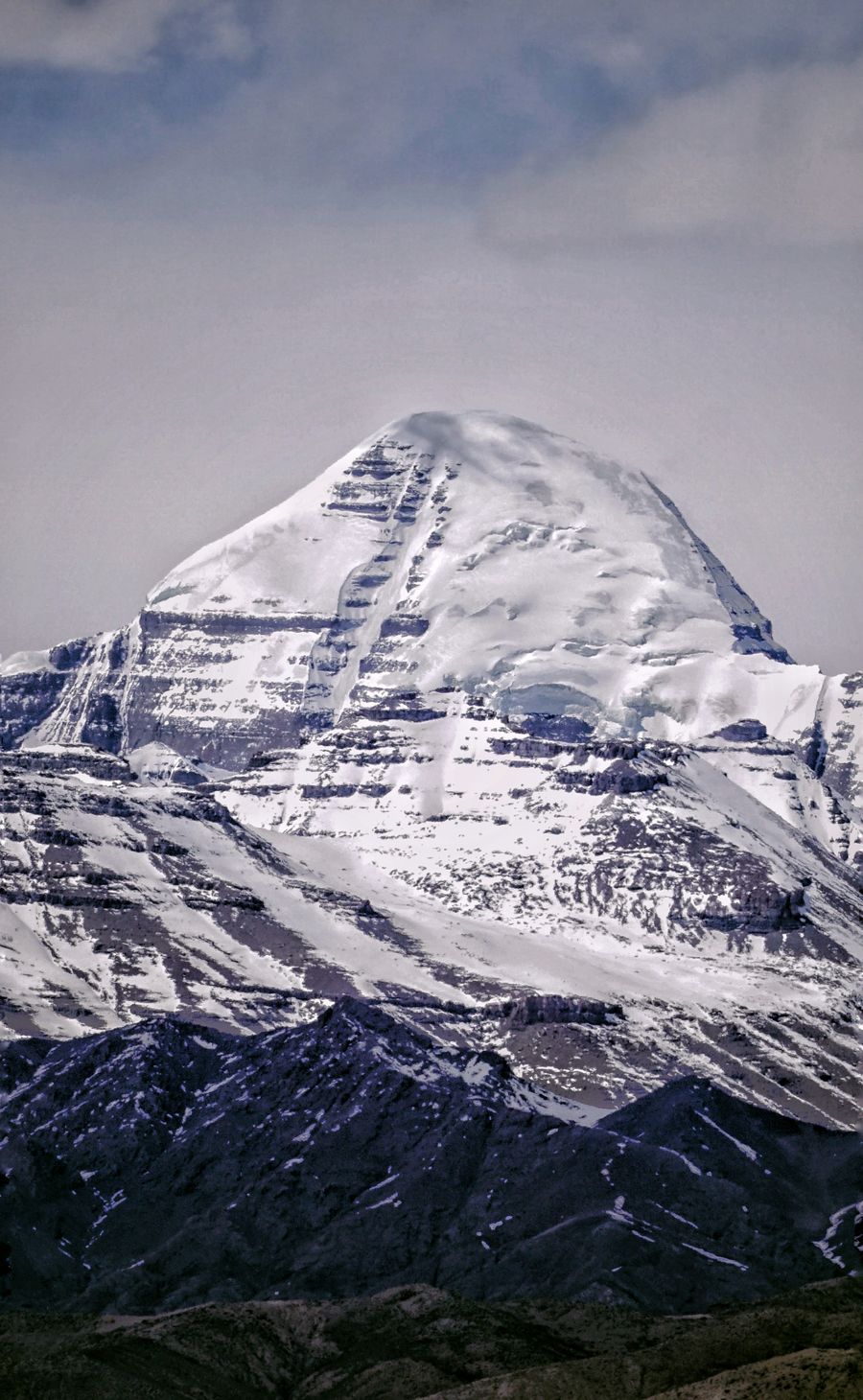
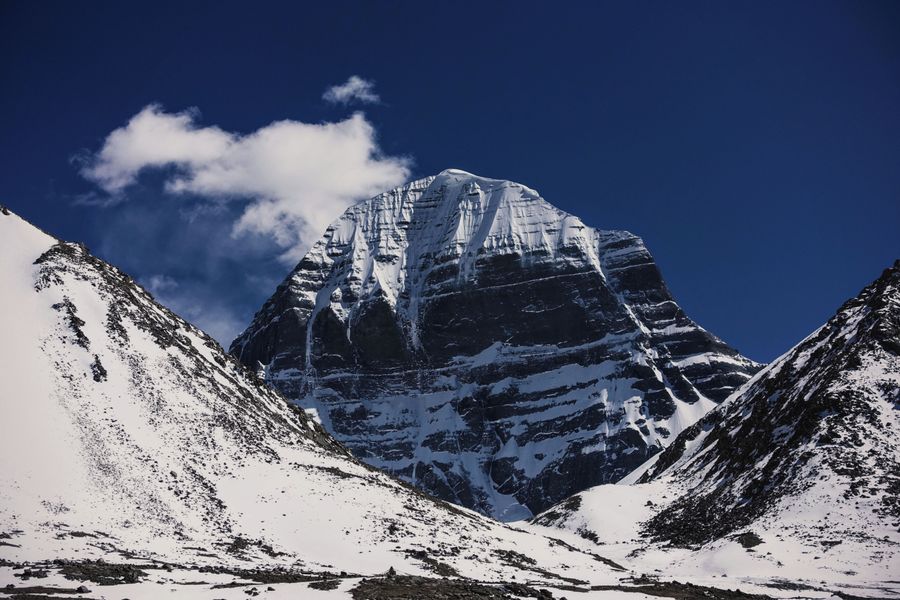
The Kailash Mansarovar Yatra travels to Mount Kailash and Lake Mansarovar on the remote western Tibetan plateau. It is among the most sacred pilgrimages in Asia and, by a distance, the most physically severe that ordinary pilgrims attempt. The journey has two centres. Lake Mansarovar sits at around 4,590 metres — a vast, still, astonishingly blue body of water where pilgrims bathe and perform parikrama. And above it stands Kailash itself, a dark pyramidal peak of about 6,638 metres with a snow cap, around whose base pilgrims walk the kora: fifty-two kilometres, usually over three days, crossing the Dolma La pass at roughly 5,600 metres. Some Tibetan pilgrims perform the whole circuit in body-length prostrations, which takes weeks. Nothing about reaching it is simple. Kailash lies inside Tibet, and access from India depends on arrangements between the two governments that have been suspended for long stretches. The government-run yatra crosses at Lipulekh in Uttarakhand or Nathu La in Sikkim; the alternative is an overland route through Nepal run by private operators. The season is short — roughly June to September — because for the rest of the year the plateau is closed by snow and cold.
June to September
12 to 24 days
How hard it is
Severe — the hardest pilgrimage most people will ever attempt; days above 4,500 m and a pass near 5,600 m
The Kailash Mansarovar route


- 1Mount KailashThe sacred peak; pilgrims complete the 52-km kora around its base.
- 2Lake MansarovarThe high holy lake, where pilgrims bathe and perform parikrama.
Kailash Mansarovar YatraChecked
Pilgrimage route
The Kailash Mansarovar Yatra travels to Mount Kailash and Lake Mansarovar on the remote western Tibetan plateau. It is among the most sacred pilgrimages in Asia and, by a distance,…
Best season
June to September
Duration
12 to 24 days
How hard it is
Severe — the hardest pilgrimage most people will ever attempt; days above 4,500 m and a pass near 5,600 m
Before you go
I will be honest with you in a way that I am not always honest about other journeys.
Most people who ask me about Kailash should not go. Not because they lack devotion — because the mountain does not care about devotion. It sits at six thousand metres on the Tibetan plateau, the kora around its base is fifty-two kilometres, and the high point of that walk is a pass at around 5,600 metres where the air holds roughly half the oxygen you are breathing right now. People are carried off this route every season. A few do not come back at all.
And yet.
There is no other place like it on earth. Hindus know it as Shiva''s abode. Buddhists as Demchok''s. Jains hold that their first Tirthankara attained liberation there. The Bon, older than all three, call it the seat of the world. Four faiths, one mountain, and not one of them has ever permitted anyone to climb it. Kailash has never been summited, and that is not a matter of difficulty. It is a matter of it being forbidden. You walk around it. You do not go up.
If you are fit, if you have time, if the year''s arrangements permit it — go. Just go with your eyes open. This is the only pilgrimage where I tell people plainly: your training is not optional, and neither is your willingness to turn back.
Along the way
The shrines and the country you cross to reach them.


The journey
What this journey actually is
The Kailash Mansarovar Yatra travels to Mount Kailash and Lake Mansarovar on the remote western Tibetan plateau. It is among the most sacred pilgrimages in Asia and, by a distance, the most physically severe that ordinary pilgrims attempt.
The journey has two centres. Lake Mansarovar sits at around 4,590 metres — a vast, still, astonishingly blue body of water where pilgrims bathe and perform parikrama. And above it stands Kailash itself, a dark pyramidal peak of about 6,638 metres with a snow cap, around whose base pilgrims walk the kora: fifty-two kilometres, usually over three days, crossing the Dolma La pass at roughly 5,600 metres. Some Tibetan pilgrims perform the whole circuit in body-length prostrations, which takes weeks.
Nothing about reaching it is simple. Kailash lies inside Tibet, and access from India depends on arrangements between the two governments that have been suspended for long stretches. The government-run yatra crosses at Lipulekh in Uttarakhand or Nathu La in Sikkim; the alternative is an overland route through Nepal run by private operators. The season is short — roughly June to September — because for the rest of the year the plateau is closed by snow and cold.
Why pilgrims come
Four faiths hold this mountain sacred, and none of them permits climbing it.
For Hindus, Kailash is the abode of Shiva, who sits there in eternal meditation with Parvati. It is the axis of the world in the old cosmology — Mount Meru made visible. Lake Mansarovar below it is said to have been formed in the mind of Brahma, which is what its name means, and a bath in it is held to wash away the accumulation of lifetimes.
For Tibetan Buddhists the mountain is Kang Rinpoche, "precious jewel of snows", and the seat of Demchok. The great yogi Milarepa is said to have contested the mountain with the Bon master Naro Bönchung and won it for Buddhism. For Jains it is Ashtapada, where Rishabhadeva, the first Tirthankara, attained liberation. For the Bon — the pre-Buddhist religion of Tibet — it is the nine-storey swastika mountain at the centre of the world, and Bon pilgrims walk their kora anticlockwise while everyone else goes clockwise.
Geography obliges the symbolism. Four of Asia''s great rivers rise within about a hundred kilometres of Kailash — the Indus, the Sutlej, the Brahmaputra and the Karnali, which feeds the Ganga. Standing on that plateau, it is not hard to see why people concluded this was where the world began.
What a day looks like
The plateau days are slow, and then the kora days are hard.
Getting there
is mostly sitting — long drives across brown emptiness, high passes, a border crossing that takes as long as it takes, and nights at acclimatisation halts where the whole job of the day is to do nothing and let your blood catch up. Use those days. Walk gently, drink constantly, sleep badly and do not worry about sleeping badly.
At Mansarovar
the rhythm changes. Pilgrims rise before light for the bath — and I should be plain about this: the lake is snowmelt at 4,590 metres, and it is shockingly, breath-stoppingly cold. Most people go in for a matter of seconds. Many pour water over themselves instead, which is entirely accepted. Then the parikrama of the lake, done by vehicle on most itineraries, and a long quiet afternoon watching the light move on the water. Sunrise and sunset at Mansarovar are the two hours people talk about for the rest of their lives.
The kora
is three days with very different characters. Day one is a long, gradual walk up the western valley to Dirapuk, and somewhere along it the north face of Kailash appears — sheer, dark, streaked with snow, appallingly close. People stop walking when they see it. Some sit down.
- Day two starts in the dark and is the hardest day of the pilgrimage: a steep climb to Dolma La at around 5,600 metres, where prayer flags cover everything and pilgrims leave behind a piece of clothing, or a lock of hair, or a photograph of someone dead, at the place that stands for dying and being reborn. Then a punishing descent past Gauri Kund to Zutulpuk. Twenty-odd kilometres, ten to fourteen hours, at an altitude where each step needs deciding on. Go slowly. Everyone who suffers on this day suffered because they went too fast in the first hour.
- Day three is short and almost cheerful — a walk down the valley back to Darchen, and the strange feeling of having gone all the way round something without ever standing on top of it.
Throughout,
the pace is set by breath. Walk slower than feels right. Rest before you need to. Eat when you are not hungry. And keep looking up.
Getting ready
Getting there, and getting around
There is no easy way in, and that is part of what the mountain is.
The Lipulekh route
, run by the Ministry of External Affairs, goes from Delhi through Uttarakhand''s Kumaon hills — Almora, Dharchula, and then up the Kali valley — to the Lipulekh pass on the border, and down onto the plateau. It involves real trekking on the Indian side and it is the oldest of the routes, the one traders and pilgrims have used for centuries. It is also the longest and hardest.
The Nathu La route
, also government-run, crosses from Sikkim and is almost entirely motorable. It is longer in distance but far gentler on the body, which makes it the option for older pilgrims. Both routes are allotted by the same computerised draw.
The Nepal route
, run by private operators, goes overland from Kathmandu through Kerung or by air to Simikot and Hilsa, then by road across the plateau to Darchen, the small town at the foot of Kailash where the kora begins. It is the fastest — and that speed is exactly its danger, because it can put you at 4,500 metres within a couple of days of leaving Kathmandu at 1,400.
The kora itself
starts and ends at Darchen. Day one takes you to Dirapuk, with the north face of Kailash directly above you — for many pilgrims this is the moment of the whole journey. Day two is the hard one: the climb to Dolma La at around 5,600 metres, past the field where pilgrims leave clothing behind to mark a symbolic death, then a steep descent to Zutulpuk. Day three is an easy walk back to Darchen. Yaks and porters carry baggage; ponies are available for parts of the route but not over the pass.
Whichever way you come, the plateau is empty in a way that is difficult to describe to someone who has not seen it. Hours of brown and gold and nothing, under an enormous sky, and then a wall of white on the horizon.
Permits and registration
This is not a journey you can simply set out on. Mount Kailash and Lake Mansarovar are in Tibet, so you need a Chinese visa and a Tibet travel permit in addition to your passport, and the crossing depends on India–China arrangements that have been suspended for years at a stretch. The Indian government route is run by the Ministry of External Affairs: you apply on the official Kailash Manasarovar Yatra portal, applicants are chosen by a computerised draw, and selection requires clearing a medical examination. The yatra resumed in 2025 after a three-year pause and ran again through 2026 via the Lipulekh pass in Uttarakhand and Nathu La in Sikkim. Private operators also run an overland route through Nepal, on Chinese permits. Check the official position for your year before you plan anything — this is the one pilgrimage where the paperwork genuinely decides whether you go.
How to prepare
Treat this as the one pilgrimage where preparation is not advice but a condition of entry — and on the government route, literally so, because you will be medically examined before you are cleared.
Train for months, not weeks
Three to six months. Long walks with a loaded pack, hills if you have them, stairs if you do not, and cardio that leaves you genuinely out of breath several times a week. The benchmark I use: you should be able to walk fifteen kilometres over rough ground with a day pack and still want dinner. If that sounds far off, give yourself another year. The mountain is not going anywhere.
Understand what 5,600 metres means
At Dolma La you are breathing roughly half the oxygen available at sea level. Everybody feels it. Headache, nausea, no appetite, sleep that never quite arrives, and a strange slow stupidity in your thinking — all of that is normal and passes. What is not normal, and what you must know by heart: breathlessness while sitting still, a cough that brings up froth, confusion, an inability to walk a straight line. Those are the serious forms of altitude sickness, they can kill within hours, and the only real treatment is immediate descent. On this route, descent is slow and help is far away. That is why turning back has to be a decision you are willing to make before you start.
Acclimatise, and do not let anyone rush you
The itineraries that gain height slowly are the ones people come home from. Any plan that puts you above 4,500 metres within two days of leaving the lowlands is selling you speed at your own expense.
Get a proper medical examination
— heart, lungs, blood pressure — and be truthful with the doctor. The MEA route requires this; take it just as seriously if you go via Nepal, where nobody will make you.
Sort the paperwork early and expect it to change
Passport valid well beyond your travel dates, Chinese visa, Tibet permits, and for the government route an application on the official MEA portal followed by a draw you may not win. Arrangements between India and China have been suspended before and may be again. Have a version of your year that does not depend on this trip happening.
Go with an operator who knows the plateau,
carries bottled oxygen and a portable pressure bag, and has a written plan for getting a sick person down. Ask them directly what that plan is. A good operator answers immediately; a bad one improvises.
Prepare for cold, wind and sun all at once
Even in July it freezes at night up there, the wind is constant, and the ultraviolet at that altitude is fierce.
And prepare for the possibility of not completing the kora
Plenty of pilgrims reach Mansarovar, bathe, see the mountain, and go no further because their body says no. That is not a failed yatra. Darshan of Kailash from the lake is a complete pilgrimage in itself, and everyone on that plateau understands it.
What to pack
You are packing for a high, cold, dry, windy desert, and for the possibility of being cold and wet in it.
A proper down jacket, and layers under it
Thermals top and bottom, fleece, an insulated mid-layer, and a windproof, waterproof shell. It can be sunny and pleasant at noon and well below freezing before dawn on the same day.
Trekking boots with ankle support, broken in long before
The kora is rock, scree and loose stone. Wool socks, several pairs. Gaiters if you have them — there can be snow on Dolma La even in summer.
Warm hat, a sun hat, a buff or scarf for the wind and dust, and two pairs of gloves
— a thin liner pair and a warm outer pair.
Serious sun protection
Category 3 or 4 sunglasses, high-factor sunscreen reapplied constantly, and lip balm with sun protection. The plateau reflects light off snow and pale ground; people come back with burnt nostrils and cracked lips because they only protected their faces.
Trekking poles
Not optional on the descent from Dolma La.
A sleeping bag rated for well below freezing
Accommodation on the kora is basic guesthouse dormitory at best.
Personal medication, plus altitude medication discussed with your doctor before you leave
— acetazolamide is commonly prescribed for acclimatisation and it is not something to start taking on a stranger''s advice on the plateau. Also: painkillers, rehydration salts, something for an upset stomach, blister plasters, and anything you take daily in a quantity that outlasts the trip.
A wide-mouth insulated bottle and purification tablets
You must drink far more than you want to; dehydration at altitude is constant and it makes everything else worse. A thermos of hot water is worth its weight up there.
A headtorch with spare batteries
— cold kills batteries fast, so keep spares against your body.
A power bank, and low expectations of electricity
Charging on the kora is unreliable to non-existent, and the cold drains phones quickly.
Dry snacks you will actually eat
Appetite disappears at altitude and food on the plateau is limited. Nuts, dry fruit, chocolate, energy bars, anything salty. You need the calories even when you do not want them.
Documents in a waterproof pouch
passport, visa, permits, medical certificate, passport photographs, emergency contacts on paper.
Leave behind
anything heavy you are not certain about. Porters and yaks carry the main baggage on the kora, but you carry your day pack over a 5,600-metre pass, and every gram of it will make itself known.
On the ground
How to behave at the shrines
You are a guest in Tibet, on a mountain sacred to four faiths, and the local customs are not the same as at an Indian temple.
Walk the kora clockwise
Hindus, Buddhists and Jains all go clockwise. Bon pilgrims walk anticlockwise, and you will pass them coming the other way — this is correct and ancient, not a mistake. Do not comment on it, just make room.
Do not attempt to climb Kailash
It is not a rule anyone will need to enforce on you — there is no route and no permit — but it matters that you understand why. No one has ever summited it, and that is the point. The mountain is walked around, not conquered.
Leave the mani stones, prayer flags and cairns as you find them
Walk to the left of mani walls and chortens, so they stay on your right. Do not take stones from the kora as souvenirs — you will see mounds of them left by pilgrims, and they are offerings.
At Dolma La, take your time and take nothing
Pilgrims leave things there deliberately. Do not collect them.
Bathe at Mansarovar respectfully and lightly
Do not use soap, shampoo or detergent in the lake — this is a serious matter, it is drinking-holy water for everyone there, and the rules are enforced. If the cold defeats you, pouring water over your head is a complete and accepted alternative.
Photograph the landscape freely; photograph people only after asking
Monasteries generally forbid photography inside, and some charge for it — respect the sign, not your judgement of the sign. Never photograph anything that looks like a military or border installation, on either side.
Be careful with what you carry and what you say
Tibet is politically sensitive and your guides carry the consequences of a visitor''s carelessness long after you fly home. Do not bring political material, do not raise political conversations with local people, and do not put them in the position of having to answer.
Buddhist etiquette at monasteries
shoes off where indicated, hats off, walk clockwise inside, do not point your feet at an image or a monk, do not touch statues or thangkas, and if you spin prayer wheels, spin them clockwise.
Look after each other
The single most important courtesy on this route has nothing to do with religion: notice how the people in your group are doing. Altitude sickness makes people quiet and stubborn and bad at judging themselves. Someone who has stopped talking and stopped eating needs asking about.
If it is your first time
Be honest about whether this is your pilgrimage
I have said it already and I will say it once more, because it is the only advice on this page that could matter more than the rest put together. If you are not fit, if you have a heart or lung condition, if you are travelling on a schedule that cannot absorb a lost week — this is not the year. Kailash has been there a long time.
Do not compare this to Char Dham
People who have done the Uttarakhand yatra sometimes arrive confident. Kedarnath is 3,583 metres and you sleep in a village with a clinic in it. Dolma La is 5,600 metres and the nearest hospital is a very long drive away. It is a different order of thing.
The first day of the kora is when people ruin the second
Everyone is excited, the ground is gentle, the mountain appears — and they walk too fast. Then Dolma La breaks them. Walk the first day like an old man. You will thank yourself.
Cold water at Mansarovar is genuinely brutal
Seconds, not minutes. Have dry clothes and a towel within arm''s reach, get out, get dry, get warm immediately. Every year someone stays in too long, in the name of devotion, and spends the rest of the trip ill.
Your phone will not work the way you expect
Indian networks do not roam usefully in Tibet, connectivity is patchy at best, and cold destroys batteries. Tell the people at home in advance that you will be unreachable for stretches, and write your emergency contacts on paper.
Eat, even when the idea repels you
Altitude kills appetite exactly when your body needs the most fuel. Force down what you can — soup, rice, anything. People who stop eating are the people who stop walking.
Do not save your dignity at the cost of your safety
If you need a pony, take the pony. If you need to turn back, turn back. Nobody on that mountain is scoring you, and every experienced guide has more respect for the pilgrim who came down than the one who had to be carried.
Prepare for it to be less transcendent than you imagined, and stranger
Many pilgrims describe the walk as mostly cold, mostly hard, mostly a matter of putting one foot down and then another — and then, at some unplanned moment, usually not at Dolma La, something opens. Sitting outside the guesthouse at Dirapuk at dusk with the north face going pink. A Tibetan family sharing tea. The lake at first light.
That is what people come back with. Not the summit — there is no summit for you here. Just the going round.