religious
When it happens
October
Nine days during the Sharad Navratri cycle in Ashvin month (Sep–Oct). Region: Tirumala Temple, Tirupati, Andhra Pradesh.
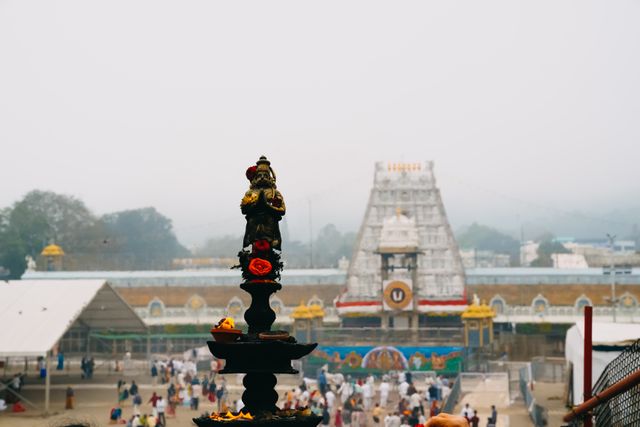


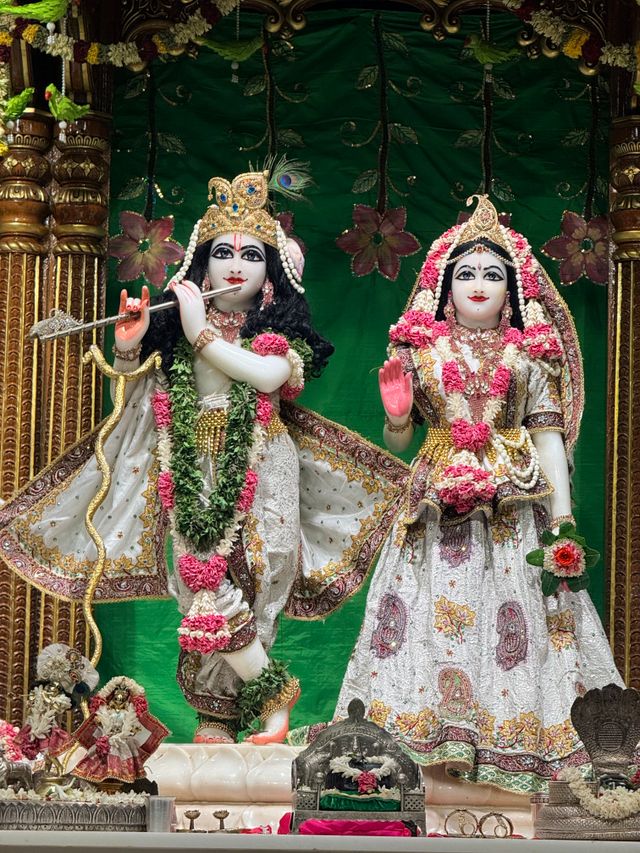


A grand cleansing festival initiated by Lord Brahma. Features daily morning and evening vehicle (vahanam) processions of Lord Venkateswara.
According to temple lore, the creator god Lord Brahma initiated this festival cycle. He descended to earth to perform a grand thanksgiving festival honoring Lord Venkateswara for manifesting on the sacred Seshachalam hills to preserve humanity from the spiritual degradation of the Kali Yuga era.
The mountain fortress of Tirumala is blanketed in millions of fragrant flowers and shimmering LED illuminations. The processional deity, 'Malayappa Swamy', adorned with priceless diamond armor and ancient crown jewels, is taken out twice daily on majestic, stylized wooden vehicles ('Vahanams') through the four massive streets surrounding the temple, accompanied by royal elephants, horses, and thousands of traditional dancers.
The festival begins with 'Dwajarohanam' (hoisting the celestial Garuda flag on the temple mast). Each day features a distinct vehicle procession: Pedda Sesha Vahanam (seven-headed serpent), Hanumantha Vahanam, Garuda Vahanam (the grand peak night drawing nearly half a million people), Rathotsavam (pulling a massive wooden temple chariot), and concludes with 'Chakra Snanam', where the sacred disc ('Sudarshana Chakra') is bathed in the temple tank alongside millions of bathing devotees.
Beholding the deity riding on the Garuda Vahanam is believed to grant immediate relief from severe karmic debts and break planetary curses. The water of the Pushkarini tank during the final Chakra Snanam is believed to turn into holy nectar, and a single dip washes away a lifetime of sins, ensuring spiritual liberation.
Epigraphical evidence dating back to the Pallava, Chola, and Vijayanagara dynasties confirms that Brahmotsavams have been celebrated since at least the 9th century. Emperor Krishnadevaraya famously donated immense wealth, gold vessels, and diamonds specifically to fund these processions. Today, the festival is a masterclass in massive crowd logistics managed by the Tirumala Tirupati Devasthanams (TTD) administration.
To step into Tirumala during Brahmotsavam is to witness the zenith of Hindu temple pageantry. The air is heavy with the scent of burning camphor, pure sandalwood, and thousands of kilograms of fresh jasmine blossoms. Suddenly, the ancient trumpets blast, and a wave of pure ecstasy ripples through half a million people who roar 'Govinda! Govinda!' in one single voice. Emerging into the light is the golden vehicle of the deity, shimmering with diamonds that catch the flicker of thousand-watt camphor lamps. The visual opulence, matched by the deep, ancient Vedic chanting, creates an atmosphere of spiritual majesty.
During the Brahmotsavam days, all privileged and advance paid darshans are completely cancelled by the temple trust to prioritize ordinary pilgrims in the free queue lines ('Sarva Darshan'). Plan for long waiting times in the computerized holding compartments.
.jpg?width=640)
religious
Bodh Gaya, Sarnath, Kushinagar, Sikkim, Ladakh, and globally across Buddhist nations.

religious
Celebrated extensively across Northern, Western, and Central India, as well as by Hindu communities worldwide.

religious
The sacred Mahamaham Tank in Kumbakonam, Thanjavur district, Tamil Nadu.

religious
Celebrated at the Hemis Monastery, located 45 km southeast of Leh, Ladakh (high-altitude region in Northern India).

religious
Bihar, Jharkhand, Eastern Uttar Pradesh, and by migrant communities.
religious
Across Sikkim, with the absolute cultural and ritual centerpiece performed at the Tsuklakhang Royal Palace Monastery courtyard in Gangtok.
.jpg?width=640)
religious
Basilica of Bom Jesus, Old Goa (Velha Goa), Goa.

religious
Celebrated across India, with major historical celebrations in Pawapuri and Kundalpur (Bihar), the Dilwara Temples near Mount Abu (Rajasthan), and Palitana (Gujarat).