

Temple Architecture
Heritage
Temples read as buildings — Chola bronze-age granite, Hoysala soapstone, Nagara shikharas.
65 places
Karnataka
Group of Monuments at Hampi
Tamil Nadu
Great Living Chola Temples
Bihar
Mahabodhi Temple Complex at Bodh Gaya
Telangana
Kakatiya Rudreshwara (Ramappa) Temple
Karnataka
Sacred Ensembles of the Hoysalas
Odisha
Sun Temple, Konark
Madhya Pradesh
Khajuraho Group of Monuments
Karnataka
Group of Monuments at Pattadakal

Ujjain (Mahakaleshwar)
Mahakaleshwar Temple
The Jyotirlinga of Shiva famed for the daily pre-dawn Bhasma Aarti.
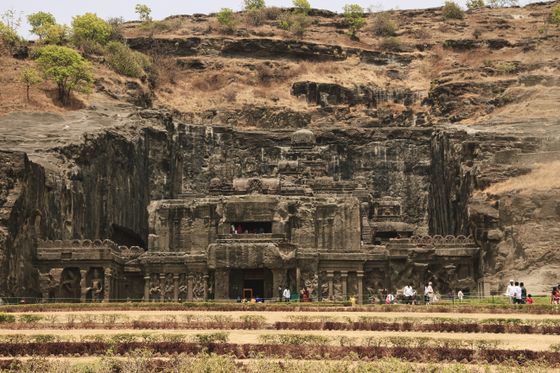
Ellora Caves
Kailash Temple (Cave 16)
Cut downwards out of one piece of hillside in the eighth century until a complete two-storey temple stood clear of the rock — nothing was added, only stone taken away. Ellora closes on Tuesdays. Walk up the side path for the view down into it.
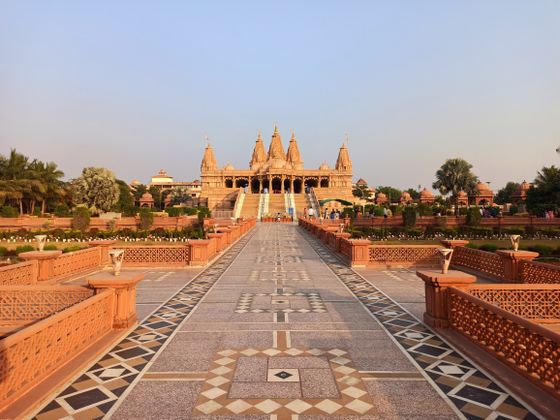
Gandhinagar
Akshardham Temple Complex
A BAPS Swaminarayan temple complex of twenty-three acres, conceived by Yogiji Maharaj and built under Pramukh Swami Maharaj over thirteen years. The mandir at its centre uses six thousand tonnes of pink sandstone brought from Rajasthan. Akshardham is the abode of Swaminarayan, where followers hold the soul goes after liberation, which is what the complex is named for. On 24 September 2002 two Lashkar-e-Taiba gunmen attacked it and killed thirty-three worshippers; security has been heavy ever since, and phones, bags and cameras do not go past the gate.

Srikalahasti
Srikalahasti Temple
An ancient Shiva temple of the wind element, famed for its windless flickering lamp.

Udaipur
Lake Pichola
Artificial, dammed in 1362 and named after the village of Picholi — one of a chain of lakes built around Udaipur to hold drinking and irrigation water, not for the view they are now famous for. Four islands sit in it, among them Jag Niwas, which carries the Lake Palace, and Jag Mandir. Boats leave from inside the City Palace and the sunset run is the one people book. In bad drought years this lake has emptied completely, so check the water level before you plan a trip around it.

Dwarka
Dwarkadhish Temple (Jagat Mandir)
The Jagat Mandir — a Krishna temple where he is worshipped as Dwarkadhish, lord of Dwarka, and one of the four Char Dham sites of the Hindu pilgrimage circuit. Five storeys carried on seventy-two pillars, with a spire visible across the town and a flag that is changed by hand several times a day. Archaeology puts the earliest temple on this spot at around 200 BCE; what stands now is largely a fifteenth- and sixteenth-century rebuilding. There are two gates, one to enter by and one to leave by, and a queue at both right through the morning.
Dwarka
Dwarkadhish Temple
The five-storey temple of Krishna as king, with its famous flag changed five times a day.

Pondicherry (Puducherry)
Auroville & Matrimandir
The experimental international township and its golden meditation sphere, the Matrimandir.
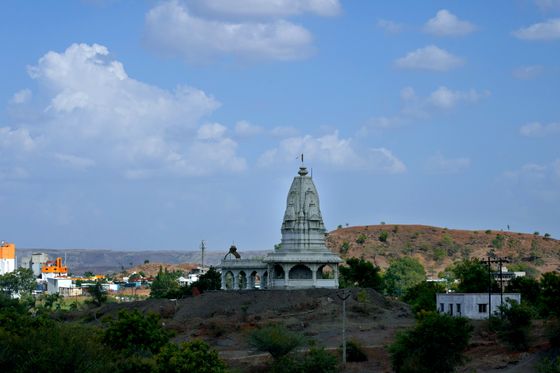
Bhavnagar
Takhteshwar Temple
Built in 1893 on a small hill in the middle of Bhavnagar, carried on eighteen pillars. Climb it for the view over the town to the shipping channels in the gulf rather than for the temple itself.

Deoghar (Baidyanath Dham)
Baidyanath Temple
The Jyotirlinga of Shiva at the centre of the Shravan kanwar pilgrimage.

Girnar (Jain Temples)
Girnar Jain Temple Group
A cluster of Jain temples partway up Girnar, the ancient hill above Junagadh, and one of the great Svetambara pilgrimages — a Mahatirth. Tradition holds that Neminath, the twenty-second Tirthankara, attained omniscience here and later nirvana at the highest peak, along with five hundred and thirty-three other enlightened sages; the Kalpa Sutra and the Uttaradhyayana Sutra both describe it. The temples sit several thousand steps above the base. The climb is the point and it is a real one — start before dawn, or take the ropeway up and walk down.

Puri (Jagannath Temple & Beach)
Shree Jagannath Temple
Twelfth century, with a spire around sixty-five metres high. Hindus only, and no phones or leather past the gate. The flag at the top is changed every day by a man who climbs the spire without ropes — worth waiting for, from outside if you cannot go in.
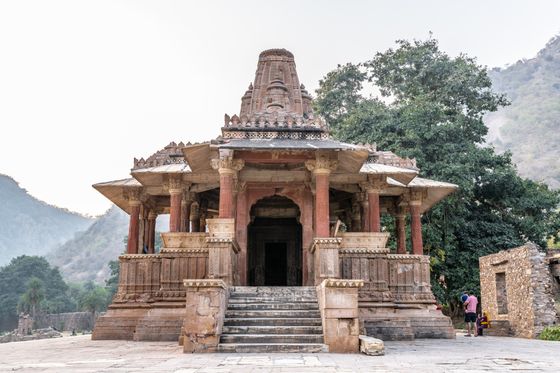
Pushkar
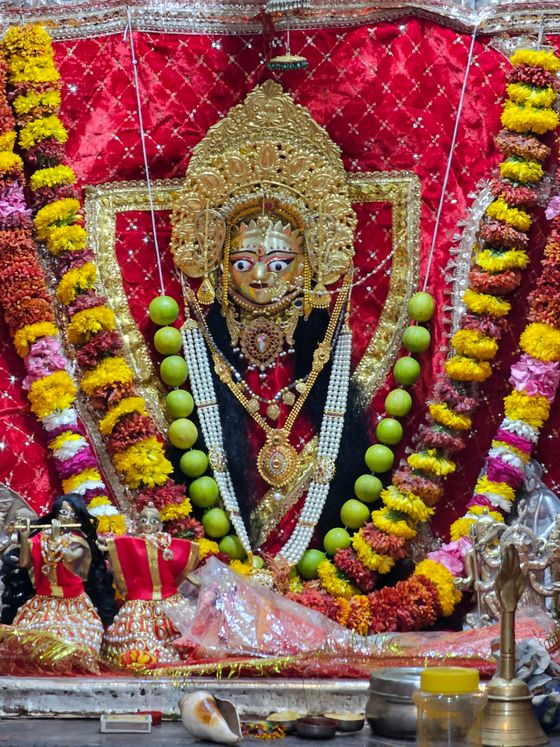
Jagatpita Brahma Mandir
One of very few temples anywhere dedicated to Brahma, and by some distance the most important of them. The structure dates to the fourteenth century with later partial rebuilding, in marble and stone slabs, with a red shikhara and a hamsa — the goose that carries Brahma — as its motif. The sanctum holds a four-headed image of Brahma with Gayatri beside him, and the temple is governed by a Sanyasi ascetic priesthood. It stands a few minutes from Pushkar Lake, to which its legend is tied. Shoes come off well before the steps, and cameras are not welcome in the sanctum.
Pushkar
Savitri Devi Temple
A prominent hilltop temple perched on Ratnagiri Hill, accessible via a passenger ropeway and famous for panoramic sunrise views of the entire town.

Palitana (Shatrunjaya)
Shatrunjaya Temple City
A range of hills above Palitana carrying 865 Jain temples — not one temple with outbuildings but a city of them, built up along the ridge over centuries. Jain tradition holds the site was sanctified when Rishabha, the first Tirthankara, preached from the summit, and that Pundarik Swami, his grandson and chief Ganadhara, attained moksha here. It is among the holiest places in Jainism. Getting up means roughly 3,500 steps and there is no ropeway; pilgrims start before dawn, and nobody stays on the hill overnight, priests included.

Dakor
Ranchhodraiji Temple
Built in 1772 by a Maratha noble, with eight spires over a walled compound and a black stone Krishna inside. Full-moon days bring very large numbers on foot from the surrounding villages — avoid those unless that is what you came for.

Mehsana
Modhera Sun Temple
An eleventh-century temple to Surya on the bank of the Pushpavati, built under Bhima I and Karna I of the Chaulukya dynasty. It has not been used for worship for a very long time and is a protected monument under the Archaeological Survey of India, which is why you can walk through all of it. Three parts: the shrine hall, the assembly hall in front of it, and the kunda — a stepped tank with small shrines set into every tier, running down to the water. The carving on the exteriors and pillars is the reason to come, and the tank is the reason to come early.

Mathura & Vrindavan
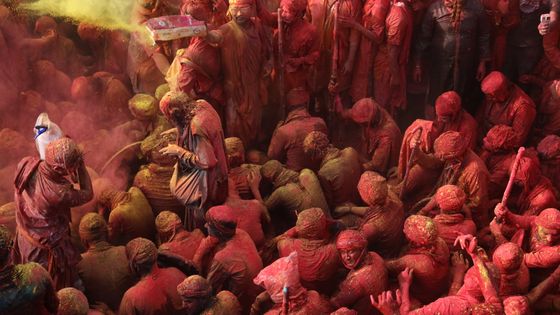
Banke Bihari Temple
Vrindavan's most beloved Krishna temple, famous for its lively darshan.
Mathura & Vrindavan
Bankey Bihari Temple
The curtain is drawn across the deity every minute or two rather than left open — the tradition holds that an unbroken gaze is too much to bear. There are no bells here either. Very crowded, and the Mangala aarti happens only once a year.
Mathura & Vrindavan
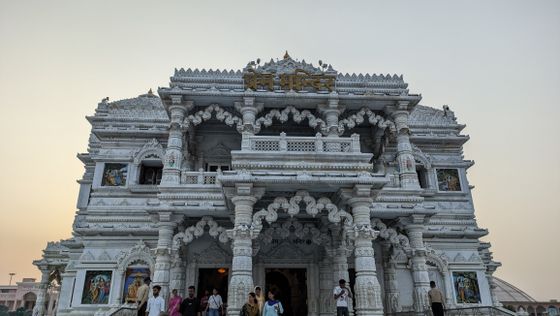
Prem Mandir
A vast white-marble temple in Vrindavan, floodlit in colour after dark, which is when everyone comes. Built by a modern sect rather than an old one, and it looks it.
Hampi
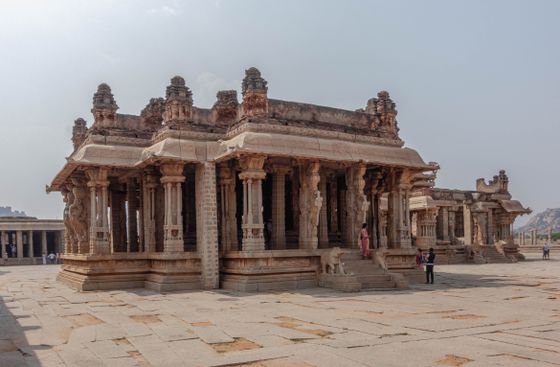
Vittala Temple Complex
The stone chariot is a Garuda shrine rather than a vehicle, and its wheels once turned. The musical pillars in the hall are now roped off — too many people struck them. Come at opening; this is the most visited thing in Hampi.
.jpg?width=560)
Hampi
Virupaksha Temple
The one temple in Hampi that never stopped functioning, with a fifty-metre gopuram over the bazaar street. The temple elephant is walked down to the river to be washed each morning, which is worth getting up for.

Shikharji (Parasnath)
Madhuban Temple Town
The base settlement of Jain temples and dharamshalas below the hill.

Khajuraho
Western Group of Temples
The finest cluster including the soaring Kandariya Mahadev temple.

Khajuraho
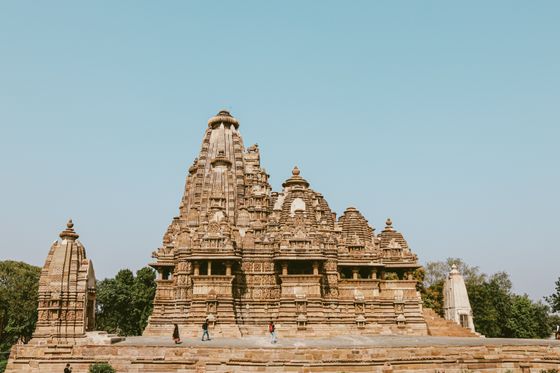
Kandariya Mahadev Temple
The largest temple at Khajuraho, built around 1030 and thirty-one metres high, with close to nine hundred carvings on it. Only a small fraction are erotic, which surprises most first-time visitors.
Khajuraho
Lakshmana Temple
An exceptionally preserved 10th-century temple featuring unique stone reliefs detailing medieval military marches and domestic life scenes.

Khajuraho
Parshvanatha Temple
The largest structure inside the Eastern Group of Jain temples, famous for delicate sandstone sculptures.

Pavagadh Hill
Kalika Mata Temple
A Mahakali shrine on the summit of Pavagadh, about forty-six kilometres from Vadodara and one of the most visited hill shrines in Gujarat. The records point to a Jain origin — the temple belonged to the Svetambara Achalgaccha sect, and the Mahakali image was installed in the twelfth century. The hill and the ruined city below it form the Champaner-Pavagadh Archaeological Park, which UNESCO listed in 2004 as the only complete pre-Mughal Islamic city in India. A ropeway covers most of the climb; the last stretch is steps, and it is shoulder to shoulder at weekends.
Ayodhya
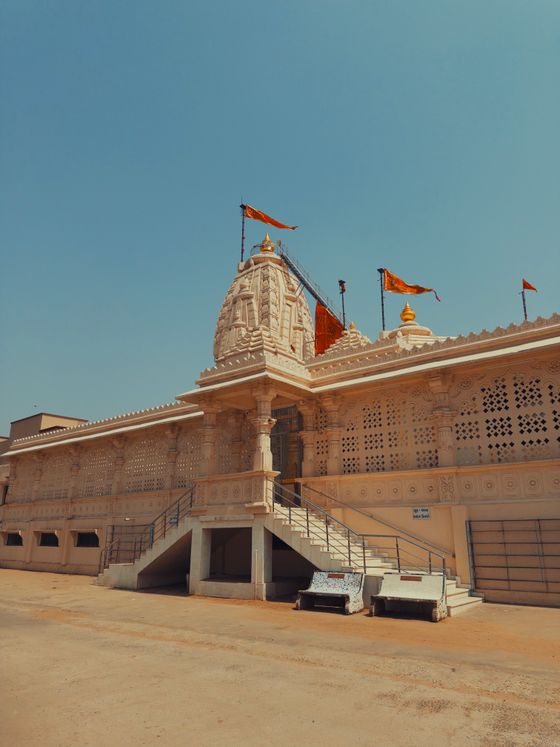
Ram Mandir
The grand new temple at the birthplace of Lord Rama.
Ayodhya
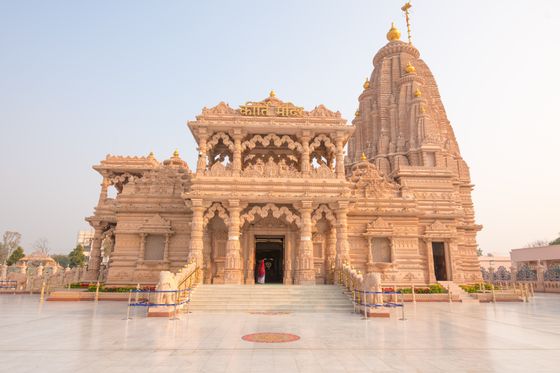
Sri Ram Janmabhoomi Mandir
Opened in January 2024 in pink Rajasthani sandstone, Nagara style, three storeys, with work still finishing around it. Phones and bags are not allowed in, so use the lockers before you join the queue.
Somnath
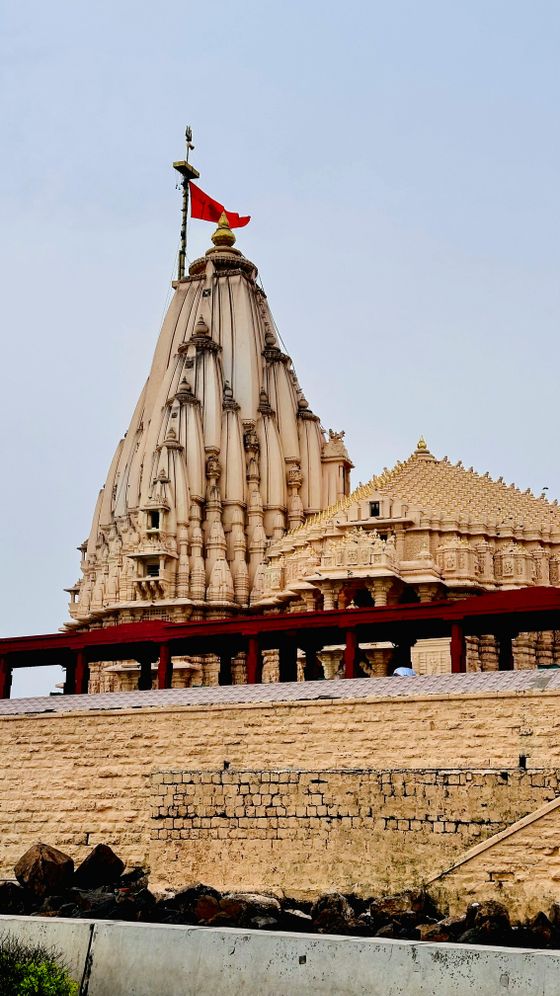
Somnath Temple
The grand seaside Jyotirlinga temple of Lord Shiva.
.jpg?width=560)
Somnath
Somnath Mahadev Temple
The first of the twelve jyotirlingas of Shiva, at Prabhas Patan near Veraval on the Saurashtra coast, and one of the most contested sites in Indian history. The Mahabharata and the Bhagavata Purana both name a tirtha here long before archaeology can confirm a building; the earliest datable temple falls somewhere between the first centuries CE and the ninth. It was destroyed and rebuilt repeatedly, beginning with Mahmud of Ghazni's raid in January 1026. The ruins standing at independence were cleared and the present temple built in the Maru-Gurjara style. The sea starts immediately behind it.
Orchha
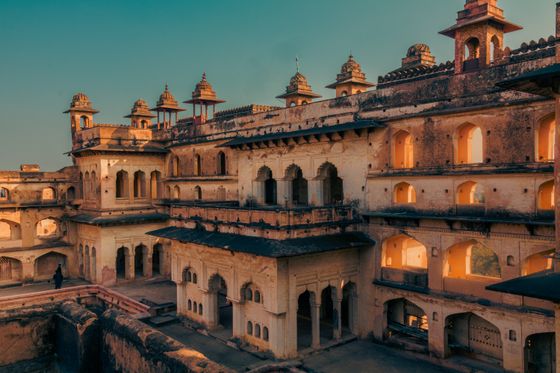
Chaturbhuj Temple
The tallest thing in Orchha, built to house the Rama image that ended up staying in the palace instead — so the sanctum it was designed around has never held its deity. Steep narrow stairs climb to the upper galleries; go up for the view over the chhatris and the Betwa.
Orchha
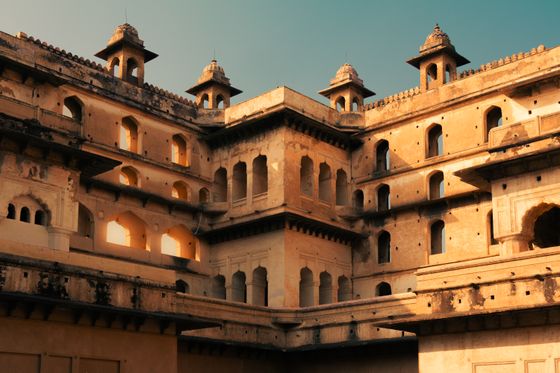
Laxminarayan Temple
Reached by a straight paved path from Ram Raja, and the reason to walk it is the wall paintings inside — Bundela murals in good condition, including scenes of the 1857 fighting and the Jhansi campaign. Usually empty. Ask the caretaker to open the upper chambers.

Orchha
Ram Raja Temple
The only place where Rama is worshipped as a reigning king, so the state police mount a guard and present arms at set hours. It is a palace rather than a temple because the image, once installed here, could not be moved to the temple built for it.

Shatrunjaya Hill
Adinath Temple
The grandest and most sacred primary temple inside the summit enclave, dedicated to the first Jain Tirthankara. It features detailed white marble pillars, friezes, and a jewel-encrusted deity image.

Taranga Hills
Ajitnath Jain Temple
Built around 1161 under the Solanki king Kumarpal and roughly a hundred and forty feet high, in local sandstone. The Ajitnath inside is cut from one block, a little over five metres. Taranga is a quiet hill and this is close to the only thing on it.

Belur & Halebidu
Chennakeshava Temple (Belur)
Hoysala work from 1117, cut in soapstone, which holds detail granite will not. The forty-two bracket figures under the eaves are what people come for. Still a working temple, so shoes off, and expect a queue at festival times.

Belur & Halebidu
Hoysaleswara Temple (Halebidu)
A colossal twin-structured temple complex wrapped in over two hundred meters of continuous, horizontal exterior stone scroll friezes.

Mount Abu
Dilwara Jain Temples
Five Svetambara Jain temples about two and a half kilometres outside Mount Abu, built between the eleventh and sixteenth centuries in the Solanki style. The oldest, Vimal Vasahi, dates to 1031; later additions were funded by Vastupala, a minister of the Vaghelas. What everyone comes for is the marble — pure white, cut so fine across the domes and ceilings that it looks poured rather than carved, with no two pillars alike. They count among the five great pilgrimage sites of the Svetambara sect and are still run by a religious trust, so they are working temples with temple rules, not monuments.
Varanasi
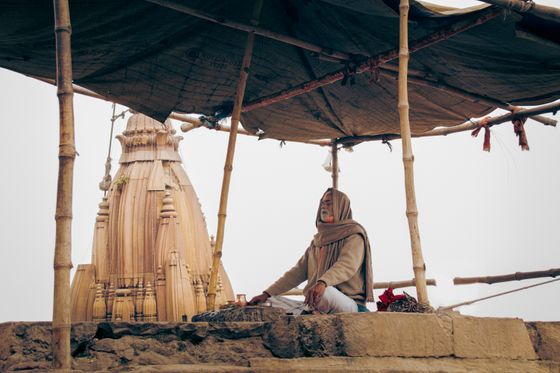
Kashi Vishwanath Mandir
The highly sacred golden-spired Jyotirlinga Shiva temple, recently transformed into a wide, modern barrier-free pedestrian corridor.

Varanasi
Kashi Vishwanath Temple
One of the twelve Jyotirlingas of Lord Shiva, at the heart of the new corridor.

Bodh Gaya
Mahabodhi Temple & Bodhi Tree
The UNESCO temple beside the tree under which the Buddha was enlightened.
Chandrabhaga Beach (Konark)
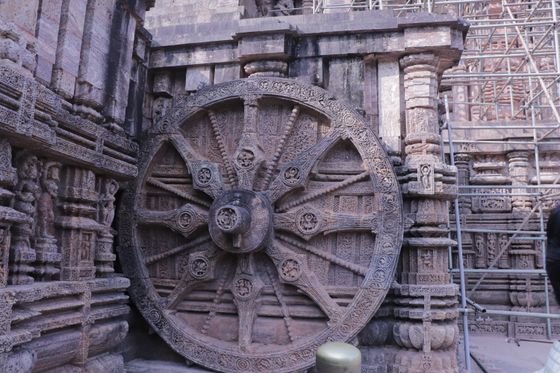
Konark Sand Art Stretch
The beach famed for the international sand-art festival.
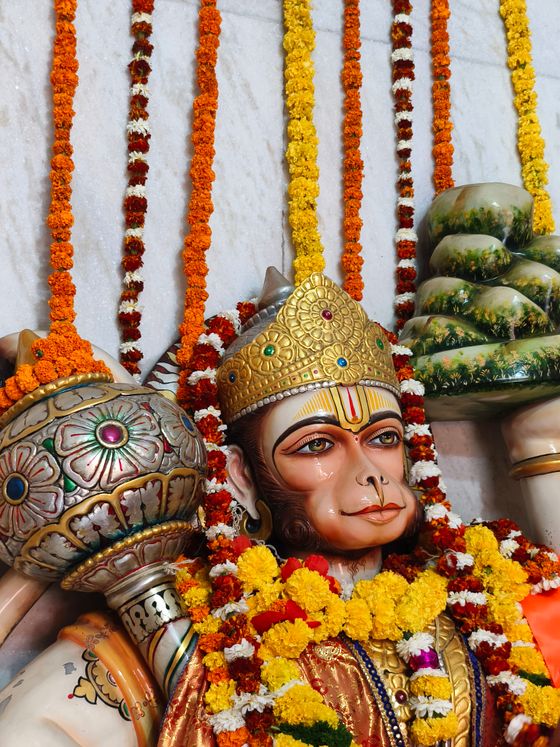
Jamnagar
Bala Hanuman Temple
Chanting of the Ram dhun has gone on here without a break since August 1964, which put the temple in the Guinness records. Someone is always singing. You can sit down and join in or just listen.
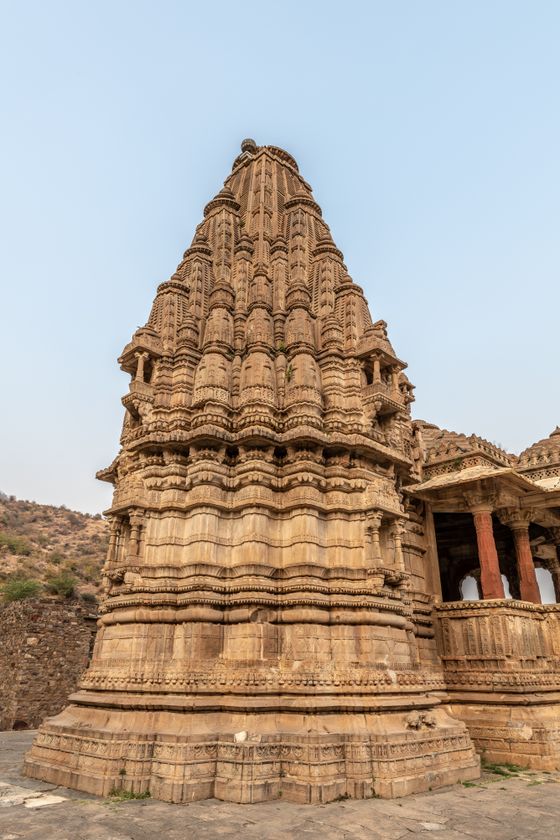
Ranakpur Jain Temple
Chaumukha Adinath Temple
Chaturmukha Dharana Vihara, the four-faced temple — begun in the fifteenth century by Dharna Shah, a local Jain merchant, and dedicated to Adinath, the first Tirthankara of the present cycle. It is one of the largest Jain temples in India and the principal Svetambara pilgrimage site in this part of Rajasthan. The count everyone quotes is 1,444 marble pillars, and the claim that no two are carved alike holds up better than most such claims. Four entrances face four directions onto four images of Adinath. A working temple: leather off at the gate, and hours for visitors are set by the trust.
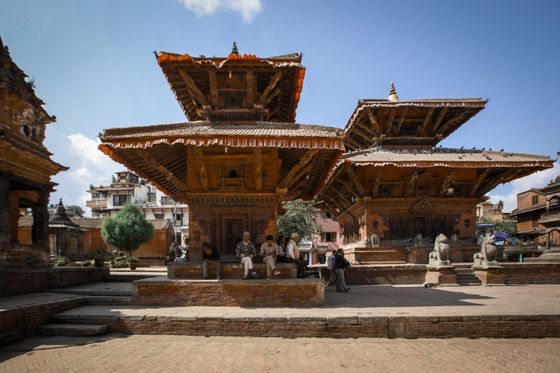
Kalpa (Kinnaur)
Narayan-Nagini Temple
Kinnauri kath-kuni construction — alternating courses of timber and dry stone, which is what keeps these buildings up through earthquakes. Photography inside is usually not allowed, and visitors are sometimes asked not to enter the sanctum.
.jpg?width=560)
Kanchipuram
Kailasanathar Temple
The city's oldest temple, an 8th-century Pallava sandstone masterpiece.

Porbandar
Kirti Mandir
The house where Gandhi was born in 1869, and the small museum built beside it for him and Kasturba. Inside are objects he used, life-size portraits of the two of them, old photographs and a library of his writing and of books about his thinking. The ancestral home itself is entered through the museum — narrow rooms, steep stairs, and a marked spot on the floor. It is modest by design, and the contrast with the Statue of Unity three hours away is worth sitting with. World leaders have made the trip; most visitors need about half an hour.
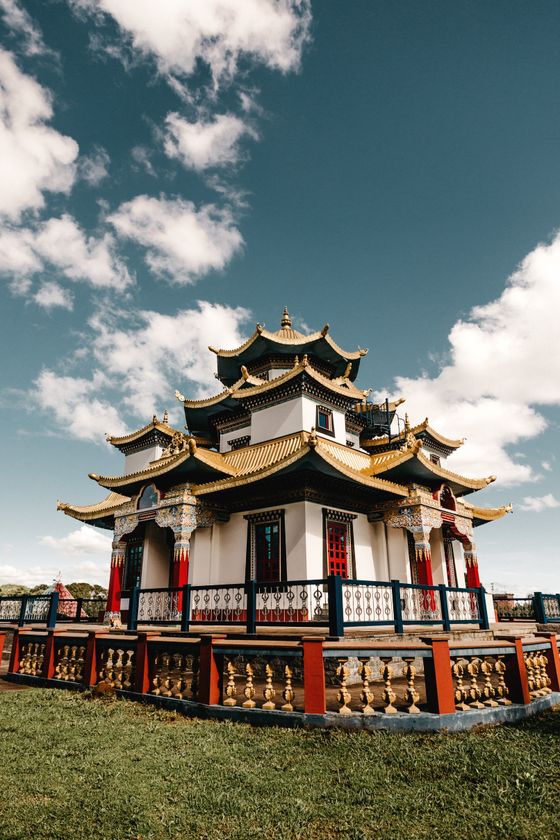
Kushinagar
Mahaparinirvana Temple
Houses a 6-metre reclining statue of the dying Buddha.

Warangal
Thousand Pillar Temple
A 12th-century Kakatiya temple famed for its carved pillars.
.jpg?width=560)
Warangal
Ramappa Temple
A UNESCO World Heritage Kakatiya temple known for its lightweight 'floating' bricks.

Dilwara Temples (Mount Abu)
Vimal Vasahi Temple
The oldest of the Dilwara temples, built in 1031 by Vimal Shah — a Jain minister to the Solanki king Bhima I — and dedicated to Adinath, the first Tirthankara. It is the earliest of a group that grew between the eleventh and sixteenth centuries, and the one that set the pattern: pure white marble worked into concentric rings of dancers, musicians and elephants across the central dome, and pillars carved individually rather than repeated. These are active Svetambara pilgrimage temples managed by a religious trust, not monuments, so visiting hours and dress are set by the temple rather than by the tourism department.

Mahabalipuram
The Shore Temple
Built rather than carved, around the year 700, and among the oldest structural stone temples in south India. The sea has been eating the carving for thirteen centuries, so the detail is soft. The 2004 tsunami drew the water back far enough to expose other structures offshore.
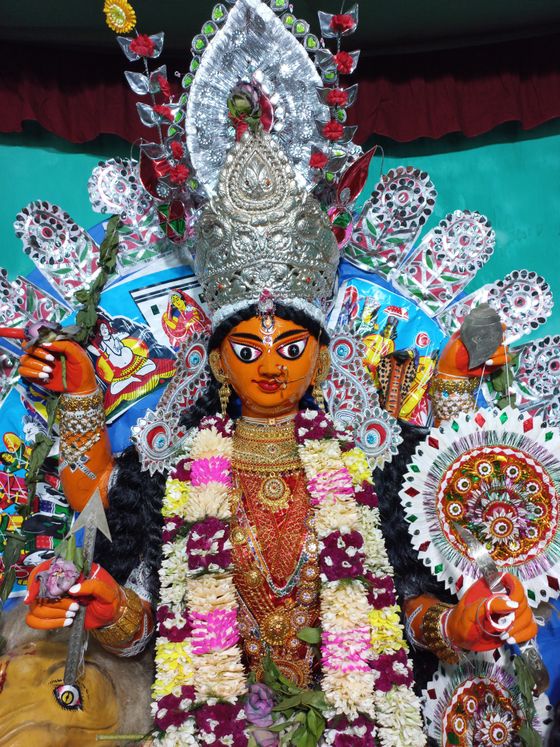
Konark Sun Temple
Nata Mandir (Dance Hall)
An elevated columned stone structure standing before the main hall, carpeted entirely with fine reliefs of classical musicians and dancers.
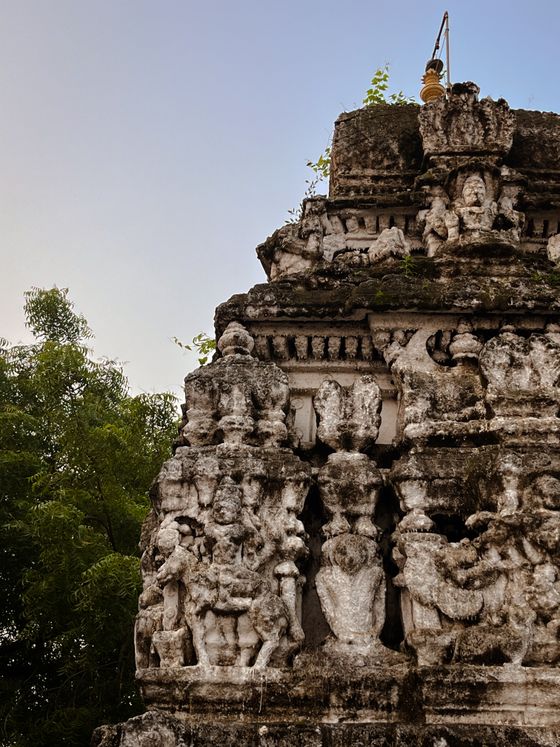
Amararama (Amaravati)
Amareswara Temple
The principal Pancharama Shiva temple on the Krishna River.
.jpg?width=560)
Shamlaji
Shamlaji Vishnu Temple
A Vishnu temple in Aravalli district and one of the busier pilgrimage centres in north Gujarat. The present building is fifteenth or sixteenth century, though it may have been begun in the eleventh in the Chaulukya style; the Vishnu image in the sanctuary is older still, probably seventh or eighth century, and the small temple facing it holds a sixth-century Shiva. The oldest intact structure on the site is the ninth-century Harishchandrani Chauri, with its gateway, off to one side and usually walked past. The fair at Kartik Poornima is when the town fills.


