

Buddhist & Jain Circuits
Spiritual & Pilgrimage
Monasteries, stupas, viharas and the hilltop Jain complexes of the west and south.
32 places

Girnar Hills
Neminath Jain Temples
A walled cluster of marble Jain temples around the 3,500-step mark, built between the twelfth and fifteenth centuries. Neminath's temple at the centre is the main one, and the courtyards are the first flat ground on the climb, so most people rest here.
Key Monastery
Monastery Kitchen
The traditional wood-fired kitchen where friendly lamas prepare hot butter tea and local barley meals for visitors.

Sanchi
The Great Stupa
India's oldest stone stupa, famed for its carved gateways.

Girnar (Jain Temples)
Girnar Jain Temple Group
A cluster of Jain temples partway up Girnar, the ancient hill above Junagadh, and one of the great Svetambara pilgrimages — a Mahatirth. Tradition holds that Neminath, the twenty-second Tirthankara, attained omniscience here and later nirvana at the highest peak, along with five hundred and thirty-three other enlightened sages; the Kalpa Sutra and the Uttaradhyayana Sutra both describe it. The temples sit several thousand steps above the base. The climb is the point and it is a real one — start before dawn, or take the ropeway up and walk down.

Palitana (Shatrunjaya)
Shatrunjaya Temple City
A range of hills above Palitana carrying 865 Jain temples — not one temple with outbuildings but a city of them, built up along the ridge over centuries. Jain tradition holds the site was sanctified when Rishabha, the first Tirthankara, preached from the summit, and that Pundarik Swami, his grandson and chief Ganadhara, attained moksha here. It is among the holiest places in Jainism. Getting up means roughly 3,500 steps and there is no ropeway; pilgrims start before dawn, and nobody stays on the hill overnight, priests included.

Sarnath
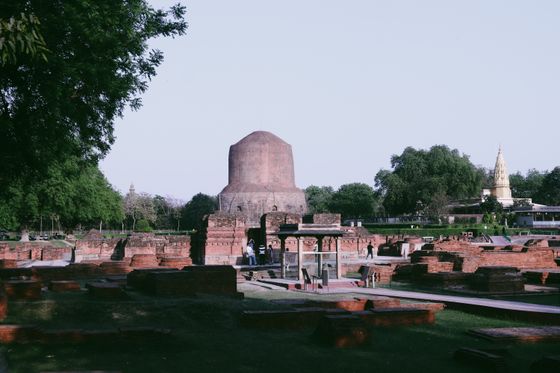
Dhamek Stupa
A massive 5th-century stupa marking the site of the Buddha's first sermon.
Sarnath
Sarnath Archaeological Museum
India's oldest site museum gallery housing the original 3rd-century BCE Ashokan Lion Capital and masterfully carved sandstone Buddha statues.
Sarnath
Sarnath Museum
Home to the original Ashoka Lion Capital, India's national emblem.
Sarnath
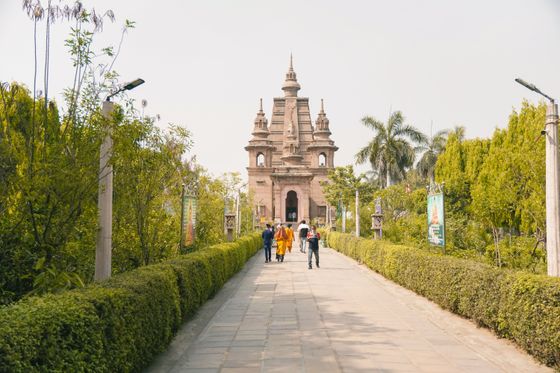
Mulagandha Kuti Vihara
Built in 1931, with wall paintings by the Japanese artist Kosetsu Nosu that took him years to finish. The Bodhi tree outside was grown from a cutting of the one at Anuradhapura, which came from Bodh Gaya. The relics are shown once a year.
.jpg?width=560)
Uttar Pradesh
Sarnath
Sarnath, near Varanasi, is where the Buddha delivered his first sermon after enlightenment, setting in motion the wheel of dharma. The towering Dhamek Stupa, ancient monastery ruins and an excellent archaeological museum make it a cornerstone of the Buddhist circuit.
.jpg?width=560)
Rajgir
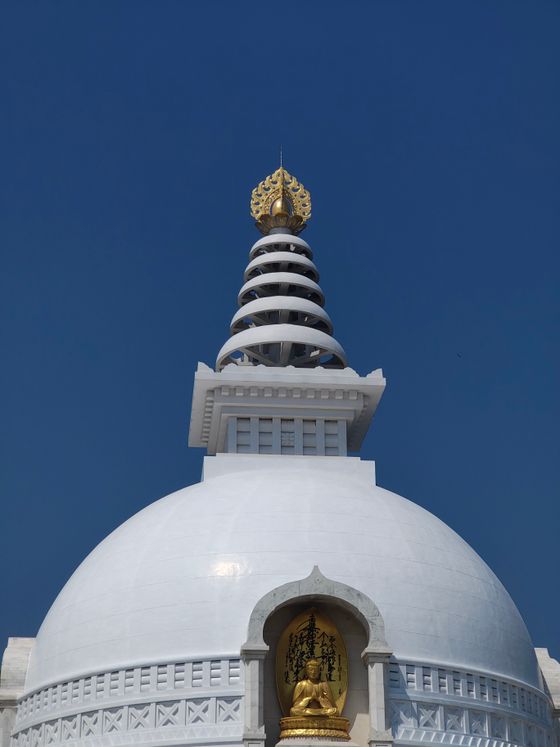
Vishwa Shanti Stupa
A white peace pagoda atop a hill, reached by a ropeway.

Bodh Gaya
Mahabodhi Temple & Bodhi Tree
The UNESCO temple beside the tree under which the Buddha was enlightened.
Bodh Gaya
Great Buddha Statue
An 80-foot seated Buddha statue, a landmark of the town.
Kushinagar
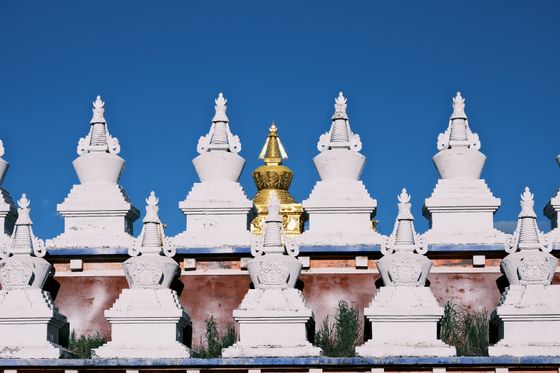
Ramabhar Stupa
The large stupa marking the site of the Buddha's cremation.
Tawang
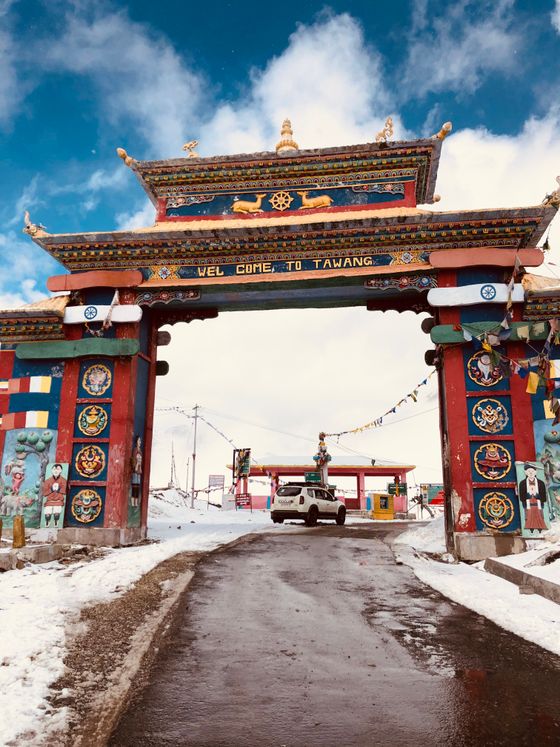
Tawang Monastery
India's largest and the world's second-largest Buddhist monastery.
Amararama (Amaravati)
Amaravati Stupa
The ruins and museum of a great ancient Buddhist stupa nearby.

Leh & Ladakh
Alchi Monastery
Alchi is unlike any other gompa in Ladakh: it sits low by the Indus rather than on a crag, and its temples preserve some of the finest 11th–12th century Buddhist art in the world. The Kashmiri-style murals of the Sumtsek and Dukhang — thousand-Buddha walls, colossal bodhisattvas painted with miniature scenes on their robes — survive from the era of the great translator Rinchen Zangpo. It is a quiet village of apricot orchards, a living museum of a vanished artistic world.

Bihar
Bodh Gaya
Bodh Gaya is the most sacred site in Buddhism — the place where Prince Siddhartha attained enlightenment under the Bodhi Tree to become the Buddha. The Mahabodhi Temple, a UNESCO World Heritage Site, and monasteries built by Buddhist nations worldwide make it a global pilgrimage centre.

Rajasthan
Dilwara Temples (Mount Abu)
The Dilwara Temples at Mount Abu are a group of five exquisite Jain temples built between the 11th and 13th centuries, known for marble carving cut so thin that the ceilings pass light — ceilings, pillars and panels worked into lace-like detail considered unsurpassed in India.

Leh & Ladakh
Diskit Monastery
Diskit is the oldest and largest monastery of the Nubra valley, founded in the 14th century and stacked on a rocky spur above the Shyok river. Its prayer halls hold fierce guardian deities and centuries-old murals, but the landmark is newer: the 32-metre Jampa (Maitreya) Buddha on the hill facing Pakistan, consecrated by the Dalai Lama in 2010, gazing out over the cold-desert dunes of Hunder.

Gujarat
Girnar (Jain Temples)
Girnar, a sacred volcanic massif near Junagadh, is a major pilgrimage for both Jains and Hindus. The arduous climb of roughly 10,000 steps passes a walled cluster of medieval Jain temples partway up, before continuing to Hindu shrines at the higher summits — a full day's climb, and one of the hardest pilgrimages in Gujarat.
Leh & Ladakh
Hemis Monastery
Hemis Monastery is a deeply revered Himalayan Buddhist sanctuary belonging to the Drukpa (Dragon) lineage of the Kagyu sect. Tucked away discreetly inside a hidden mountain canyon along the western banks of the Indus River, it lies roughly 45 kilometers south of main Leh town. It stands as the largest, wealthiest, and most institutionally influential monastery complex across Ladakh. The massive architecture presents a beautiful specimen of traditional Tibetan monastic layout, featuring white-washed stone masonry walls, intricately painted timber windows, and expansive open flagstone courtyards. Hemis houses an underground heritage museum containing priceless multi-century collections of gold-plated statues, sacred thangkas, and ancient weapons.

Himachal Pradesh
Key Monastery
Key Monastery is a thousand-year-old Tibetan Buddhist monastery belonging to the Gelugpa (Yellow Hat) lineage. At 4,166 metres, it sits on a prominent volcanic cone hill overlooking the wide Spiti River valley floor. Located roughly 14 kilometers from Kaza, it stands as the largest monastery, primary spiritual archive, and leading training school for resident Lamas in Spiti Valley. The unique architectural layout of the monastery has evolved over centuries of restructuring, resulting in a tightly stacked, fortress-like profile known as the Pasada style. The close grouping of white-washed mud-brick rooms, multi-tiered chapels, and narrow defensive corridors gives the complex the appearance of a monolithic castle emerging naturally from the mountain slope.

Gujarat
Palitana (Shatrunjaya)
Palitana, in Gujarat's Saurashtra, is one of Jainism's most sacred sites — the Shatrunjaya hill is crowned by an astonishing cluster of over 800 intricately carved marble temples. Pilgrims climb roughly 3,800 steps to reach the summit, where the temple-city gleams in white marble. No one, not even priests, may stay overnight on the sacred hill.

Rajasthan
Ranakpur Jain Temple
The Ranakpur Jain Temple, set in a quiet Aravalli valley, is a 15th-century marble masterpiece dedicated to Adinath, the first Tirthankara. Famed for its forest of 1,444 individually carved marble pillars — no two alike — it stands with Dilwara as the finest marble carving in Rajasthan.

Sikkim
Rumtek Monastery
Rumtek is the largest monastery in Sikkim and the seat-in-exile of the Karmapa, head of the Karma Kagyu (Black Hat) lineage. Rebuilt in the 1960s by the 16th Karmapa as a faithful copy of Tibet's Tsurphu monastery, it holds the Golden Stupa with his relics, a monastic college, and treasures of the lineage. Ritual dances, deep-horn ensembles and the view back across the valley to Gangtok make it the centrepiece of any Sikkim circuit.

Gujarat
Shatrunjaya Hill
Shatrunjaya Hill, near Palitana town in the Bhavnagar district, is a world-famous sacred mountain rising above the Shatrunjaya River. It stands as a unique structural wonder, being the world's only mountain holding a fortified complex of more than 860 carved marble temples built over a millennium. Considered an entirely holy landscape by the Jain community, no vehicles are permitted past the base database, requiring pilgrims and travelers to scale approximately 3,500 stone steps to reach the mountaintop complex.

Karnataka
Shravanabelagola
Shravanabelagola is among the most important Jain pilgrimage centres, dominated by the colossal 17-metre monolithic statue of Lord Bahubali (Gomateshwara) atop Vindhyagiri hill — one of the world's tallest free-standing statues. Every twelve years it is the site of the Mahamastakabhisheka, when the statue is anointed from a scaffold built over its head.

Leh & Ladakh
Thiksey Monastery
Thiksey Gompa cascades down a hillock above the Indus like a miniature Potala Palace — twelve storeys of whitewashed cells, red-ochre temples and golden finials. The seat of the Gelug (Yellow Hat) order in central Ladakh, it houses a 15-metre Maitreya (Future Buddha) seated in a two-storey hall, along with murals, thangkas and a library of Kangyur volumes. The morning prayers, announced by conch and drum from the rooftop, are among Ladakh's most moving experiences.
Madhya Pradesh
Buddhist Monuments at Sanchi
Bihar
Mahabodhi Temple Complex at Bodh Gaya
Bihar
Nalanda Mahavihara


