

Sacred Cities
Spiritual & Pilgrimage
Cities you go to for the city itself — Varanasi, Rishikesh, Haridwar, Madurai, Puri.
166 places
Uttarakhand
Rishikesh
Famed globally as the 'Yoga Capital of the World', this crowded, restless city on the Ganges blends ancient spirituality with high-adrenaline adventure sports. Rishikesh is located in the foothills of the Garhwal Himalayas where the sacred Ganges leaves the mountains to enter the plains. It is a world-renowned destination for spiritual seekers, yoga enthusiasts, and extreme adventure travelers.
Uttarakhand
Haridwar
An ancient holy city where the Ganges emerges into the Indo-Gangetic plains, world-known for its evening Ganga Aarti at Har Ki Pauri. Haridwar, meaning the 'Gateway to Lord Vishnu', is one of the seven holiest places in Hinduism. Located where the Ganges River exits the Himalayan foothills, the city acts as the launching pad for the entire Char Dham pilgrimage circuit.

Uttarakhand
Kedarnath
Kedarnath, set at 3,583 metres against a backdrop of snow peaks and the Mandakini valley, is among the holiest of the twelve Jyotirlingas and a cornerstone of the Char Dham Yatra. The ancient stone temple, reached by a demanding Himalayan trek, is one of India's most revered shrines.
Rajasthan
Ajmer Sharif Dargah
Ajmer Sharif is the most revered Sufi shrine in India — the dargah of Khwaja Moinuddin Chishti, the 12th-century saint who founded the Chishti order. Drawing millions of pilgrims of all faiths, especially during the annual Urs, it is a powerful symbol of India's syncretic spiritual culture.

Delhi
Akshardham (Delhi)
Swaminarayan Akshardham on the Yamuna's east bank is modern India's grandest act of temple-building — a pink sandstone and white marble mandir raised in just five years by volunteers and artisans working from ancient shilpa texts. 234 carved pillars, 20,000 sculpted figures, a colonnade of 148 stone elephants and the gilded murti of Bhagwan Swaminarayan lead out to exhibitions, a boat ride through Indian civilisation, and the evening musical fountain.

Leh & Ladakh
Alchi Monastery
Alchi is unlike any other gompa in Ladakh: it sits low by the Indus rather than on a crag, and its temples preserve some of the finest 11th–12th century Buddhist art in the world. The Kashmiri-style murals of the Sumtsek and Dukhang — thousand-Buddha walls, colossal bodhisattvas painted with miniature scenes on their robes — survive from the era of the great translator Rinchen Zangpo. It is a quiet village of apricot orchards, a living museum of a vanished artistic world.
Uttar Pradesh
Alopi Devi (Lalita) Temple
Alopi Devi (Lalita) Temple in Prayagraj (Sangam), Uttar Pradesh is one of the Shakti Peethas, the sacred shrines of the Divine Mother in the Shakta tradition of Hinduism. According to tradition, this is where the **fingers** of Goddess Sati fell when Lord Vishnu's Sudarshana Chakra divided her body. Here the Goddess is worshipped as **Lalita (Madhaveshwari)**, and her guardian Bhairava (a form of Shiva) as **Bhava**. Shakti Peethas are among the holiest pilgrimage sites for devotees of the Goddess, drawing pilgrims especially during Navratri and Durga Puja. Each is tied to the legend of Sati, whose body parts fell across the Indian subcontinent and beyond, sanctifying the ground where they landed.

Andhra Pradesh
Amararama (Amaravati)
Amararama at Amaravati is the foremost of the Pancharama Kshetras — five ancient Shiva temples of coastal Andhra said to enshrine pieces of a single sacred lingam. Set on the Krishna River beside the famous Buddhist stupa site of Amaravati, it blends Shaivite pilgrimage with deep archaeological heritage.

Madhya Pradesh
Amarkantak
Amarkantak is where the Narmada is born — a hilltop sanctuary in the Maikal range where India's holiest westward river rises from a small white-tiled kund ringed by temples. The Sone river springs from the same plateau to flow east, making this a rare watershed of sacred geography. Around the Narmada Udgam cluster the ancient Kalachuri-era temples, Kapil Dhara falls where the infant river first leaps, and forests rich with medicinal herbs.
Jammu & Kashmir
Amarnath
Amarnath in Pahalgam, Jammu & Kashmir is one of the Shakti Peethas, the sacred shrines of the Divine Mother in the Shakta tradition of Hinduism. According to tradition, this is where the **throat** of Goddess Sati fell when Lord Vishnu's Sudarshana Chakra divided her body. Here the Goddess is worshipped as **Mahamaya**, and her guardian Bhairava (a form of Shiva) as **Trisandhyeshwar**. Shakti Peethas are among the holiest pilgrimage sites for devotees of the Goddess, drawing pilgrims especially during Navratri and Durga Puja. Each is tied to the legend of Sati, whose body parts fell across the Indian subcontinent and beyond, sanctifying the ground where they landed.

Gujarat
Ambaji Temple (Gabbar Hill)
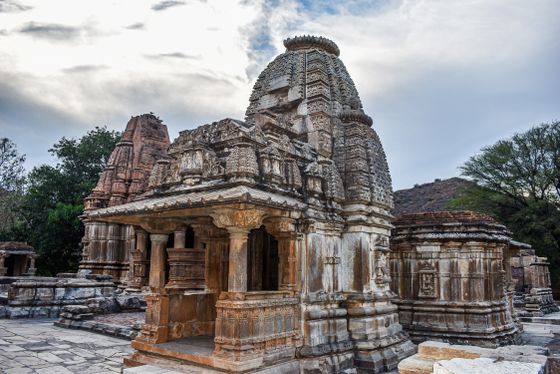
Ambaji Temple (Gabbar Hill) in Ambaji, Banaskantha, Gujarat is one of the Shakti Peethas, the sacred shrines of the Divine Mother in the Shakta tradition of Hinduism. According to tradition, this is where the **heart** of Goddess Sati fell when Lord Vishnu's Sudarshana Chakra divided her body. Here the Goddess is worshipped as **Amba (Ambika)**, and her guardian Bhairava (a form of Shiva) as **Batuk Bhairava**. Shakti Peethas are among the holiest pilgrimage sites for devotees of the Goddess, drawing pilgrims especially during Navratri and Durga Puja. Each is tied to the legend of Sati, whose body parts fell across the Indian subcontinent and beyond, sanctifying the ground where they landed.
Rajasthan
Ambika Shakti Peeth
Ambika Shakti Peeth in Bharatpur, Rajasthan is one of the Shakti Peethas, the sacred shrines of the Divine Mother in the Shakta tradition of Hinduism. According to tradition, this is where the **toes of the left foot** of Goddess Sati fell when Lord Vishnu's Sudarshana Chakra divided her body. Here the Goddess is worshipped as **Ambika**, and her guardian Bhairava (a form of Shiva) as **Amriteshwar**. Shakti Peethas are among the holiest pilgrimage sites for devotees of the Goddess, drawing pilgrims especially during Navratri and Durga Puja. Each is tied to the legend of Sati, whose body parts fell across the Indian subcontinent and beyond, sanctifying the ground where they landed.
Punjab
Amritsar (Golden Temple)
The Golden Temple sits lower than the ground around it, and you walk down steps to reach the water. That is deliberate: nearly every other temple in India makes you climb up to it. It has four doors, one on each side, for the same reason — the building is meant to be entered from any direction, by anyone. Head covered, shoes off, feet through the water channel at the entrance, and nobody will ask you anything else. The langar behind the complex feeds on the order of a hundred thousand people a day, more at weekends, on donated food and volunteer labour. The dish hall takes anyone who turns up to help, and half an hour in it tells you more about the place than any guidebook. The Akal Takht faces the sanctum across the water. It is the seat of temporal authority in Sikhism, and those two buildings looking at each other across a pool is the whole argument of the faith in one view.
Punjab
Anandpur Sahib
Anandpur Sahib, translating to the 'Holy City of Bliss', matters as much as anywhere in the Sikh faith outside Amritsar. It sits at the foothills of the scenic Shivalik mountain range along the Sutlej River loop in Punjab, the town is structurally dominated by white-stone fortress-style Gurdwaras. It serves as a center for theological studies and martial heritage curation. The spiritual nucleus of the city is the Takht Sri Keshgarh Sahib, one of the five supreme temporal seats (Takhts) of Sikh authority. The city architecture is backdropped by the Virasat-e-Khalsa museum, an architectural marvel designed by Israeli architect Moshe Safdie that meticulously brings out 500 years of rich Sikh history and regional cultural traditions.

West Bengal
Attahas Temple
Attahas Temple in Labhpur, Birbhum, West Bengal is one of the Shakti Peethas, the sacred shrines of the Divine Mother in the Shakta tradition of Hinduism. According to tradition, this is where the **lips** of Goddess Sati fell when Lord Vishnu's Sudarshana Chakra divided her body. Here the Goddess is worshipped as **Phullara**, and her guardian Bhairava (a form of Shiva) as **Vishwesh**. Shakti Peethas are among the holiest pilgrimage sites for devotees of the Goddess, drawing pilgrims especially during Navratri and Durga Puja. Each is tied to the legend of Sati, whose body parts fell across the Indian subcontinent and beyond, sanctifying the ground where they landed.
Uttar Pradesh
Ayodhya
Ayodhya is a deeply revered, ancient historical city along the banks of the sacred Saryu River, celebrated as the birthplace of Lord Rama. As one of the seven primary holy cities in Hinduism, the destination has undergone a monumental civilizational and infrastructure transformation following the historic consecration of the grand, newly constructed Sri Ram Janmabhoomi Mandir. The city's urban layout integrates centuries-old temple heritage with modern tourist corridors. The core of the spiritual experience pivots around the wide pedestrian plazas of the Ram Mandir, constructed without using any iron or steel elements. From the high stone steps of Hanuman Garhi to the evening illumination reflecting off the water at Ram Ki Pauri ghats, Ayodhya radiates an atmosphere of deep devotion and civilizational identity.
Uttarakhand
Badrinath
A Vishnu temple that anchors both the national Char Dham and the Chota Char Dham circuits. Badrinath is a historic holy town between the Nar and Narayana mountain ranges in the Chamoli district of Uttarakhand. It sits at an altitude of 3,133 metres along the banks of the Alaknanda River.

West Bengal
Bahula Temple
Bahula Temple in Ketugram, Purba Bardhaman, West Bengal is one of the Shakti Peethas, the sacred shrines of the Divine Mother in the Shakta tradition of Hinduism. According to tradition, this is where the **left arm** of Goddess Sati fell when Lord Vishnu's Sudarshana Chakra divided her body. Here the Goddess is worshipped as **Bahula**, and her guardian Bhairava (a form of Shiva) as **Bhiruk**. Shakti Peethas are among the holiest pilgrimage sites for devotees of the Goddess, drawing pilgrims especially during Navratri and Durga Puja. Each is tied to the legend of Sati, whose body parts fell across the Indian subcontinent and beyond, sanctifying the ground where they landed.

Jharkhand
Baidyanath Dham (Jaya Durga)
Baidyanath Dham (Jaya Durga) in Deoghar, Jharkhand is one of the Shakti Peethas, the sacred shrines of the Divine Mother in the Shakta tradition of Hinduism. According to tradition, this is where the **heart** of Goddess Sati fell when Lord Vishnu's Sudarshana Chakra divided her body. Here the Goddess is worshipped as **Jaya Durga**, and her guardian Bhairava (a form of Shiva) as **Vaidyanath**. It is counted among the eighteen Ashtadasha Maha Shakti Peethas — the most revered of all the seats of the Goddess. Shakti Peethas are among the holiest pilgrimage sites for devotees of the Goddess, drawing pilgrims especially during Navratri and Durga Puja. Each is tied to the legend of Sati, whose body parts fell across the Indian subcontinent and beyond, sanctifying the ground where they landed.

Himachal Pradesh
Bajreshwari Mata Temple (Kangra)
Bajreshwari Mata Temple (Kangra) in Kangra, Himachal Pradesh is one of the Shakti Peethas, the sacred shrines of the Divine Mother in the Shakta tradition of Hinduism. According to tradition, this is where the **left breast** of Goddess Sati fell when Lord Vishnu's Sudarshana Chakra divided her body. Here the Goddess is worshipped as **Jayadurga (Bajreshwari)**, and her guardian Bhairava (a form of Shiva) as **Abhiru (Abhirunatheshwar)**. Shakti Peethas are among the holiest pilgrimage sites for devotees of the Goddess, drawing pilgrims especially during Navratri and Durga Puja. Each is tied to the legend of Sati, whose body parts fell across the Indian subcontinent and beyond, sanctifying the ground where they landed.
West Bengal
Bakreshwar Temple
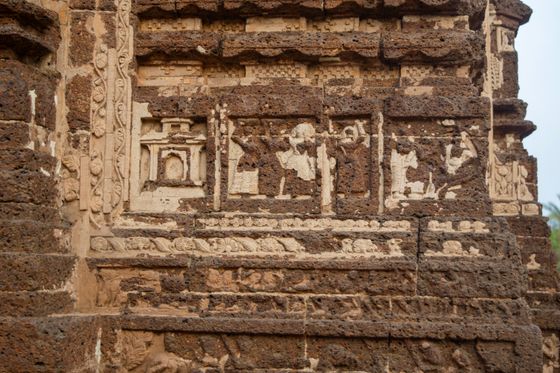
Bakreshwar Temple in Birbhum, West Bengal is one of the Shakti Peethas, the sacred shrines of the Divine Mother in the Shakta tradition of Hinduism. According to tradition, this is where the **between the eyebrows** of Goddess Sati fell when Lord Vishnu's Sudarshana Chakra divided her body. Here the Goddess is worshipped as **Mahishmardini**, and her guardian Bhairava (a form of Shiva) as **Vakranath**. Shakti Peethas are among the holiest pilgrimage sites for devotees of the Goddess, drawing pilgrims especially during Navratri and Durga Puja. Each is tied to the legend of Sati, whose body parts fell across the Indian subcontinent and beyond, sanctifying the ground where they landed.

West Bengal
Belur Math
Belur Math, headquarters of the Ramakrishna Mission on the Hooghly's west bank, was consecrated by Swami Vivekananda in 1899. Its main temple is a deliberate symphony of faiths — a facade that reads as temple, church and mosque depending on where you stand — enshrining Sri Ramakrishna's relics. The riverside campus of lawns and shrines to Holy Mother Sarada Devi and Vivekananda breathes an orderly, universal calm unlike anywhere else in Kolkata.

Bhabanipur (Aparna) Temple
Bhabanipur (Aparna) Temple in Karatoyatat, Bogra, Bangladesh is one of the Shakti Peethas, the sacred shrines of the Divine Mother in the Shakta tradition of Hinduism. According to tradition, this is where the **left anklet** of Goddess Sati fell when Lord Vishnu's Sudarshana Chakra divided her body. Here the Goddess is worshipped as **Aparna**, and her guardian Bhairava (a form of Shiva) as **Vaman**. Shakti Peethas are among the holiest pilgrimage sites for devotees of the Goddess, drawing pilgrims especially during Navratri and Durga Puja. Each is tied to the legend of Sati, whose body parts fell across the Indian subcontinent and beyond, sanctifying the ground where they landed.
.JPG?width=560)
Telangana
Bhadrachalam
Bhadrachalam, on the Godavari, is the 'Ayodhya of the South' — the seat of Sita Ramachandraswamy, whose temple was raised in the 17th century by the tahsildar-saint Kancherla Gopanna, remembered as Bhakta Ramadasu for the kirtans he wrote in prison for the temple's sake. The Sri Rama Navami kalyanam (celestial wedding) performed here draws lakhs, with the state itself presenting pearls for the ritual, a tradition running unbroken from the Qutb Shahi kings.

Haryana
Bhadrakali Temple (Kurukshetra)
Bhadrakali Temple (Kurukshetra) in Thanesar, Kurukshetra, Haryana is one of the Shakti Peethas, the sacred shrines of the Divine Mother in the Shakta tradition of Hinduism. According to tradition, this is where the **ankle bone** of Goddess Sati fell when Lord Vishnu's Sudarshana Chakra divided her body. Here the Goddess is worshipped as **Savitri (Bhadrakali)**, and her guardian Bhairava (a form of Shiva) as **Sthanu**. Shakti Peethas are among the holiest pilgrimage sites for devotees of the Goddess, drawing pilgrims especially during Navratri and Durga Puja. Each is tied to the legend of Sati, whose body parts fell across the Indian subcontinent and beyond, sanctifying the ground where they landed.
Maharashtra
Bhimashankar
Bhimashankar, deep in the Sahyadri hills of Maharashtra, is one of the twelve Jyotirlingas of Lord Shiva and the source of the Bhima River. Surrounded by a wildlife sanctuary that shelters the rare Indian giant squirrel, it combines a major pilgrimage with lush Western Ghats trekking.

Chhattisgarh
Bhoramdeo Temple
Bhoramdeo, wrapped in the forested Maikal hills, is called the 'Khajuraho of Chhattisgarh' — an 11th-century Shiva temple of the Nagvanshi kings whose walls carry tier upon tier of sculpted musicians, dancers, deities and frankly amorous couples. The sanctum's dark stone Shiva sits behind a hall of carved pillars, and two earlier brick temples and a sculpture-filled lawn complete the complex beside a lotus pond.

Andhra Pradesh
Bhramaramba (Mallikarjuna) Temple
Bhramaramba (Mallikarjuna) Temple in Srisailam, Andhra Pradesh is one of the Shakti Peethas, the sacred shrines of the Divine Mother in the Shakta tradition of Hinduism. According to tradition, this is where the **neck** of Goddess Sati fell when Lord Vishnu's Sudarshana Chakra divided her body. Here the Goddess is worshipped as **Bhramaramba (Mahalakshmi)**, and her guardian Bhairava (a form of Shiva) as **Mallikarjuna (Sambaranand)**. It is counted among the eighteen Ashtadasha Maha Shakti Peethas — the most revered of all the seats of the Goddess. Shakti Peethas are among the holiest pilgrimage sites for devotees of the Goddess, drawing pilgrims especially during Navratri and Durga Puja. Each is tied to the legend of Sati, whose body parts fell across the Indian subcontinent and beyond, sanctifying the ground where they landed.

West Bengal
Bhramari Devi (Jalpesh) Temple
Bhramari Devi (Jalpesh) Temple in Jalpaiguri, West Bengal is one of the Shakti Peethas, the sacred shrines of the Divine Mother in the Shakta tradition of Hinduism. According to tradition, this is where the **left leg** of Goddess Sati fell when Lord Vishnu's Sudarshana Chakra divided her body. Here the Goddess is worshipped as **Bhramari**, and her guardian Bhairava (a form of Shiva) as **Ambar (Ishwar)**. Shakti Peethas are among the holiest pilgrimage sites for devotees of the Goddess, drawing pilgrims especially during Navratri and Durga Puja. Each is tied to the legend of Sati, whose body parts fell across the Indian subcontinent and beyond, sanctifying the ground where they landed.
Odisha
Biraja (Girija) Temple
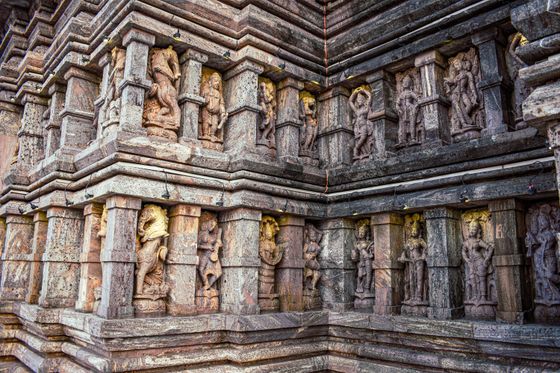
Biraja (Girija) Temple in Jajpur, Odisha is one of the Shakti Peethas, the sacred shrines of the Divine Mother in the Shakta tradition of Hinduism. According to tradition, this is where the **navel** of Goddess Sati fell when Lord Vishnu's Sudarshana Chakra divided her body. Here the Goddess is worshipped as **Vimala (Biraja)**, and her guardian Bhairava (a form of Shiva) as **Jagannath (Varaha)**. Shakti Peethas are among the holiest pilgrimage sites for devotees of the Goddess, drawing pilgrims especially during Navratri and Durga Puja. Each is tied to the legend of Sati, whose body parts fell across the Indian subcontinent and beyond, sanctifying the ground where they landed.

Bihar
Bodh Gaya
Bodh Gaya is the most sacred site in Buddhism — the place where Prince Siddhartha attained enlightenment under the Bodhi Tree to become the Buddha. The Mahabodhi Temple, a UNESCO World Heritage Site, and monasteries built by Buddhist nations worldwide make it a global pilgrimage centre.
.jpg?width=560)
Karnataka
Chamundeshwari Temple
Chamundeshwari Temple in Mysuru, Karnataka is one of the Shakti Peethas, the sacred shrines of the Divine Mother in the Shakta tradition of Hinduism. According to tradition, this is where the **hair** of Goddess Sati fell when Lord Vishnu's Sudarshana Chakra divided her body. Here the Goddess is worshipped as **Chamundeshwari (Krouncha)**. Shakti Peethas are among the holiest pilgrimage sites for devotees of the Goddess, drawing pilgrims especially during Navratri and Durga Puja. Each is tied to the legend of Sati, whose body parts fell across the Indian subcontinent and beyond, sanctifying the ground where they landed.
Gujarat
Chandrabhaga (near Somnath)
Chandrabhaga (near Somnath) in Prabhas, Veraval, Gujarat is one of the Shakti Peethas, the sacred shrines of the Divine Mother in the Shakta tradition of Hinduism. According to tradition, this is where the **stomach** of Goddess Sati fell when Lord Vishnu's Sudarshana Chakra divided her body. Here the Goddess is worshipped as **Chandrabhaga**, and her guardian Bhairava (a form of Shiva) as **Vakratunda**. Shakti Peethas are among the holiest pilgrimage sites for devotees of the Goddess, drawing pilgrims especially during Navratri and Durga Puja. Each is tied to the legend of Sati, whose body parts fell across the Indian subcontinent and beyond, sanctifying the ground where they landed.
Chattal Bhawani (Chandranath)
Chattal Bhawani (Chandranath) in Sitakunda, Chittagong, Bangladesh is one of the Shakti Peethas, the sacred shrines of the Divine Mother in the Shakta tradition of Hinduism. According to tradition, this is where the **right arm** of Goddess Sati fell when Lord Vishnu's Sudarshana Chakra divided her body. Here the Goddess is worshipped as **Bhawani**, and her guardian Bhairava (a form of Shiva) as **Chandrashekhar**. Shakti Peethas are among the holiest pilgrimage sites for devotees of the Goddess, drawing pilgrims especially during Navratri and Durga Puja. Each is tied to the legend of Sati, whose body parts fell across the Indian subcontinent and beyond, sanctifying the ground where they landed.
Tamil Nadu
Chidambaram (Nataraja Temple)
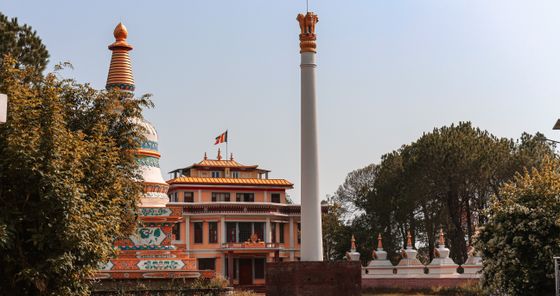
Chidambaram is an ancient, vital pilgrimage town near the coastal plains of the Cuddalore district in Tamil Nadu. The destination is known for hosting the Thillai Nataraja Temple, a multi-acre temple complex dedicated to Lord Shiva portrayed uniquely in his cosmic dance posture as Nataraja, the Lord of Dance. The structural landscape features four massive sculpture-covered gopuram gateways, a grand sacred temple tank, and the Kanaka Sabha, the central inner sanctum topped by a pure gold-plated roof structure fastened using exactly 72,000 copper nails. The complex is managed by an exclusive, hereditary community of married priests known as the Dikshitars.
Himachal Pradesh
Chinnamastika Temple (Chintpurni)
Chinnamastika Temple (Chintpurni) in Chintpurni, Himachal Pradesh is one of the Shakti Peethas, the sacred shrines of the Divine Mother in the Shakta tradition of Hinduism. According to tradition, this is where the **feet** of Goddess Sati fell when Lord Vishnu's Sudarshana Chakra divided her body. Here the Goddess is worshipped as **Chhinnamastika**, and her guardian Bhairava (a form of Shiva) as **Rudra Mahadeva**. Shakti Peethas are among the holiest pilgrimage sites for devotees of the Goddess, drawing pilgrims especially during Navratri and Durga Puja. Each is tied to the legend of Sati, whose body parts fell across the Indian subcontinent and beyond, sanctifying the ground where they landed.
Gujarat
Chotila Hill
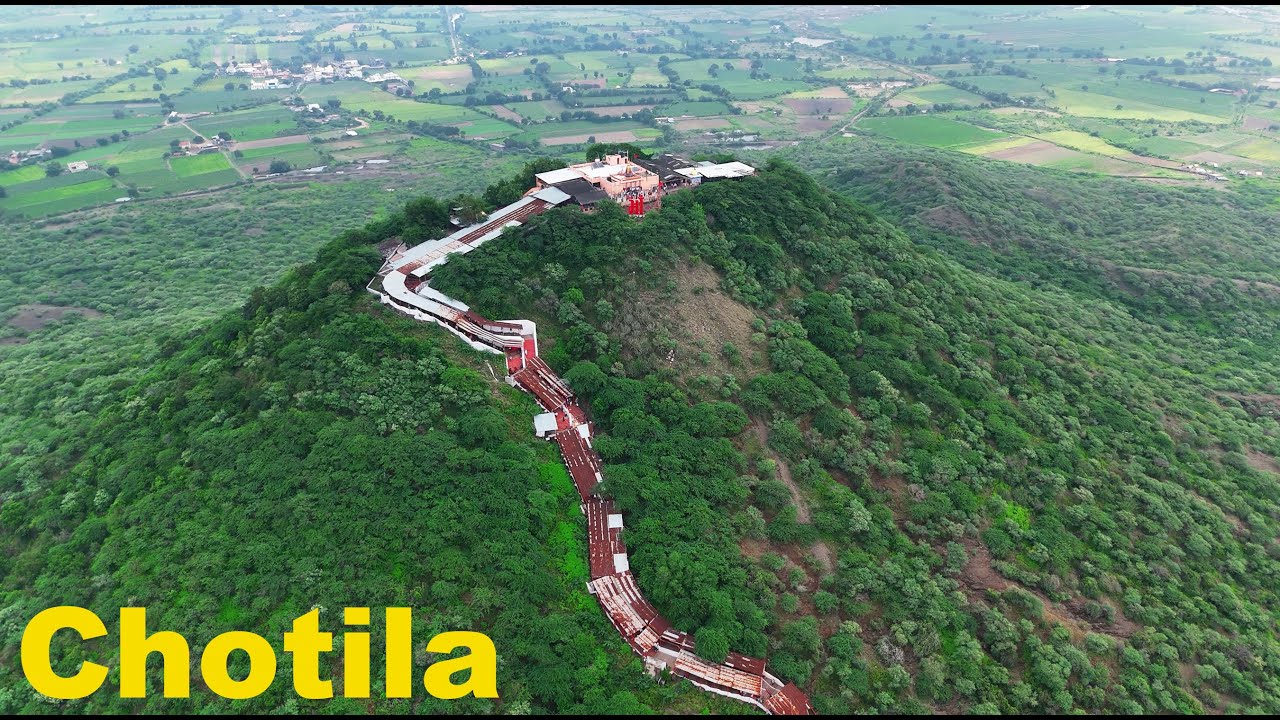
Chotila Hill rises abruptly from the flat plains of the Surendranagar district in Saurashtra, a near-symmetrical cone standing about 350 metres high. It is best known as the seat of the goddess Chamunda Mata, whose hilltop shrine draws a steady stream of pilgrims who climb the long covered stairway of more than 600 stone steps to the summit.

Kerala
Chottanikkara Temple
Chottanikkara Bhagavathy, on Kochi's green edge, is one of Kerala's most powerful goddess temples — the Devi worshipped as Saraswati at dawn, Lakshmi at noon and Durga at dusk. The temple is famed across the South for healing afflictions of the mind; at the lower Kizhukkavu shrine, the guardian Bhadrakali's ancient paala tree bristles with nails driven in as spirits are exorcised at the wrenching Guruthi Pooja each night.

Gujarat
Dakor
Dakor is a temple town in the Kheda district of central Gujarat, built around the Ranchhodraiji Temple and the stone-stepped Gomti Lake. Its Krishna deity is one of the region's most revered; local legend says the image came from Dwarka out of love for a devotee named Bodana. The town is busiest on full-moon days, when large crowds gather for prayers.
Dakshayani (Manasa) Temple
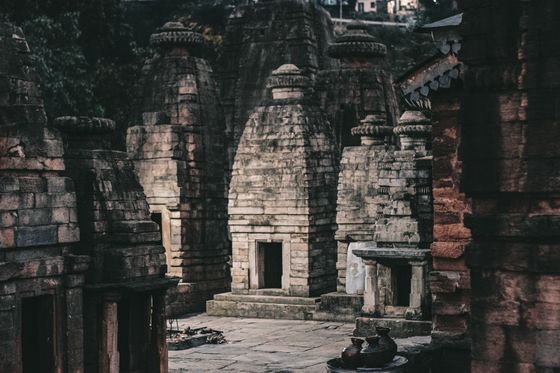
Dakshayani (Manasa) Temple in Lake Manasarovar, Mount Kailash, China (Tibet) is one of the Shakti Peethas, the sacred shrines of the Divine Mother in the Shakta tradition of Hinduism. According to tradition, this is where the **right hand** of Goddess Sati fell when Lord Vishnu's Sudarshana Chakra divided her body. Here the Goddess is worshipped as **Dakshayani**, and her guardian Bhairava (a form of Shiva) as **Amar**. Shakti Peethas are among the holiest pilgrimage sites for devotees of the Goddess, drawing pilgrims especially during Navratri and Durga Puja. Each is tied to the legend of Sati, whose body parts fell across the Indian subcontinent and beyond, sanctifying the ground where they landed.
.jpg?width=560)
West Bengal
Dakshineswar Kali Temple
Dakshineswar, on the Hooghly north of Kolkata, is the great navaratna (nine-spired) temple of Bhavatarini Kali built by Rani Rashmoni in 1855 — and the temple where Sri Ramakrishna served as priest, had his God-intoxicated visions, and drew the world to Kali's feet. His room in the courtyard's corner is preserved as he left it; twelve Shiva temples line the riverfront, and ferries cross to Belur Math on the far bank.

Punjab
Damdama Sahib (Talwandi Sabo)
Takht Sri Damdama Sahib at Talwandi Sabo is one of the five Takhts of Sikhism, the place where Guru Gobind Singh prepared the definitive recension of the Guru Granth Sahib. Known as the 'Guru's Kashi' (seat of learning), it is a major centre during Baisakhi.

Chhattisgarh
Danteshwari Temple
Danteshwari Temple in Dantewada (Bastar), Chhattisgarh is one of the Shakti Peethas, the sacred shrines of the Divine Mother in the Shakta tradition of Hinduism. According to tradition, this is where the **tooth** of Goddess Sati fell when Lord Vishnu's Sudarshana Chakra divided her body. Here the Goddess is worshipped as **Danteshwari**, and her guardian Bhairava (a form of Shiva) as **Kapalabhairava**. Shakti Peethas are among the holiest pilgrimage sites for devotees of the Goddess, drawing pilgrims especially during Navratri and Durga Puja. Each is tied to the legend of Sati, whose body parts fell across the Indian subcontinent and beyond, sanctifying the ground where they landed.
Jharkhand
Deoghar (Baidyanath Dham)
Deoghar, the 'abode of the gods', is home to the Baidyanath Jyotirlinga, one of the twelve sacred Jyotirlingas of Shiva. During the monsoon month of Shravan, millions of saffron-clad kanwariyas walk over 100 km carrying Ganga water from Sultanganj to offer at the temple — one of India's largest pilgrim movements.

Punjab
Devi Talab Mandir (Tripuramalini)
Devi Talab Mandir (Tripuramalini) in Jalandhar, Punjab is one of the Shakti Peethas, the sacred shrines of the Divine Mother in the Shakta tradition of Hinduism. According to tradition, this is where the **left breast** of Goddess Sati fell when Lord Vishnu's Sudarshana Chakra divided her body. Here the Goddess is worshipped as **Tripuramalini**, and her guardian Bhairava (a form of Shiva) as **Bhishana**. It is counted among the eighteen Ashtadasha Maha Shakti Peethas — the most revered of all the seats of the Goddess. Shakti Peethas are among the holiest pilgrimage sites for devotees of the Goddess, drawing pilgrims especially during Navratri and Durga Puja. Each is tied to the legend of Sati, whose body parts fell across the Indian subcontinent and beyond, sanctifying the ground where they landed.
Uttarakhand
Devprayag (Panch Prayag)
Devprayag is the most sacred of the Panch Prayag — the five holy confluences of Uttarakhand — where the Alaknanda and Bhagirathi rivers merge to form the Ganga itself. A small temple town clinging to the hillsides above the turquoise waters, it marks the very birth of the holy river.

Karnataka
Dharmasthala
Dharmasthala is Karnataka's temple of harmony: a Shiva shrine (Manjunatha) whose priests are Vaishnava Brahmins and whose hereditary guardians, the Heggade family, are Jain — dispensing dharma, justice and food to all comers for over 800 years. Its annadana feeds tens of thousands daily in one of India's great free kitchens, while the 12-metre Bahubali monolith and a vintage-car museum stand nearby on the Netravati's banks.

Rajasthan
Dilwara Temples (Mount Abu)
The Dilwara Temples at Mount Abu are a group of five exquisite Jain temples built between the 11th and 13th centuries, known for marble carving cut so thin that the ceilings pass light — ceilings, pillars and panels worked into lace-like detail considered unsurpassed in India.

Leh & Ladakh
Diskit Monastery
Diskit is the oldest and largest monastery of the Nubra valley, founded in the 14th century and stacked on a rocky spur above the Shyok river. Its prayer halls hold fierce guardian deities and centuries-old murals, but the landmark is newer: the 32-metre Jampa (Maitreya) Buddha on the hill facing Pakistan, consecrated by the Dalai Lama in 2010, gazing out over the cold-desert dunes of Hunder.

Chhattisgarh
Dongargarh (Bamleshwari Temple)
At Dongargarh the goddess Bamleshwari watches from a 1,600-step hilltop — the Badi (elder) Bamleshwari — while her sister shrine, Chhoti Bamleshwari, stands in the town below. The temple is Chhattisgarh's busiest pilgrimage, its twin Navratri fairs drawing lakhs of devotees who climb through the night as the hill glows with lamps. A ropeway now glides over the boulders for those who skip the stairs.

Gujarat
Dwarka
Dwarka is an ancient holy city resting on the westernmost tip of the Saurashtra peninsula. Revered as the legendary ocean kingdom of Lord Krishna, it forms a core part of the highly sacred Chardham pilgrimage circuit. It draws millions of continuous domestic and international travelers year-round to experience its historic temples and newly developed infrastructure marvels.
_at_Fatehgarh_Sahib_Gurdwara%2C_Punjab%2C_India.jpg?width=560)
Punjab
Fatehgarh Sahib
Gurdwara Fatehgarh Sahib rises in white marble over the site of Sikhism's most heart-rending sacrifice — where in 1704 the two youngest sons of Guru Gobind Singh, aged just seven and nine, were bricked alive by the Sirhind governor for refusing to abandon their faith. The underground Bhora Sahib preserves the wall's site; nearby stand Mata Gujri's tower prison and the shrine of Todar Mal, who bought the cremation ground with gold coins laid edge to edge.
Gandaki Chandi (Muktinath)
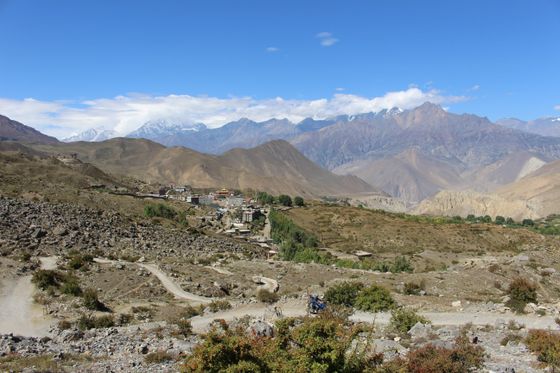
Gandaki Chandi (Muktinath) in Muktinath, Nepal is one of the Shakti Peethas, the sacred shrines of the Divine Mother in the Shakta tradition of Hinduism. According to tradition, this is where the **head (cheek)** of Goddess Sati fell when Lord Vishnu's Sudarshana Chakra divided her body. Here the Goddess is worshipped as **Gandaki Chandi**, and her guardian Bhairava (a form of Shiva) as **Chakrapani**. Shakti Peethas are among the holiest pilgrimage sites for devotees of the Goddess, drawing pilgrims especially during Navratri and Durga Puja. Each is tied to the legend of Sati, whose body parts fell across the Indian subcontinent and beyond, sanctifying the ground where they landed.

Gujarat
Gandhinagar
Gandhinagar, the meticulously master-planned capital city of Gujarat, stands on the west bank of the Sabarmati River. Designed by visionary architects H.K. Mewada and Prakash M. Apte, it is internationally recognized as one of India's greenest administrative capitals, laid out in an orderly grid of 30 structured sectors. Beyond its primary role as a political and bureaucratic powerhouse, Gandhinagar handles a massive leisure and spiritual tourist footprint due to its high-capacity exhibition facilities, lush urban forest canopy covers, eco-nature parks, and monumental temple installations.

Uttarakhand
Gangotri
The revered birthplace of the holy River Ganga and the second shrine in the Chota Char Dham circuit. Gangotri is at an elevation of 3,048 metres in the Uttarkashi district of Uttarakhand. The white granite temple sits on the banks of the Bhagirathi River. While the actual geographical source of the Ganges is Gaumukh at the base of the Gangotri Glacier (an 18 km trek from the town), Gangotri town is the accessible spiritual epicenter for millions of devotees.

Gujarat
Girnar (Jain Temples)
Girnar, a sacred volcanic massif near Junagadh, is a major pilgrimage for both Jains and Hindus. The arduous climb of roughly 10,000 steps passes a walled cluster of medieval Jain temples partway up, before continuing to Hindu shrines at the higher summits — a full day's climb, and one of the hardest pilgrimages in Gujarat.
.jpg?width=560)
Guhyeshwari Temple
Guhyeshwari Temple in Kathmandu, Nepal is one of the Shakti Peethas, the sacred shrines of the Divine Mother in the Shakta tradition of Hinduism. According to tradition, this is where the **both knees** of Goddess Sati fell when Lord Vishnu's Sudarshana Chakra divided her body. Here the Goddess is worshipped as **Mahamaya (Mahashira)**, and her guardian Bhairava (a form of Shiva) as **Kapali**. Shakti Peethas are among the holiest pilgrimage sites for devotees of the Goddess, drawing pilgrims especially during Navratri and Durga Puja. Each is tied to the legend of Sati, whose body parts fell across the Indian subcontinent and beyond, sanctifying the ground where they landed.

Kerala
Guruvayur (Sri Krishna Temple)
Guruvayur is a temple town in Kerala centred on the revered Sri Krishna (Guruvayurappan) Temple, often called the Dwarka of the South. The deity is worshipped as the young Krishna, and the shrine is one of the busiest Vaishnava pilgrimage centres in India, famed for its strict rituals, temple elephants and devotional music.

Maharashtra
Haji Ali Dargah (Mumbai)
The Haji Ali Dargah is one of Mumbai's most recognisable landmarks — a white-domed Indo-Islamic shrine and mosque set on a tiny islet in the Arabian Sea, reached by a causeway that submerges at high tide. The tomb of the saint Pir Haji Ali Shah Bukhari draws pilgrims of all faiths.

Assam
Hajo
Hajo is an ancient pilgrimage town near Guwahati in Assam, revered across three faiths. The hilltop Hayagriva Madhava temple draws Hindus and some Buddhists who believe the Buddha attained nirvana here, while the nearby Poa Mecca is an important Muslim shrine, making Hajo a rare centre of shared devotion.

Madhya Pradesh
Harsiddhi (Avanti) Temple
Harsiddhi (Avanti) Temple in Ujjain, Madhya Pradesh is one of the Shakti Peethas, the sacred shrines of the Divine Mother in the Shakta tradition of Hinduism. According to tradition, this is where the **upper lip / elbow** of Goddess Sati fell when Lord Vishnu's Sudarshana Chakra divided her body. Here the Goddess is worshipped as **Mahakali (Avanti)**, and her guardian Bhairava (a form of Shiva) as **Lambakarna**. Shakti Peethas are among the holiest pilgrimage sites for devotees of the Goddess, drawing pilgrims especially during Navratri and Durga Puja. Each is tied to the legend of Sati, whose body parts fell across the Indian subcontinent and beyond, sanctifying the ground where they landed.

Jammu & Kashmir
Hazratbal Shrine (Srinagar)
The Hazratbal Shrine, set on the western shore of Srinagar's Dal Lake, is Kashmir's holiest Muslim shrine, revered for housing a relic believed to be a hair of Prophet Muhammad. Its gleaming white marble dome against the lake and mountains makes it both a sacred site and a scenic landmark.
Uttarakhand
Hemkund Sahib
One of the highest and most revered Sikh shrines in the world, next to a glacial lake surrounded by seven mountain peaks. Gurdwara Sri Hemkund Sahib is a renowned pilgrimage center located at an astounding altitude of 4,572 metres (15,000 feet) in the Chamoli district of Uttarakhand. It is sacred to both the Sikh community and Hindu devotees.

Hinglaj Mata Temple
Hinglaj Mata Temple in Hingol (Balochistan), Pakistan is one of the Shakti Peethas, the sacred shrines of the Divine Mother in the Shakta tradition of Hinduism. According to tradition, this is where the **brahmarandhra (crown of the head)** of Goddess Sati fell when Lord Vishnu's Sudarshana Chakra divided her body. Here the Goddess is worshipped as **Hinglaj (Kottari)**, and her guardian Bhairava (a form of Shiva) as **Bhimalochana**. Shakti Peethas are among the holiest pilgrimage sites for devotees of the Goddess, drawing pilgrims especially during Navratri and Durga Puja. Each is tied to the legend of Sati, whose body parts fell across the Indian subcontinent and beyond, sanctifying the ground where they landed.

Karnataka
ISKCON Temple (Bengaluru)
ISKCON Sri Radha Krishna Temple in Rajajinagar is one of the largest ISKCON temples in the world, a striking blend of modern glass-and-steel architecture with traditional gopuram-topped shrines. Opened in 1997 on Hare Krishna Hill, it is a major centre for Krishna devotion, cultural programmes and prasadam distribution in Bengaluru.

Delhi
Jama Masjid (Delhi)
The Jama Masjid of Delhi, built by Shah Jahan in 1656, is one of the largest mosques in India. Its vast red-sandstone-and-marble courtyard holds tens of thousands of worshippers, and its southern minaret looks out over the rooftops of Old Delhi.
Gujarat
Jamnagar
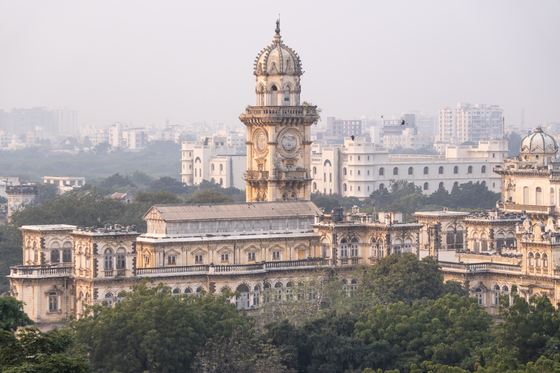
Jamnagar, once the princely capital of Nawanagar under the Jadeja rulers, sits on the southern Gulf of Kutch. Known as the 'Jewel of Kathiawar' and, for its many temples, as 'Chhoti Kashi', it pairs royal-era architecture — lake palaces, colonial squares and a solar observatory — with a large modern industrial belt. Nearby lie coral reefs and coastal wetlands rich in birdlife.

Jayanti (Jaintiapur)
Jayanti (Jaintiapur) in Jaintiapur, Bangladesh is one of the Shakti Peethas, the sacred shrines of the Divine Mother in the Shakta tradition of Hinduism. According to tradition, this is where the **left palm** of Goddess Sati fell when Lord Vishnu's Sudarshana Chakra divided her body. Here the Goddess is worshipped as **Jayanti**, and her guardian Bhairava (a form of Shiva) as **Kramadishwar**. Shakti Peethas are among the holiest pilgrimage sites for devotees of the Goddess, drawing pilgrims especially during Navratri and Durga Puja. Each is tied to the legend of Sati, whose body parts fell across the Indian subcontinent and beyond, sanctifying the ground where they landed.
Meghalaya
Jayanti (Nartiang Durga) Temple
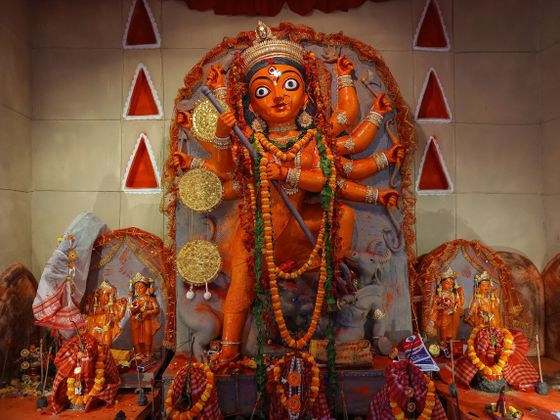
Jayanti (Nartiang Durga) Temple in Nartiang, Jaintia Hills, Meghalaya is one of the Shakti Peethas, the sacred shrines of the Divine Mother in the Shakta tradition of Hinduism. According to tradition, this is where the **left thigh** of Goddess Sati fell when Lord Vishnu's Sudarshana Chakra divided her body. Here the Goddess is worshipped as **Jayanti (Nartiang Durga)**, and her guardian Bhairava (a form of Shiva) as **Kramadishwar**. Shakti Peethas are among the holiest pilgrimage sites for devotees of the Goddess, drawing pilgrims especially during Navratri and Durga Puja. Each is tied to the legend of Sati, whose body parts fell across the Indian subcontinent and beyond, sanctifying the ground where they landed.
.jpg?width=560)
Jeshoreshwari Kali Temple
Jeshoreshwari Kali Temple in Ishwaripur, Satkhira, Bangladesh is one of the Shakti Peethas, the sacred shrines of the Divine Mother in the Shakta tradition of Hinduism. According to tradition, this is where the **palms and soles** of Goddess Sati fell when Lord Vishnu's Sudarshana Chakra divided her body. Here the Goddess is worshipped as **Jeshoreshwari**, and her guardian Bhairava (a form of Shiva) as **Chanda**. Shakti Peethas are among the holiest pilgrimage sites for devotees of the Goddess, drawing pilgrims especially during Navratri and Durga Puja. Each is tied to the legend of Sati, whose body parts fell across the Indian subcontinent and beyond, sanctifying the ground where they landed.

Telangana
Jogulamba Temple
Jogulamba Temple in Alampur, Telangana is one of the Shakti Peethas, the sacred shrines of the Divine Mother in the Shakta tradition of Hinduism. According to tradition, this is where the **upper teeth** of Goddess Sati fell when Lord Vishnu's Sudarshana Chakra divided her body. Here the Goddess is worshipped as **Jogulamba (Yogini)**, and her guardian Bhairava (a form of Shiva) as **Bala Brahmeshwar**. It is counted among the eighteen Ashtadasha Maha Shakti Peethas — the most revered of all the seats of the Goddess. Shakti Peethas are among the holiest pilgrimage sites for devotees of the Goddess, drawing pilgrims especially during Navratri and Durga Puja. Each is tied to the legend of Sati, whose body parts fell across the Indian subcontinent and beyond, sanctifying the ground where they landed.
Gujarat
Junagadh
Resting right at the base of the sacred, volcanic Girnar hills, Junagadh is an ancient city whose name means 'Old Fort'. It features a diverse mix of ancient Buddhist rock edicts, medieval fort structures, and flamboyant 19th-century royal mausoleums, capturing a unique historical footprint within Saurashtra.

Himachal Pradesh
Jwalamukhi (Jwala Ji) Temple
Jwalamukhi (Jwala Ji) Temple in Jwalamukhi, Kangra, Himachal Pradesh is one of the Shakti Peethas, the sacred shrines of the Divine Mother in the Shakta tradition of Hinduism. According to tradition, this is where the **tongue** of Goddess Sati fell when Lord Vishnu's Sudarshana Chakra divided her body. Here the Goddess is worshipped as **Siddhida (Ambika/Jwalamukhi)**, and her guardian Bhairava (a form of Shiva) as **Unmatta Bhairava**. It is counted among the eighteen Ashtadasha Maha Shakti Peethas — the most revered of all the seats of the Goddess. Shakti Peethas are among the holiest pilgrimage sites for devotees of the Goddess, drawing pilgrims especially during Navratri and Durga Puja. Each is tied to the legend of Sati, whose body parts fell across the Indian subcontinent and beyond, sanctifying the ground where they landed.

West Bengal
Kalighat Kali Temple
Kalighat Kali Temple in Kolkata, West Bengal is one of the Shakti Peethas, the sacred shrines of the Divine Mother in the Shakta tradition of Hinduism. According to tradition, this is where the **toes of the right foot** of Goddess Sati fell when Lord Vishnu's Sudarshana Chakra divided her body. Here the Goddess is worshipped as **Kalika**, and her guardian Bhairava (a form of Shiva) as **Nakuleshwar**. It is counted among the eighteen Ashtadasha Maha Shakti Peethas — the most revered of all the seats of the Goddess. Shakti Peethas are among the holiest pilgrimage sites for devotees of the Goddess, drawing pilgrims especially during Navratri and Durga Puja. Each is tied to the legend of Sati, whose body parts fell across the Indian subcontinent and beyond, sanctifying the ground where they landed.

Assam
Kamakhya Temple
Kamakhya Temple in Guwahati, Assam is one of the Shakti Peethas, the sacred shrines of the Divine Mother in the Shakta tradition of Hinduism. According to tradition, this is where the **yoni (womb)** of Goddess Sati fell when Lord Vishnu's Sudarshana Chakra divided her body. Here the Goddess is worshipped as **Kamakhya**, and her guardian Bhairava (a form of Shiva) as **Umananda**. It is counted among the eighteen Ashtadasha Maha Shakti Peethas — the most revered of all the seats of the Goddess. Shakti Peethas are among the holiest pilgrimage sites for devotees of the Goddess, drawing pilgrims especially during Navratri and Durga Puja. Each is tied to the legend of Sati, whose body parts fell across the Indian subcontinent and beyond, sanctifying the ground where they landed.

Tamil Nadu
Kamakshi Amman Temple
Kamakshi Amman Temple in Kanchipuram, Tamil Nadu is one of the Shakti Peethas, the sacred shrines of the Divine Mother in the Shakta tradition of Hinduism. According to tradition, this is where the **navel / back** of Goddess Sati fell when Lord Vishnu's Sudarshana Chakra divided her body. Here the Goddess is worshipped as **Devagarbha (Kamakshi)**, and her guardian Bhairava (a form of Shiva) as **Ruru**. It is counted among the eighteen Ashtadasha Maha Shakti Peethas — the most revered of all the seats of the Goddess. Shakti Peethas are among the holiest pilgrimage sites for devotees of the Goddess, drawing pilgrims especially during Navratri and Durga Puja. Each is tied to the legend of Sati, whose body parts fell across the Indian subcontinent and beyond, sanctifying the ground where they landed.
Tamil Nadu
Kanchipuram
Kanchipuram, the 'City of a Thousand Temples', is one of Hinduism's seven sacred Sapta Puri cities and a great centre of Dravidian temple architecture. Famed for the Kamakshi Amman, Ekambareswarar and Kailasanathar temples — and for its exquisite hand-woven Kanchipuram silk sarees.
.jpg?width=560)
West Bengal
Kankalitala Temple
Kankalitala Temple in Bolpur, Birbhum, West Bengal is one of the Shakti Peethas, the sacred shrines of the Divine Mother in the Shakta tradition of Hinduism. According to tradition, this is where the **pelvis (waist)** of Goddess Sati fell when Lord Vishnu's Sudarshana Chakra divided her body. Here the Goddess is worshipped as **Devgarbha**, and her guardian Bhairava (a form of Shiva) as **Ruru**. Shakti Peethas are among the holiest pilgrimage sites for devotees of the Goddess, drawing pilgrims especially during Navratri and Durga Puja. Each is tied to the legend of Sati, whose body parts fell across the Indian subcontinent and beyond, sanctifying the ground where they landed.
Uttar Pradesh
Katyayani (Uma Shakti) Temple
Katyayani (Uma Shakti) Temple in Vrindavan, Uttar Pradesh is one of the Shakti Peethas, the sacred shrines of the Divine Mother in the Shakta tradition of Hinduism. According to tradition, this is where the **ringlets of hair** of Goddess Sati fell when Lord Vishnu's Sudarshana Chakra divided her body. Here the Goddess is worshipped as **Uma (Katyayani)**, and her guardian Bhairava (a form of Shiva) as **Bhuteshwar**. Shakti Peethas are among the holiest pilgrimage sites for devotees of the Goddess, drawing pilgrims especially during Navratri and Durga Puja. Each is tied to the legend of Sati, whose body parts fell across the Indian subcontinent and beyond, sanctifying the ground where they landed.

Jammu & Kashmir
Kheer Bhawani (Tulmulla)
In a spring-fed pool at Tulmulla, shaded by great chinars, sits the marble shrine of Ragnya Devi — Kheer Bhawani, named for the rice-pudding offered to her. She is the beloved guardian goddess of the Kashmiri Pandits, and her spring is famous for changing colour, read for generations as an omen for the Valley. The annual mela on Jyeshtha Ashtami brings Pandit families home from across India in Kashmir's most poignant homecoming.

West Bengal
Kiriteswari Temple
Kiriteswari Temple in Murshidabad, West Bengal is one of the Shakti Peethas, the sacred shrines of the Divine Mother in the Shakta tradition of Hinduism. According to tradition, this is where the **crown (kirita)** of Goddess Sati fell when Lord Vishnu's Sudarshana Chakra divided her body. Here the Goddess is worshipped as **Vimala (Kiriteswari)**, and her guardian Bhairava (a form of Shiva) as **Sanvart**. Shakti Peethas are among the holiest pilgrimage sites for devotees of the Goddess, drawing pilgrims especially during Navratri and Durga Puja. Each is tied to the legend of Sati, whose body parts fell across the Indian subcontinent and beyond, sanctifying the ground where they landed.
Himachal Pradesh
Kullu
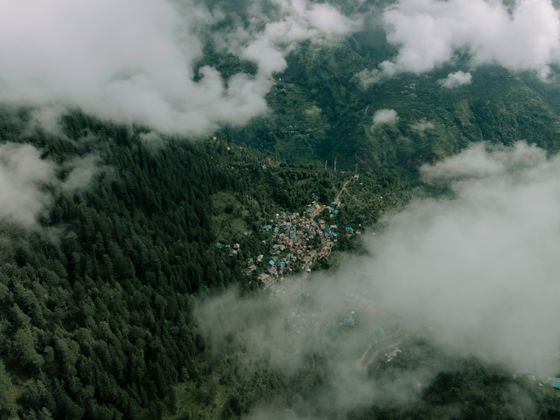
Kullu is the valley Manali sits at the top of, and the town itself is an administrative centre with a bus stand rather than a resort. Most people are through it in an hour. Two things are worth stopping for. Bijli Mahadev, on the ridge above, is an hour's climb from the road: a tall wooden staff there is said to draw lightning, and the lingam beneath it is broken by the strike and reset with butter. And the weaving — Kullu shawls carry a GI tag, and the co-operative showrooms on the highway sell at fixed prices, which the roadside stalls do not. The one time Kullu itself is the destination is Dussehra in October. It starts on the day the rest of India's ends, runs about a week, and brings the village deities down into the maidan on palanquins. Rafting on the Beas runs from Pirdi, roughly March to June and again once the monsoon has passed.

Tamil Nadu
Kumari Amman Temple
Kumari Amman Temple in Kanyakumari, Tamil Nadu is one of the Shakti Peethas, the sacred shrines of the Divine Mother in the Shakta tradition of Hinduism. According to tradition, this is where the **back** of Goddess Sati fell when Lord Vishnu's Sudarshana Chakra divided her body. Here the Goddess is worshipped as **Sarvani (Kanyakumari)**, and her guardian Bhairava (a form of Shiva) as **Nimish**. Shakti Peethas are among the holiest pilgrimage sites for devotees of the Goddess, drawing pilgrims especially during Navratri and Durga Puja. Each is tied to the legend of Sati, whose body parts fell across the Indian subcontinent and beyond, sanctifying the ground where they landed.

Haryana
Kurukshetra (Brahma Sarovar)
Kurukshetra is the battlefield of the Mahabharata and the ground where the Bhagavad Gita was spoken. Its heart is the vast Brahma Sarovar, one of India's largest sacred tanks, ringed by ghats and shrines where lakhs bathe during solar eclipses. Nearby lie Jyotisar, the banyan under which Krishna is said to have counselled Arjuna, the Sannihit Sarovar, and the modern Sri Krishna and panorama museums that retell the epic.

Uttar Pradesh
Kushinagar
Kushinagar is the sacred site where the Buddha attained Mahaparinirvana (final liberation) and was cremated. The reclining Buddha statue in the Mahaparinirvana Temple and the Ramabhar Stupa marking his cremation make it the poignant final stop of his life's journey.
Lake Mansarovar
Lake Mansarovar, at 4,590 metres one of the highest freshwater lakes in the world, lies at the foot of Mount Kailash on the Tibetan plateau. Its turquoise water is deeply sacred to Hindus, Buddhists and Jains, and pilgrims bathe in and circumambulate the lake as part of the Kailash yatra.

Andhra Pradesh
Lepakshi
Lepakshi, in Andhra Pradesh's Sri Sathya Sai district, is known for the 16th-century Veerabhadra Temple, a masterpiece of Vijayanagara architecture. It is famed for its intricately carved pillars, vivid ceiling frescoes, a giant monolithic Nandi bull nearby and the mysterious hanging pillar that barely touches the ground.

Madhya Pradesh
Maa Sharda Mandir (Maihar)
Maa Sharda Mandir (Maihar) in Maihar, Madhya Pradesh is one of the Shakti Peethas, the sacred shrines of the Divine Mother in the Shakta tradition of Hinduism. According to tradition, this is where the **necklace** of Goddess Sati fell when Lord Vishnu's Sudarshana Chakra divided her body. Here the Goddess is worshipped as **Sharada (Shivani)**, and her guardian Bhairava (a form of Shiva) as **Chanda Bhairava**. Shakti Peethas are among the holiest pilgrimage sites for devotees of the Goddess, drawing pilgrims especially during Navratri and Durga Puja. Each is tied to the legend of Sati, whose body parts fell across the Indian subcontinent and beyond, sanctifying the ground where they landed.
Tamil Nadu
Madurai (Meenakshi Amman Temple)
The Meenakshi Amman Temple is a historic Dravidian temple complex located in the heart of Madurai, an ancient city on the banks of the Vaigai River. Dedicated to Goddess Meenakshi, a powerful form of Parvati, and her consort Sundareswarar, a form of Shiva, the complex stands as a supreme architectural masterpiece of South Indian civilization. The complex is enclosed by massive high stone walls and dominated by 14 towering gateway towers, or gopurams, completely carpeted with thousands of brightly painted stone sculptures of deities, demons, and celestial beings. Inside, the temple features grand columned assembly halls, including the legendary Hall of a Thousand Pillars, and a sacred golden lotus pond that serves as a ritual center for millions of annual devotees.
.jpg?width=560)
Gujarat
Mahakali Temple (Pavagadh)
Mahakali Temple (Pavagadh) in Pavagadh, Panchmahal, Gujarat is one of the Shakti Peethas, the sacred shrines of the Divine Mother in the Shakta tradition of Hinduism. According to tradition, this is where the **right toe** of Goddess Sati fell when Lord Vishnu's Sudarshana Chakra divided her body. Here the Goddess is worshipped as **Mahakali**, and her guardian Bhairava (a form of Shiva) as **Batuk Bhairava**. Shakti Peethas are among the holiest pilgrimage sites for devotees of the Goddess, drawing pilgrims especially during Navratri and Durga Puja. Each is tied to the legend of Sati, whose body parts fell across the Indian subcontinent and beyond, sanctifying the ground where they landed.
Maharashtra
Mahalakshmi (Ambabai) Temple
Mahalakshmi (Ambabai) Temple in Kolhapur, Maharashtra is one of the Shakti Peethas, the sacred shrines of the Divine Mother in the Shakta tradition of Hinduism. According to tradition, this is where the **eyes** of Goddess Sati fell when Lord Vishnu's Sudarshana Chakra divided her body. Here the Goddess is worshipped as **Mahalakshmi**, and her guardian Bhairava (a form of Shiva) as **Krodhish**. It is counted among the eighteen Ashtadasha Maha Shakti Peethas — the most revered of all the seats of the Goddess. Shakti Peethas are among the holiest pilgrimage sites for devotees of the Goddess, drawing pilgrims especially during Navratri and Durga Puja. Each is tied to the legend of Sati, whose body parts fell across the Indian subcontinent and beyond, sanctifying the ground where they landed.
Mahalakshmi (Sri Shail) Temple
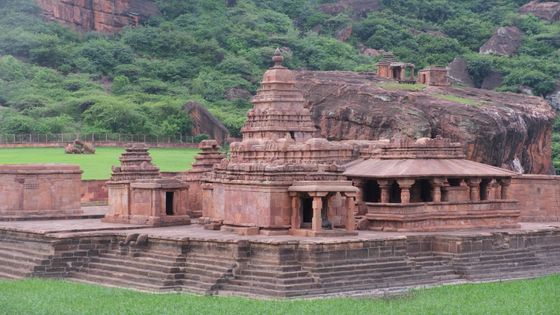
Mahalakshmi (Sri Shail) Temple in Gotatikar, Sylhet, Bangladesh is one of the Shakti Peethas, the sacred shrines of the Divine Mother in the Shakta tradition of Hinduism. According to tradition, this is where the **neck** of Goddess Sati fell when Lord Vishnu's Sudarshana Chakra divided her body. Here the Goddess is worshipped as **Mahalakshmi**, and her guardian Bhairava (a form of Shiva) as **Sambaranand**. Shakti Peethas are among the holiest pilgrimage sites for devotees of the Goddess, drawing pilgrims especially during Navratri and Durga Puja. Each is tied to the legend of Sati, whose body parts fell across the Indian subcontinent and beyond, sanctifying the ground where they landed.

Kerala
Malayattoor
Malayattoor, a hilltop church near Kochi dedicated to St. Thomas the Apostle, draws one of the largest Christian pilgrimages in India and the only one in Asia declared an International Shrine by the Vatican. Pilgrims climb the forested hill, especially during the Lenten season, to reach the shrine said to be linked to St. Thomas.

Bihar
Mangala Gauri Temple
Mangala Gauri Temple in Gaya, Bihar is one of the Shakti Peethas, the sacred shrines of the Divine Mother in the Shakta tradition of Hinduism. According to tradition, this is where the **breast** of Goddess Sati fell when Lord Vishnu's Sudarshana Chakra divided her body. Here the Goddess is worshipped as **Sarvamangala (Mangala Gauri)**, and her guardian Bhairava (a form of Shiva) as **Sarvananda**. It is counted among the eighteen Ashtadasha Maha Shakti Peethas — the most revered of all the seats of the Goddess. Shakti Peethas are among the holiest pilgrimage sites for devotees of the Goddess, drawing pilgrims especially during Navratri and Durga Puja. Each is tied to the legend of Sati, whose body parts fell across the Indian subcontinent and beyond, sanctifying the ground where they landed.

Goa
Mangeshi Temple
Shri Manguesh at Priol is the largest and most famous temple in Goa, home of Mangesh — a form of Shiva worshipped by generations of Goud Saraswat Brahmins, including the family of Lata Mangeshkar, who took their name from the deity. Its white seven-storey lamp tower is a Goan icon, rising from a compound of tiled courtyards, a temple tank and agrashalas, the whole ensemble in that unmistakable Goan temple style born of exile from the coastal talukas.

Rajasthan
Manibandh (Gayatri Temple)
Manibandh (Gayatri Temple) in Pushkar, Rajasthan is one of the Shakti Peethas, the sacred shrines of the Divine Mother in the Shakta tradition of Hinduism. According to tradition, this is where the **wrists** of Goddess Sati fell when Lord Vishnu's Sudarshana Chakra divided her body. Here the Goddess is worshipped as **Gayatri**, and her guardian Bhairava (a form of Shiva) as **Sarvananda**. Shakti Peethas are among the holiest pilgrimage sites for devotees of the Goddess, drawing pilgrims especially during Navratri and Durga Puja. Each is tied to the legend of Sati, whose body parts fell across the Indian subcontinent and beyond, sanctifying the ground where they landed.

Andhra Pradesh
Manikyamba (Bhimeswara) Temple
Manikyamba (Bhimeswara) Temple in Draksharamam, Kakinada, Andhra Pradesh is one of the Shakti Peethas, the sacred shrines of the Divine Mother in the Shakta tradition of Hinduism. According to tradition, this is where the **left cheek** of Goddess Sati fell when Lord Vishnu's Sudarshana Chakra divided her body. Here the Goddess is worshipped as **Manikyamba**, and her guardian Bhairava (a form of Shiva) as **Bhimeshwar**. It is counted among the eighteen Ashtadasha Maha Shakti Peethas — the most revered of all the seats of the Goddess. Shakti Peethas are among the holiest pilgrimage sites for devotees of the Goddess, drawing pilgrims especially during Navratri and Durga Puja. Each is tied to the legend of Sati, whose body parts fell across the Indian subcontinent and beyond, sanctifying the ground where they landed.
.jpg?width=560)
Uttar Pradesh
Mathura & Vrindavan
Mathura, the birthplace of Lord Krishna, and neighbouring Vrindavan, where he spent his childhood, form the heart of the Braj pilgrimage region — a land of thousands of temples, devotional music and the most exuberant Holi celebrations in India.
_1.jpg?width=560)
Telangana
Mecca Masjid (Hyderabad)
The Mecca Masjid in Hyderabad is one of the oldest and largest mosques in India, begun in the 16th century by the Qutb Shahi rulers. Named for bricks said to be brought from Mecca, its vast prayer hall sits beside the Charminar at the heart of the old city.

Gujarat
Mehsana
Mehsana is a busy city in northern Gujarat, known for the Dudhsagar dairy — one of India's largest cooperative dairies — and for its oil and gas fields. For travellers it is most useful as a base for the Solanki-era Sun Temple at Modhera and the Bahucharaji Shakti Peeth temple nearby.

Mount Kailash
Mount Kailash, a 6,638-metre peak in the remote Tibetan plateau, is among the most sacred mountains on earth — revered by Hindus as the abode of Lord Shiva, by Buddhists, Jains and the Bon faith alike. Pilgrims undertake the arduous 52-km kora (circumambulation) around its base; the peak itself is never climbed.

Himachal Pradesh
Naina Devi Temple
Naina Devi Temple in Bilaspur, Himachal Pradesh is one of the Shakti Peethas, the sacred shrines of the Divine Mother in the Shakta tradition of Hinduism. According to tradition, this is where the **eyes** of Goddess Sati fell when Lord Vishnu's Sudarshana Chakra divided her body. Here the Goddess is worshipped as **Mahishamardini**, and her guardian Bhairava (a form of Shiva) as **Krodhish**. Shakti Peethas are among the holiest pilgrimage sites for devotees of the Goddess, drawing pilgrims especially during Navratri and Durga Puja. Each is tied to the legend of Sati, whose body parts fell across the Indian subcontinent and beyond, sanctifying the ground where they landed.
West Bengal
Nalhateshwari Temple
Nalhateshwari Temple in Nalhati, Birbhum, West Bengal is one of the Shakti Peethas, the sacred shrines of the Divine Mother in the Shakta tradition of Hinduism. According to tradition, this is where the **throat (nala)** of Goddess Sati fell when Lord Vishnu's Sudarshana Chakra divided her body. Here the Goddess is worshipped as **Kalika (Nalateshwari)**, and her guardian Bhairava (a form of Shiva) as **Yogesh**. Shakti Peethas are among the holiest pilgrimage sites for devotees of the Goddess, drawing pilgrims especially during Navratri and Durga Puja. Each is tied to the legend of Sati, whose body parts fell across the Indian subcontinent and beyond, sanctifying the ground where they landed.
Maharashtra
Nanded (Hazur Sahib)
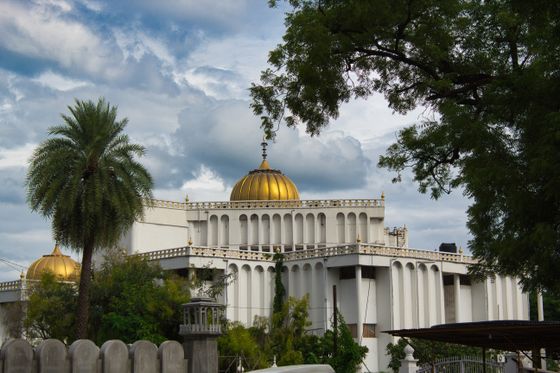
Takht Sri Hazur Sahib at Nanded is one of the five Takhts (seats of temporal authority) of Sikhism, marking the place where Guru Gobind Singh, the tenth Guru, passed away and declared the Guru Granth Sahib the eternal Guru. Its golden-domed gurdwara on the Godavari draws Sikh pilgrims from across the world.

Tamil Nadu
Narayani Temple (Suchindram)
Narayani Temple (Suchindram) in Suchindram, Tamil Nadu is one of the Shakti Peethas, the sacred shrines of the Divine Mother in the Shakta tradition of Hinduism. According to tradition, this is where the **upper teeth** of Goddess Sati fell when Lord Vishnu's Sudarshana Chakra divided her body. Here the Goddess is worshipped as **Narayani**, and her guardian Bhairava (a form of Shiva) as **Sanhar**. Shakti Peethas are among the holiest pilgrimage sites for devotees of the Goddess, drawing pilgrims especially during Navratri and Durga Puja. Each is tied to the legend of Sati, whose body parts fell across the Indian subcontinent and beyond, sanctifying the ground where they landed.
Madhya Pradesh
Narmada (Shondesh) Temple
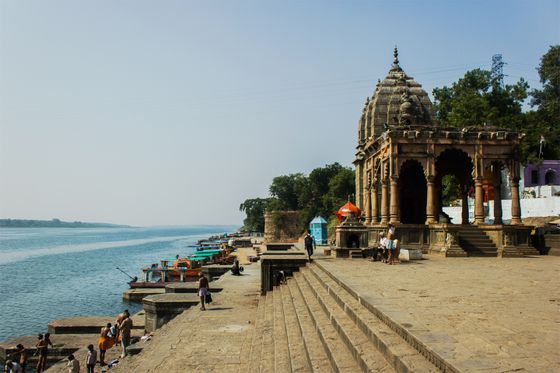
Narmada (Shondesh) Temple in Amarkantak, Madhya Pradesh is one of the Shakti Peethas, the sacred shrines of the Divine Mother in the Shakta tradition of Hinduism. According to tradition, this is where the **right buttock** of Goddess Sati fell when Lord Vishnu's Sudarshana Chakra divided her body. Here the Goddess is worshipped as **Narmada (Shondesh)**, and her guardian Bhairava (a form of Shiva) as **Bhadrasena**. Shakti Peethas are among the holiest pilgrimage sites for devotees of the Goddess, drawing pilgrims especially during Navratri and Durga Puja. Each is tied to the legend of Sati, whose body parts fell across the Indian subcontinent and beyond, sanctifying the ground where they landed.

Rajasthan
Nathdwara (Shrinathji)
Nathdwara, on the banks of the Banas river in Rajasthan, is the principal Pushtimarg pilgrimage town in India, home to the revered Shrinathji Temple. The deity, a form of Krishna as a seven-year-old lifting Mount Govardhan, was brought here from the Mathura region in the 17th century, and the town is also famed for its pichwai devotional paintings.

Delhi
Nizamuddin Dargah (Delhi)
The Hazrat Nizamuddin Dargah is the shrine of the great Sufi saint Nizamuddin Auliya, one of Delhi's most atmospheric spiritual sites. Famous for its Thursday-evening qawwali sessions in a centuries-old tradition, the dargah complex also holds the tomb of the poet Amir Khusrau.

Goa
Old Goa Churches (Velha Goa)
The churches and convents of Old Goa, a UNESCO World Heritage Site, form the greatest ensemble of Christian heritage in India. The Basilica of Bom Jesus enshrines the relics of St. Francis Xavier, drawing Catholic pilgrims worldwide, while the Se Cathedral is one of Asia's largest churches.

Madhya Pradesh
Omkareshwar
Omkareshwar is one of the twelve jyotirlingas, set on an island in the Narmada shaped — pilgrims will show you — like the sacred syllable Om. The Omkareshwar temple's tiered shikhara rises above the ghats on Mandhata island, reached by boat or the arched footbridges, and a parikrama path circles the island past shrines, sadhus and river views. On the far bank stands Mamleshwar, its partner jyotirlinga shrine, completing the darshan.

Kerala
Padmanabhaswamy Temple (Thiruvananthapuram)
Sree Padmanabhaswamy Temple in Thiruvananthapuram is a Vaishnava shrine where Lord Vishnu reclines on the serpent Anantha in the Anantha-shayanam posture. Blending Kerala and Dravidian styles with a towering seven-tier gopuram, it became world-famous when vast treasures were documented in its vaults, ranking it among the wealthiest temples on earth.

Tamil Nadu
Palani Murugan Temple
Palani's Dhandayuthapani Swamy — Murugan as the renunciate boy with staff and loincloth — watches from his hill shrine over one of Tamil Nadu's greatest pilgrimages. This is where the child god, losing the contest for the fruit of wisdom, stormed off declaring 'You yourself are the fruit' (Pazham Nee), and where the idol, by tradition, was shaped by siddha Bogar from nine poisonous minerals. Pilgrims climb the 690 steps, ride the winch trains, or carry kavadis in their lakhs at Thaipusam.

Gujarat
Palitana (Shatrunjaya)
Palitana, in Gujarat's Saurashtra, is one of Jainism's most sacred sites — the Shatrunjaya hill is crowned by an astonishing cluster of over 800 intricately carved marble temples. Pilgrims climb roughly 3,800 steps to reach the summit, where the temple-city gleams in white marble. No one, not even priests, may stay overnight on the sacred hill.

Maharashtra
Pandharpur
Pandharpur on the Chandrabhaga (Bhima) river is the spiritual heart of Maharashtra — home of Vitthal, the brick-standing form of Krishna, and his consort Rakhumai. For 800 years the Varkari saints, from Dnyaneshwar to Tukaram, have sung their way here; every Ashadhi Ekadashi, palkhis bearing the saints' padukas converge on foot from across the state in the wari, a river of dindis a million strong chanting 'Vitthal Vitthal' to the doors of the dark, smiling god.
%2CArunachal_Pradesh.jpg?width=560)
Arunachal Pradesh
Parshuram Kund
Parshuram Kund, on the Lohit river where it leaves the hills, is Arunachal's holiest Hindu site — the pool where, by legend, sage Parshuram washed away the sin of matricide and the axe fell from his hand. Every Makar Sankranti (mid-January), tens of thousands of pilgrims from Assam and beyond descend to the boulder-strewn river for a freezing holy dip, turning the remote gorge into a great mela. The rest of the year it is a quiet, mountain-ringed bend of jade water.
Bihar
Patna
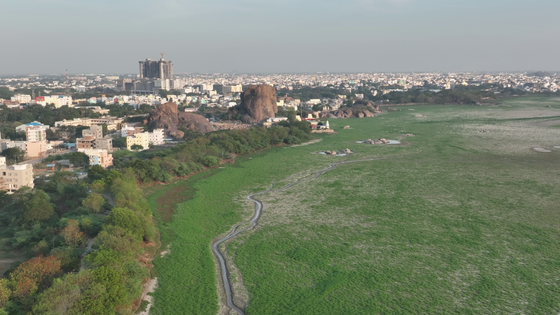
Patna, the ancient city of Pataliputra, was the capital of the mighty Maurya and Gupta empires and is one of the world's oldest continuously inhabited cities. Today it is a key gateway to Bihar's Buddhist circuit and a major Sikh pilgrimage site as the birthplace of Guru Gobind Singh.
Bihar
Patneshwari (Maa Patan Devi)
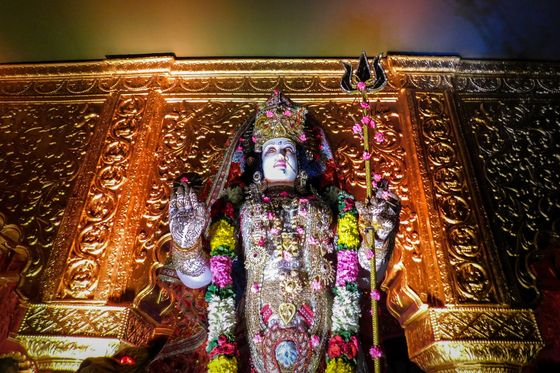
Patneshwari (Maa Patan Devi) in Patna, Bihar is one of the Shakti Peethas, the sacred shrines of the Divine Mother in the Shakta tradition of Hinduism. According to tradition, this is where the **right thigh** of Goddess Sati fell when Lord Vishnu's Sudarshana Chakra divided her body. Here the Goddess is worshipped as **Sarvanandakari (Patneshwari)**, and her guardian Bhairava (a form of Shiva) as **Vyapaksha**. Shakti Peethas are among the holiest pilgrimage sites for devotees of the Goddess, drawing pilgrims especially during Navratri and Durga Puja. Each is tied to the legend of Sati, whose body parts fell across the Indian subcontinent and beyond, sanctifying the ground where they landed.
Gujarat
Porbandar
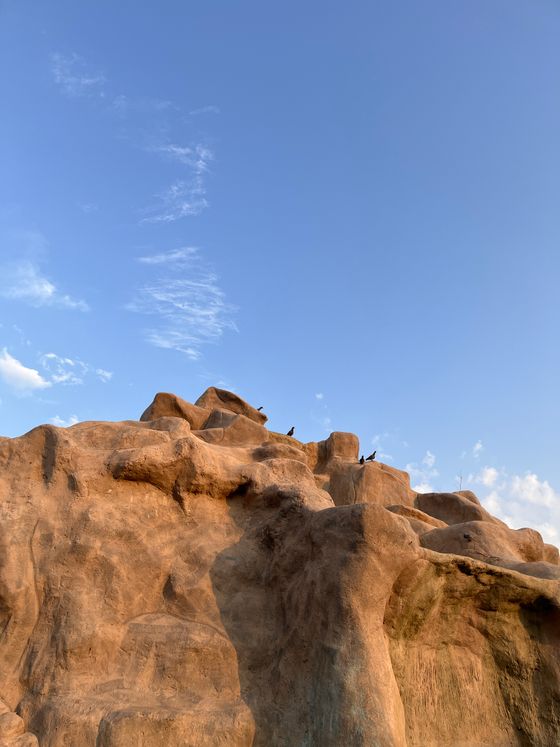
Porbandar is a coastal town on the Saurashtra shore of the Arabian Sea, remembered in tradition as the birthplace of Sudama, Krishna's childhood friend, and in modern history as the birthplace of Mahatma Gandhi. Its old quarter has distinctive limestone architecture, and the coastal wetlands nearby draw large numbers of migratory birds.
Uttar Pradesh
Prayagraj (Allahabad)
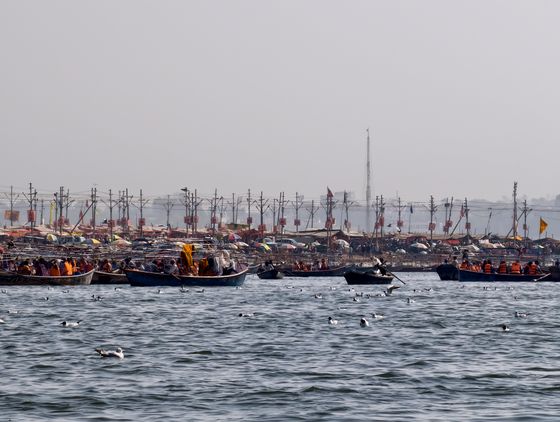
Prayagraj, formerly Allahabad, sits at the Triveni Sangam — the sacred confluence of the Ganga, Yamuna and the mythical Saraswati. It hosts the world's largest gathering, the Kumbh/Magh Mela, and blends pilgrimage with colonial and freedom-struggle heritage.

Odisha
Puri (Jagannath Temple & Beach)
Puri is an ancient holy city on the Bay of Bengal coast in Odisha, serving as one of the four primary sacred nodes in the traditional Char Dham pilgrimage circuit. The spiritual and civilizational identity of the metropolis revolves entirely around the monumental, 12th-century Shree Jagannath Temple, housing the unique wooden manifestations of Lord Jagannath, Balabhadra, and Goddess Subhadra. The city's layout presents a dynamic transition from the deep devotional crowd corridors of the Grand Road to the wide, sandy shores of Puri Beach. Puri operates on a continuous pulse governed by ancient temple rituals, transforming into a massive global phenomenon during mid-summer when it hosts the historic Rath Yatra chariot festival.

Andhra Pradesh
Puruhutika (Kukkuteswara) Temple
Puruhutika (Kukkuteswara) Temple in Pithapuram, Andhra Pradesh is one of the Shakti Peethas, the sacred shrines of the Divine Mother in the Shakta tradition of Hinduism. According to tradition, this is where the **back / hip** of Goddess Sati fell when Lord Vishnu's Sudarshana Chakra divided her body. Here the Goddess is worshipped as **Puruhutika**, and her guardian Bhairava (a form of Shiva) as **Durvaseshwar**. It is counted among the eighteen Ashtadasha Maha Shakti Peethas — the most revered of all the seats of the Goddess. Shakti Peethas are among the holiest pilgrimage sites for devotees of the Goddess, drawing pilgrims especially during Navratri and Durga Puja. Each is tied to the legend of Sati, whose body parts fell across the Indian subcontinent and beyond, sanctifying the ground where they landed.

Rajasthan
Pushkar
Pushkar is an ancient, sacred pilgrimage town curled peacefully around the perimeters of the natural, sacred Pushkar Lake. Flanked by the rugged hills of the Aravalli range near Ajmer, it ranks as one of the oldest living cities in India and a paramount spiritual core for Hindu theology. The town's unique identity is tied to hosting the rare 14th-century Jagatpita Brahma Mandir, one of the few temples dedicated to the Hindu Creator God. The landscape features 52 historic stone bathing ghats that step directly down into the clear waters, where pilgrims perform ritual cleansing dips among continuous chanting. The town transitions from a spiritual enclave into a massive cultural phenomenon during late autumn, when its outer desert fields host the world-famous Pushkar Camel Fair, attracting global communities.

Bihar
Rajgir
Rajgir, set in a valley ringed by hills, was an ancient capital and a major site in both Buddhism and Jainism. The Buddha meditated and taught here; today its hot springs, the Vishwa Shanti Stupa reached by ropeway, and Griddhakuta hill draw pilgrims and travellers.

Jharkhand
Rajrappa (Chhinnamastika Temple)
At Rajrappa the Damodar and Bhairavi rivers meet below a red-washed shrine of Chhinnamastika — the self-decapitated Tantric goddess who feeds her attendants from her own severed head, an image of fearless self-sacrifice. One of India's most important Tantric peeths, the temple hums with drummers, sacrifices and river-bathing pilgrims, while the waterfall confluence below gives the place a wild, elemental setting.
Tamil Nadu
Rameshwaram (Ramanathaswamy Temple)
Rameshwaram sits at the very tip of a slender island connected to the Tamil Nadu mainland by the Pamban Bridge, looking out across the Palk Strait toward Sri Lanka. At its heart is the Ramanathaswamy Temple, famous for the longest corridor of any temple in India — a nearly 1,200-metre passage of sculpted pillars that seems to stretch to the horizon. As one of the twelve Jyotirlingas and one of the four Char Dham, it draws pilgrims from every corner of the country, many of whom arrive after Varanasi, believing a visit to Rameshwaram completes the pilgrimage circuit.

Rajasthan
Ranakpur Jain Temple
The Ranakpur Jain Temple, set in a quiet Aravalli valley, is a 15th-century marble masterpiece dedicated to Adinath, the first Tirthankara. Famed for its forest of 1,444 individually carved marble pillars — no two alike — it stands with Dilwara as the finest marble carving in Rajasthan.

Maharashtra
Renuka Devi Temple (Mahur)
Renuka Devi Temple (Mahur) in Mahur, Nanded, Maharashtra is one of the Shakti Peethas, the sacred shrines of the Divine Mother in the Shakta tradition of Hinduism. According to tradition, this is where the **right hand** of Goddess Sati fell when Lord Vishnu's Sudarshana Chakra divided her body. Here the Goddess is worshipped as **Renuka (Mahishmardini)**. Shakti Peethas are among the holiest pilgrimage sites for devotees of the Goddess, drawing pilgrims especially during Navratri and Durga Puja. Each is tied to the legend of Sati, whose body parts fell across the Indian subcontinent and beyond, sanctifying the ground where they landed.

Sikkim
Rumtek Monastery
Rumtek is the largest monastery in Sikkim and the seat-in-exile of the Karmapa, head of the Karma Kagyu (Black Hat) lineage. Rebuilt in the 1960s by the 16th Karmapa as a faithful copy of Tibet's Tsurphu monastery, it holds the Golden Stupa with his relics, a monastic college, and treasures of the lineage. Ritual dances, deep-horn ensembles and the view back across the valley to Gangtok make it the centrepiece of any Sikkim circuit.

Kerala
Sabarimala
Sabarimala, set deep in the Western Ghats forests of Kerala, is one of the largest pilgrimage sites in the world, dedicated to Lord Ayyappa. Devotees observe a 41-day vratham and trek through the hills to reach the hilltop shrine, especially during the Makaravilakku season.

Maharashtra
Saptashrungi Temple
Saptashrungi Temple in Nashik (Vani), Maharashtra is one of the Shakti Peethas, the sacred shrines of the Divine Mother in the Shakta tradition of Hinduism. According to tradition, this is where the **chin** of Goddess Sati fell when Lord Vishnu's Sudarshana Chakra divided her body. Here the Goddess is worshipped as **Bhadrakali (Saptashrungi)**, and her guardian Bhairava (a form of Shiva) as **Vikritaksha**. Shakti Peethas are among the holiest pilgrimage sites for devotees of the Goddess, drawing pilgrims especially during Navratri and Durga Puja. Each is tied to the legend of Sati, whose body parts fell across the Indian subcontinent and beyond, sanctifying the ground where they landed.
.jpg?width=560)
Uttar Pradesh
Sarnath
Sarnath, near Varanasi, is where the Buddha delivered his first sermon after enlightenment, setting in motion the wheel of dharma. The towering Dhamek Stupa, ancient monastery ruins and an excellent archaeological museum make it a cornerstone of the Buddhist circuit.

Gujarat
Shamlaji
Shamlaji is a temple town in the Aravalli foothills of north-eastern Gujarat, on the banks of the Meshwo River near the Rajasthan border. It centres on the 11th-century Shamlaji Temple, a Vaishnavite shrine to Vishnu, and draws both tribal and other Hindu pilgrims — especially during its large annual fair.
Shankari Devi (Koneswaram)
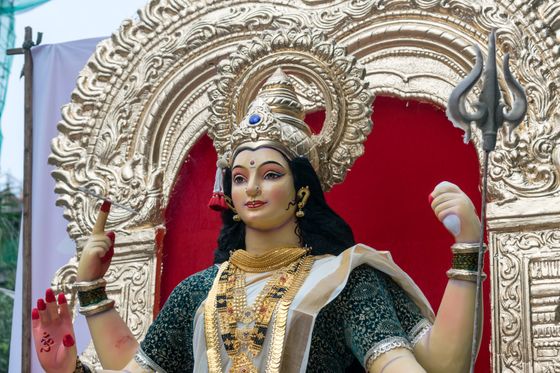
Shankari Devi (Koneswaram) in Trincomalee, Sri Lanka is one of the Shakti Peethas, the sacred shrines of the Divine Mother in the Shakta tradition of Hinduism. According to tradition, this is where the **groin (anklets)** of Goddess Sati fell when Lord Vishnu's Sudarshana Chakra divided her body. Here the Goddess is worshipped as **Shankari (Indrakshi)**, and her guardian Bhairava (a form of Shiva) as **Trikoneshwar**. It is counted among the eighteen Ashtadasha Maha Shakti Peethas — the most revered of all the seats of the Goddess. Shakti Peethas are among the holiest pilgrimage sites for devotees of the Goddess, drawing pilgrims especially during Navratri and Durga Puja. Each is tied to the legend of Sati, whose body parts fell across the Indian subcontinent and beyond, sanctifying the ground where they landed.
.jpg?width=560)
Goa
Shantadurga Temple
Shantadurga, at the foot of the Ponda hills, is the most visited of Goa's Hindu temples — dedicated to the goddess who mediated peace between Shiva and Vishnu, worshipped here in her calm (shanta) form. The temple's Indo-Portuguese architecture is unique to Goa: a pyramidal roof, a white six-storey deepastambha (lamp tower), Roman-arched windows and chandeliered halls, all in deep maroon and cream, rebuilt in the 1730s under Maratha patronage after the original shrine fled the Inquisition.

Gujarat
Shatrunjaya Hill
Shatrunjaya Hill, near Palitana town in the Bhavnagar district, is a world-famous sacred mountain rising above the Shatrunjaya River. It stands as a unique structural wonder, being the world's only mountain holding a fortified complex of more than 860 carved marble temples built over a millennium. Considered an entirely holy landscape by the Jain community, no vehicles are permitted past the base database, requiring pilgrims and travelers to scale approximately 3,500 stone steps to reach the mountaintop complex.

Jharkhand
Shikharji (Parasnath)
Shikharji, atop Parasnath Hill — Jharkhand's highest peak — is the holiest pilgrimage site in Jainism, where twenty of the twenty-four Tirthankaras are believed to have attained moksha. Devout pilgrims undertake a demanding ~27-km barefoot trek across the forested ridge, visiting shrines (tonks) marking each liberation.

Maharashtra
Shirdi
Shirdi is one of India's most visited pilgrimage towns, the home of the revered saint Sai Baba, who preached love, tolerance and the unity of all faiths. The Samadhi Mandir enshrining his tomb draws tens of millions of devotees of every religion each year.
Shivaharkaray (Karavipur)
Shivaharkaray (Karavipur) in Karachi (Parkai), Pakistan is one of the Shakti Peethas, the sacred shrines of the Divine Mother in the Shakta tradition of Hinduism. According to tradition, this is where the **third eye (both eyes)** of Goddess Sati fell when Lord Vishnu's Sudarshana Chakra divided her body. Here the Goddess is worshipped as **Mahishmardini**, and her guardian Bhairava (a form of Shiva) as **Krodhish**. Shakti Peethas are among the holiest pilgrimage sites for devotees of the Goddess, drawing pilgrims especially during Navratri and Durga Puja. Each is tied to the legend of Sati, whose body parts fell across the Indian subcontinent and beyond, sanctifying the ground where they landed.

Karnataka
Shravanabelagola
Shravanabelagola is among the most important Jain pilgrimage centres, dominated by the colossal 17-metre monolithic statue of Lord Bahubali (Gomateshwara) atop Vindhyagiri hill — one of the world's tallest free-standing statues. Every twelve years it is the site of the Mahamastakabhisheka, when the statue is anointed from a scaffold built over its head.

Maharashtra
Siddhivinayak Temple (Mumbai)
Shree Siddhivinayak is Mumbai's most beloved Ganesha temple, built in 1801 and today one of the richest and most-visited shrines in India. Its inner sanctum enshrines a black-stone idol of Lord Ganesha whose trunk curves to the right, a rare and especially auspicious form that draws millions of devotees, film stars and cricketers alike.

Gujarat
Somnath
Somnath is an ancient coastal spiritual town known for the legendary Somnath Temple, revered as the very first among the twelve sacred Jyotirlinga shrines of Lord Shiva. Rebuilt meticulously several times across history following various destruction eras, the shore temple stands as an eternal beacon of resilience directly over the crashing waves of the Arabian Sea.

Andhra Pradesh
Srikalahasti
Srikalahasti, near Tirupati, is one of the Pancha Bhoota Sthalams of Lord Shiva, representing the element of wind (Vayu). Its ancient Dravidian temple is famed for the Rahu-Ketu rituals and a lamp that flickers in a windless inner sanctum.
.jpg?width=560)
Karnataka
Sringeri Sharada Peetham
Sringeri, folded into the Western Ghats on the Tunga river, is the first and foremost of the four peethams founded by Adi Shankaracharya in the 8th century — chosen, says tradition, when he saw a cobra shading a frog in labour from the sun. The Vidyashankara temple's zodiac-pillared hall and the golden Sharadamba shrine anchor a living centre of Vedic learning, while thousands of fish swarm the ghats where pilgrims feed them as the goddess's own.
Tamil Nadu
Srirangam (Ranganathaswamy Temple)
Srirangam is a temple town on an island between the Kaveri and Kollidam rivers near Tiruchirappalli. It is built around the Sri Ranganathaswamy Temple, one of the largest functioning Hindu temple complexes in the world, laid out as seven concentric walled enclosures (prakarams). The complex has 21 carved gopuram gateways, crowned by the towering Rajagopuram — among the tallest temple towers in Asia. At its centre, the inner sanctum holds the reclining form of Lord Ranganatha, a form of Vishnu, resting on the serpent Adisesha.

Andhra Pradesh
Srisailam (Mallikarjuna Jyotirlinga)
Srisailam, set amid the forested Nallamala Hills above the Krishna River, is home to the Bhramaramba Mallikarjuna Temple, a rare site that is at once one of the twelve Jyotirlingas of Shiva (as Mallikarjuna) and one of the Shakti Peethas (as Bhramaramba Devi). This dual sanctity makes it one of southern India's most powerful pilgrimage destinations.

Sugandha (Shikarpur)
Sugandha (Shikarpur) in Shikarpur, Gournadi, Barisal, Bangladesh is one of the Shakti Peethas, the sacred shrines of the Divine Mother in the Shakta tradition of Hinduism. According to tradition, this is where the **nose** of Goddess Sati fell when Lord Vishnu's Sudarshana Chakra divided her body. Here the Goddess is worshipped as **Sugandha**, and her guardian Bhairava (a form of Shiva) as **Trayambaka**. Shakti Peethas are among the holiest pilgrimage sites for devotees of the Goddess, drawing pilgrims especially during Navratri and Durga Puja. Each is tied to the legend of Sati, whose body parts fell across the Indian subcontinent and beyond, sanctifying the ground where they landed.

Odisha
Tara Tarini Temple
Tara Tarini Temple in Purushottampur, Ganjam, Odisha is one of the Shakti Peethas, the sacred shrines of the Divine Mother in the Shakta tradition of Hinduism. According to tradition, this is where the **breasts** of Goddess Sati fell when Lord Vishnu's Sudarshana Chakra divided her body. Here the Goddess is worshipped as **Tara Tarini**. Shakti Peethas are among the holiest pilgrimage sites for devotees of the Goddess, drawing pilgrims especially during Navratri and Durga Puja. Each is tied to the legend of Sati, whose body parts fell across the Indian subcontinent and beyond, sanctifying the ground where they landed.

West Bengal
Tarapith Temple
Tarapith Temple in Rampurhat, Birbhum, West Bengal is one of the Shakti Peethas, the sacred shrines of the Divine Mother in the Shakta tradition of Hinduism. According to tradition, this is where the **third eye** of Goddess Sati fell when Lord Vishnu's Sudarshana Chakra divided her body. Here the Goddess is worshipped as **Tara (Chandi)**, and her guardian Bhairava (a form of Shiva) as **Chandrachuda**. Shakti Peethas are among the holiest pilgrimage sites for devotees of the Goddess, drawing pilgrims especially during Navratri and Durga Puja. Each is tied to the legend of Sati, whose body parts fell across the Indian subcontinent and beyond, sanctifying the ground where they landed.

Leh & Ladakh
Thiksey Monastery
Thiksey Gompa cascades down a hillock above the Indus like a miniature Potala Palace — twelve storeys of whitewashed cells, red-ochre temples and golden finials. The seat of the Gelug (Yellow Hat) order in central Ladakh, it houses a 15-metre Maitreya (Future Buddha) seated in a two-storey hall, along with murals, thangkas and a library of Kangyur volumes. The morning prayers, announced by conch and drum from the rooftop, are among Ladakh's most moving experiences.

Andhra Pradesh
Tirupati (Tirumala)
Tirupati is a paramount holy destination located in the Chittoor district of Andhra Pradesh, known for hosting the Sri Venkateswara Temple on the high-altitude Tirumala Hills. The sacred peaks comprise seven scenic ridges representing the hoods of the cosmic serpent Adisesha. The entire pilgrimage ecosystem is managed with extraordinary precision by the Tirumala Tirupati Devasthanams trust, welcoming tens of millions of devotees annually. From the organized multi-tier darshan waiting complexes to the distribution of the world-famous, GI-tagged Tirupati Laddu prasad, the hilltop shrine takes more pilgrims, and more money, than almost any other on earth.

Tamil Nadu
Tiruvannamalai (Arunachaleswarar)
At Tiruvannamalai, Shiva is the mountain itself — Arunachala, the hill of fire, with the vast Arunachaleswarar temple at its foot spreading over ten hectares beneath four colossal gopurams. Pilgrims walk the 14-km girivalam barefoot around the hill every full moon, and on Karthigai Deepam a giant cauldron of ghee is lit on the summit, visible for miles. The ashram of Ramana Maharshi, the sage of self-enquiry who never left the mountain, draws seekers from every continent.

Maharashtra
Trimbakeshwar (Jyotirlinga)
Trimbakeshwar, near Nashik in Maharashtra, enshrines one of the twelve sacred Jyotirlingas of Shiva and marks the source of the Godavari, India's second-longest river. Its distinctive lingam bears three faces representing Brahma, Vishnu and Shiva, and the town is a key site for the Nashik Kumbh Mela.
Tripura
Tripura Sundari Temple (Matabari)
Tripura Sundari Temple (Matabari) in Udaipur, Tripura is one of the Shakti Peethas, the sacred shrines of the Divine Mother in the Shakta tradition of Hinduism. According to tradition, this is where the **right foot** of Goddess Sati fell when Lord Vishnu's Sudarshana Chakra divided her body. Here the Goddess is worshipped as **Tripura Sundari**, and her guardian Bhairava (a form of Shiva) as **Tripuresh**. Shakti Peethas are among the holiest pilgrimage sites for devotees of the Goddess, drawing pilgrims especially during Navratri and Durga Puja. Each is tied to the legend of Sati, whose body parts fell across the Indian subcontinent and beyond, sanctifying the ground where they landed.
Maharashtra
Tulja Bhavani Temple
Tulja Bhavani Temple in Tuljapur, Osmanabad, Maharashtra is one of the Shakti Peethas, the sacred shrines of the Divine Mother in the Shakta tradition of Hinduism. It is revered as a sacred Shakti Peetha, a seat of the Mother Goddess. Here the Goddess is worshipped as **Tulja Bhavani**, and her guardian Bhairava (a form of Shiva) as **Bhairava**. Shakti Peethas are among the holiest pilgrimage sites for devotees of the Goddess, drawing pilgrims especially during Navratri and Durga Puja. Each is tied to the legend of Sati, whose body parts fell across the Indian subcontinent and beyond, sanctifying the ground where they landed.

Karnataka
Udupi Sri Krishna Matha
Udupi's Krishna Matha, founded by the Dvaita philosopher Madhvacharya in the 13th century, is one of South India's busiest temple towns. Krishna is famously seen not face-on but through the silver-plated Kanakana Kindi — the window through which the low-caste devotee Kanakadasa was granted darshan when the image, by legend, turned to face him. Eight surrounding mathas rotate charge in the biennial Paryaya pageant, and the temple's kitchens seeded the world's beloved Udupi cuisine.
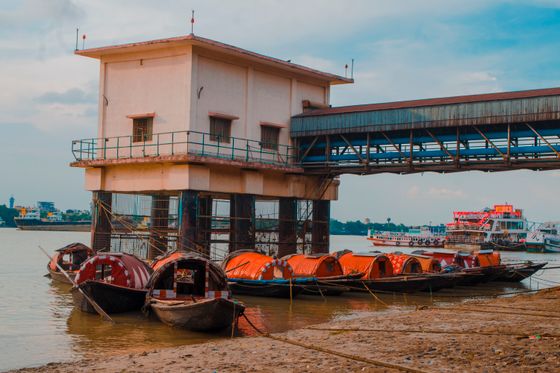
West Bengal
Ujani (Mangalchandi)
Ujani (Mangalchandi) in Purba Bardhaman, West Bengal is one of the Shakti Peethas, the sacred shrines of the Divine Mother in the Shakta tradition of Hinduism. According to tradition, this is where the **right wrist** of Goddess Sati fell when Lord Vishnu's Sudarshana Chakra divided her body. Here the Goddess is worshipped as **Mangal Chandika**, and her guardian Bhairava (a form of Shiva) as **Kapilambar**. Shakti Peethas are among the holiest pilgrimage sites for devotees of the Goddess, drawing pilgrims especially during Navratri and Durga Puja. Each is tied to the legend of Sati, whose body parts fell across the Indian subcontinent and beyond, sanctifying the ground where they landed.
Madhya Pradesh
Ujjain (Mahakaleshwar)
Ujjain, one of Hinduism's seven sacred Sapta Puri cities, is home to the Mahakaleshwar Jyotirlinga, famed for its unique Bhasma Aarti performed with sacred ash at dawn. An ancient city on the Shipra River, it is also one of the four sites of the Kumbh (Simhastha) Mela.

Jammu & Kashmir
Vaishno Devi (Katra)
The Holy Shrine of Mata Vaishno Devi is an extraordinary spiritual epicenter at an altitude of 1,585 metres inside the Trikuta Mountains of Jammu territory. Katra functions as the base town, from where millions of dedicated pilgrims commence a challenging 12 km uphill foot journey along a well-constructed mountain corridor to reach the main cave temple, known as the Bhawan. Inside the natural rock cave sanctuary, the deity is worshipped not as an idol but in the form of three natural rock structures called Pindis, representing the creative, sustaining, and transformative spiritual vectors of Goddess Shakti (Maha Kali, Maha Lakshmi, and Maha Saraswati). The entire ecosystem is meticulously managed around the clock by the Shri Mata Vaishno Devi Shrine Board (SMVDSB), featuring automated crowd tracking lanes and extensive shelter stations.
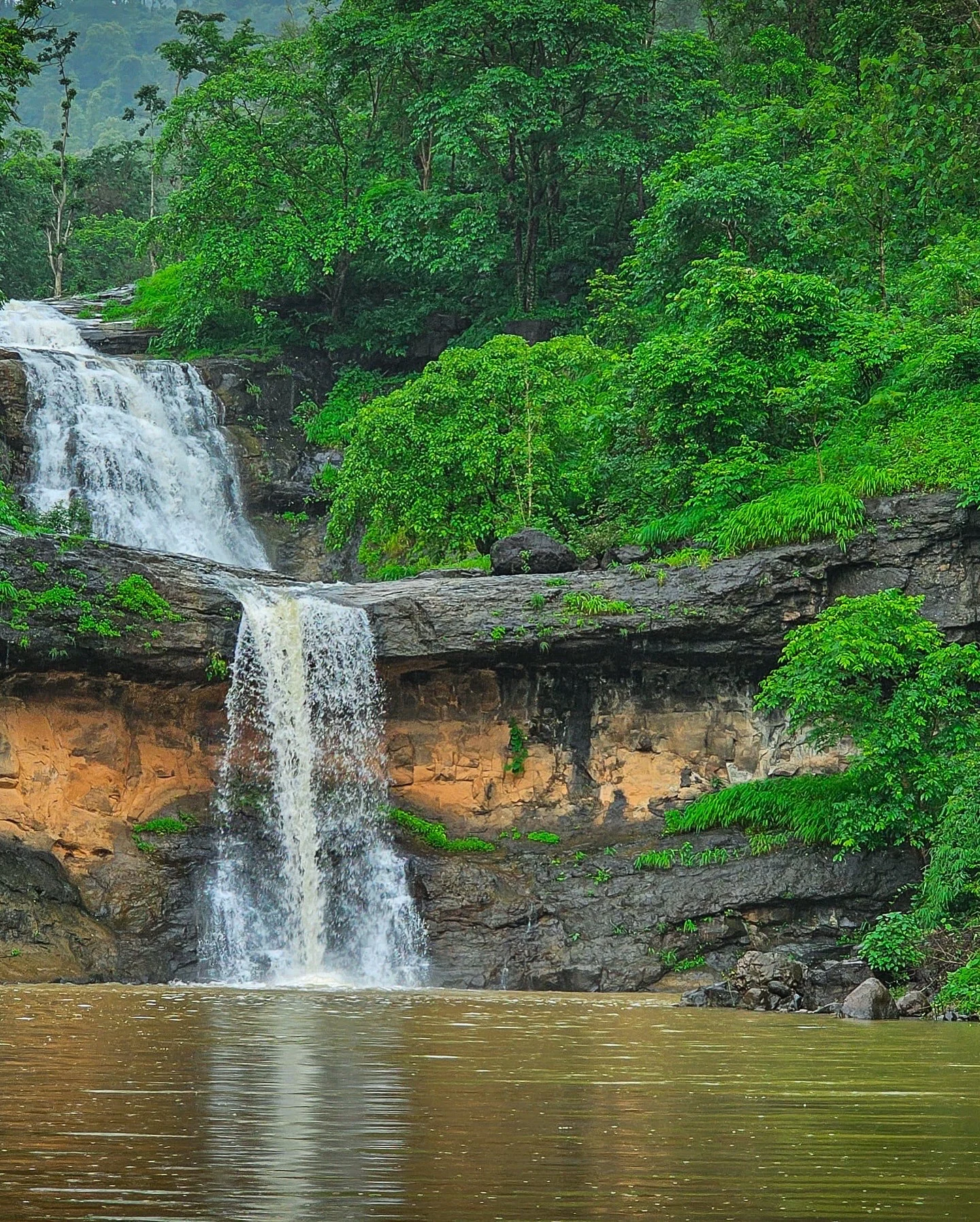
Gujarat
Valsad
Valsad, once known as Bulsar, sits at the southern tip of Gujarat on the Arabian Sea. It is known for its mango orchards — the source of much of the region's Alphonso (Hafoos) crop — and mixes an industrial economy with easygoing coastal and temple tourism. With black-sand beaches and the union territory of Daman close by, it is a popular weekend break for visitors from Gujarat and Maharashtra.
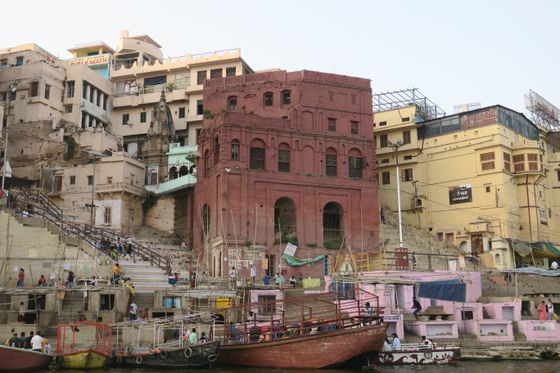
Uttar Pradesh
Varanasi
Varanasi is the oldest continuously lived-in city on earth and it will either be the best three days of your trip or the worst, with very little in between. Take a boat at dawn, not at sunset. At first light the ghats are working — people bathing, washing, praying, exercising — and the boat is quiet. The evening Ganga Aarti at Dashashwamedh is a genuine spectacle but you will watch it shoulder to shoulder with several hundred phones. At Manikarnika, bodies burn around the clock and have done for centuries. You can stand and watch; it is not hidden and nobody will stop you. Do not photograph it, and do not pay the men who offer to take you closer for a donation to the wood. Both requests are as old as the ghat. The galis behind the river are the actual city. They are too narrow for cars, you will get lost, and getting lost is the point — but keep the river to one side in your head so you can always walk back to it. Sarnath, where the Buddha gave his first sermon, is forty minutes away and a complete change of pace. Go on the day Varanasi has worn you out.

Tamil Nadu
Velankanni
Velankanni, the 'Lourdes of the East', is the largest Christian pilgrimage centre in India — home to the Basilica of Our Lady of Good Health on the Bay of Bengal coast. Drawing millions of devotees of all faiths, especially during its September feast, it is a powerful symbol of coastal Tamil Christian devotion.
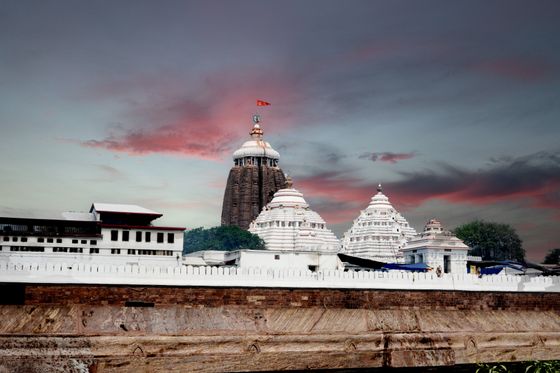
Odisha
Vimala Temple (Jagannath, Puri)
Vimala Temple (Jagannath, Puri) in Puri, Odisha is one of the Shakti Peethas, the sacred shrines of the Divine Mother in the Shakta tradition of Hinduism. According to tradition, this is where the **feet** of Goddess Sati fell when Lord Vishnu's Sudarshana Chakra divided her body. Here the Goddess is worshipped as **Vimala**, and her guardian Bhairava (a form of Shiva) as **Jagannath**. Shakti Peethas are among the holiest pilgrimage sites for devotees of the Goddess, drawing pilgrims especially during Navratri and Durga Puja. Each is tied to the legend of Sati, whose body parts fell across the Indian subcontinent and beyond, sanctifying the ground where they landed.

Uttar Pradesh
Vindhyavasini Temple
Vindhyavasini Temple in Mirzapur (Vindhyachal), Uttar Pradesh is one of the Shakti Peethas, the sacred shrines of the Divine Mother in the Shakta tradition of Hinduism. It is revered as a sacred Shakti Peetha, a seat of the Mother Goddess. Here the Goddess is worshipped as **Vindhyavasini**. Shakti Peethas are among the holiest pilgrimage sites for devotees of the Goddess, drawing pilgrims especially during Navratri and Durga Puja. Each is tied to the legend of Sati, whose body parts fell across the Indian subcontinent and beyond, sanctifying the ground where they landed.

Uttar Pradesh
Vishalakshi Temple
Vishalakshi Temple in Varanasi, Uttar Pradesh is one of the Shakti Peethas, the sacred shrines of the Divine Mother in the Shakta tradition of Hinduism. According to tradition, this is where the **earring** of Goddess Sati fell when Lord Vishnu's Sudarshana Chakra divided her body. Here the Goddess is worshipped as **Vishalakshi (Manikarni)**, and her guardian Bhairava (a form of Shiva) as **Kala Bhairava**. It is counted among the eighteen Ashtadasha Maha Shakti Peethas — the most revered of all the seats of the Goddess. Shakti Peethas are among the holiest pilgrimage sites for devotees of the Goddess, drawing pilgrims especially during Navratri and Durga Puja. Each is tied to the legend of Sati, whose body parts fell across the Indian subcontinent and beyond, sanctifying the ground where they landed.

Telangana
Yadadri (Yadagirigutta)
Yadadri's hilltop cave shrine of Lakshmi Narasimha — the fierce man-lion form of Vishnu — has been transformed into Telangana's grandest temple: the hill re-clad entirely in carved black granite by hundreds of sthapathis in a decade-long rebuild, its vimana gilded with quintals of gold. Inside, the self-manifested Narasimha images sit in a low rock cleft where devotees have prayed for centuries, many coming for the deity's famed healing grace.
Uttarakhand
Yamunotri
The sacred source of the Yamuna River and the first stop of the Chota Char Dham pilgrimage circuit in Uttarakhand. Yamunotri is at an altitude of approximately 3,293 metres in the Garhwal Himalayas. It is revered as the seat of Goddess Yamuna. The actual source of the river is the Champasar Glacier located further up on the Kalind Mountain, which is inaccessible, making the temple the primary place of veneration. Pilgrims undertake a 6 km trek from Janki Chatti to reach the temple. The journey features thermal springs, the most famous being Surya Kund, where pilgrims cook rice and potatoes as prasad. Before entering the temple, devotees offer prayers at Divya Shila, a sacred rock pillar.


