
Cave & Hilltop Shrines
Spiritual & Pilgrimage
The ones you climb to — rock-cut sanctums, cliff caves and shrines at the top of a long flight of steps.
10 places
Ellora Caves
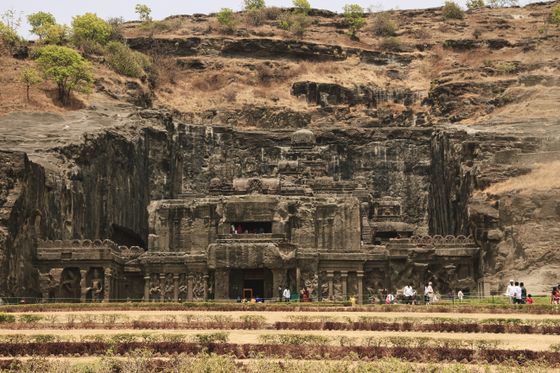
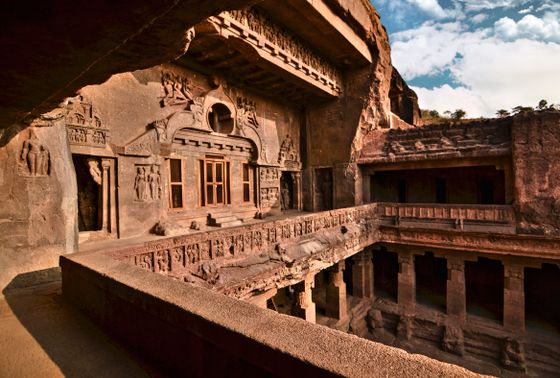
Kailash Temple (Cave 16)
Cut downwards out of one piece of hillside in the eighth century until a complete two-storey temple stood clear of the rock — nothing was added, only stone taken away. Ellora closes on Tuesdays. Walk up the side path for the view down into it.
Ellora Caves
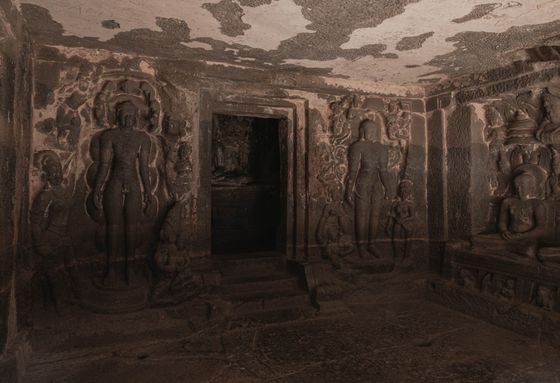
Vishwakarma Cave (Cave 10)
The only chaitya hall at Ellora, and its vaulted ceiling is carved in stone to imitate wooden ribs, which is where the carpenter's-cave name comes from. Stand at the back and the sound changes noticeably.
Malayattoor
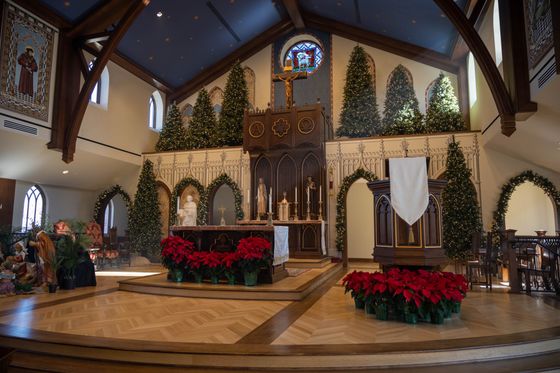
St. Thomas Hilltop Shrine
The Vatican-recognised hilltop church reached by a forest climb.
Kamakhya Temple
Inner Cave Sanctum
The natural subterranean stone fissure representing the Goddess, continuously fed by a sacred underground spring.
Vaishno Devi (Katra)
Ardhkuwari Gufa
The historic womb-shaped cave halfway along the trek path where the Goddess is believed to have meditated for nine months.
Gangotri
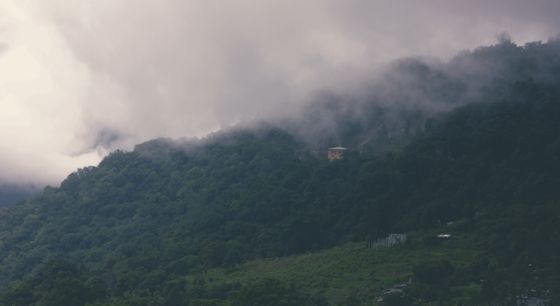
Pandav Gufa
A cave a kilometre and a half out of town where the Pandavas are said to have stopped on their way into the mountains. A short walk through deodar, usually empty.
Chotila Hill
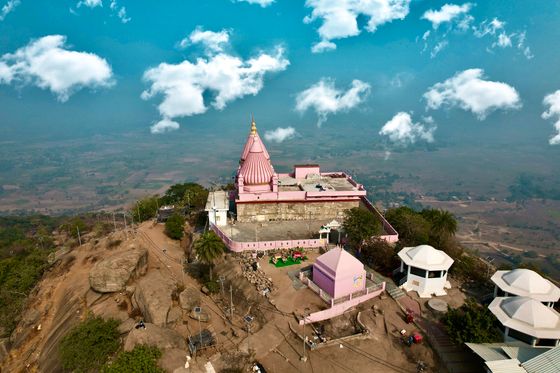
Chamunda Mata Hilltop Temple
On the summit of Chotila hill, up a stair of around a thousand steps, with two icons of the goddess in one shrine. Start early: there is no shade going up and the steps get hot.
Jammu & Kashmir
Amarnath
Amarnath in Pahalgam, Jammu & Kashmir is one of the Shakti Peethas, the sacred shrines of the Divine Mother in the Shakta tradition of Hinduism. According to tradition, this is where the **throat** of Goddess Sati fell when Lord Vishnu's Sudarshana Chakra divided her body. Here the Goddess is worshipped as **Mahamaya**, and her guardian Bhairava (a form of Shiva) as **Trisandhyeshwar**. Shakti Peethas are among the holiest pilgrimage sites for devotees of the Goddess, drawing pilgrims especially during Navratri and Durga Puja. Each is tied to the legend of Sati, whose body parts fell across the Indian subcontinent and beyond, sanctifying the ground where they landed.

Maharashtra
Ellora Caves
The Ellora Caves are a group of 34 rock-cut shrines carved into the basalt cliffs of the Charanandri Hills near Aurangabad. Stretching over two kilometres, they bring together Hindu, Buddhist and Jain temples cut between the 6th and 10th centuries CE — a rare place where all three faiths sit side by side. The centrepiece is Cave 16, the Kailasa Temple: the largest monolithic rock-cut structure in the world, carved top-down from a single cliff. Hundreds of thousands of tonnes of basalt were removed to reveal a multi-storey temple with carved pillars, life-size elephants and detailed galleries.

Jammu & Kashmir
Vaishno Devi (Katra)
The Holy Shrine of Mata Vaishno Devi is an extraordinary spiritual epicenter at an altitude of 1,585 metres inside the Trikuta Mountains of Jammu territory. Katra functions as the base town, from where millions of dedicated pilgrims commence a challenging 12 km uphill foot journey along a well-constructed mountain corridor to reach the main cave temple, known as the Bhawan. Inside the natural rock cave sanctuary, the deity is worshipped not as an idol but in the form of three natural rock structures called Pindis, representing the creative, sustaining, and transformative spiritual vectors of Goddess Shakti (Maha Kali, Maha Lakshmi, and Maha Saraswati). The entire ecosystem is meticulously managed around the clock by the Shri Mata Vaishno Devi Shrine Board (SMVDSB), featuring automated crowd tracking lanes and extensive shelter stations.

