

The Twelve Jyotirlingas
Across 7 states, IndiaSpiritual Journey
A jyotirlinga is a "linga of light" — one of twelve places where Shiva is held to have manifested himself as a column of fire with no beginning and no end. They are the most sacred Shiva shrines in India, and they are scattered deliberately wide, from the Arabian Sea to the eastern plains and from the high Himalaya to the southern tip. The twelve are Somnath in Gujarat; Mallikarjuna at Srisailam in Andhra Pradesh; Mahakaleshwar at Ujjain and Omkareshwar on the Narmada, both in Madhya Pradesh; Kedarnath in the Uttarakhand Himalaya; Bhimashankar, Trimbakeshwar and Grishneshwar in Maharashtra; Kashi Vishwanath at Varanasi; Vaidyanath at Deoghar in Jharkhand; Nageshwar near Dwarka; and Rameshwar at Rameswaram in Tamil Nadu. Several belong to more than one great circuit at once. Kedarnath is one of the four Uttarakhand dhams. Rameswaram is one of the original all-India Char Dham. Somnath, Nageshwar and Dwarka sit within an hour or two of each other on the Saurashtra coast. That overlap is not accidental — it is how Indian pilgrimage has always been organised, in layers rather than in lines. Doing all twelve is a serious undertaking. Doing three or four well is a genuinely good holiday.
October to March
Avoid Shravan (July-August) unless you want the crowds.

25 to 30 days
End to end; best done in regional clusters over several trips.
How hard it is
Moderate — mostly level temple towns, except Kedarnath, which is a 16 km climb
The Twelve Jyotirlingas route




- 1Somnath · GujaratThe first jyotirlinga, on the Saurashtra coast, destroyed and rebuilt across a thousand years.
- 2NageshwarNear Dwarka, under a colossal seated Shiva.
- 3Mahakaleshwar (Ujjain) · Madhya PradeshThe only south-facing jyotirlinga, and the only one with the pre-dawn Bhasma Aarti.
- 4Omkareshwar · Madhya PradeshOn an island in the Narmada said to be shaped like the syllable Om.
- 5Trimbakeshwar · MaharashtraThree-faced linga at the source of the Godavari, near Nashik.
- 6Bhimashankar · MaharashtraHigh in the Sahyadris, inside a wildlife sanctuary.
- 7GrishneshwarAt Verul, minutes from the Ellora caves.
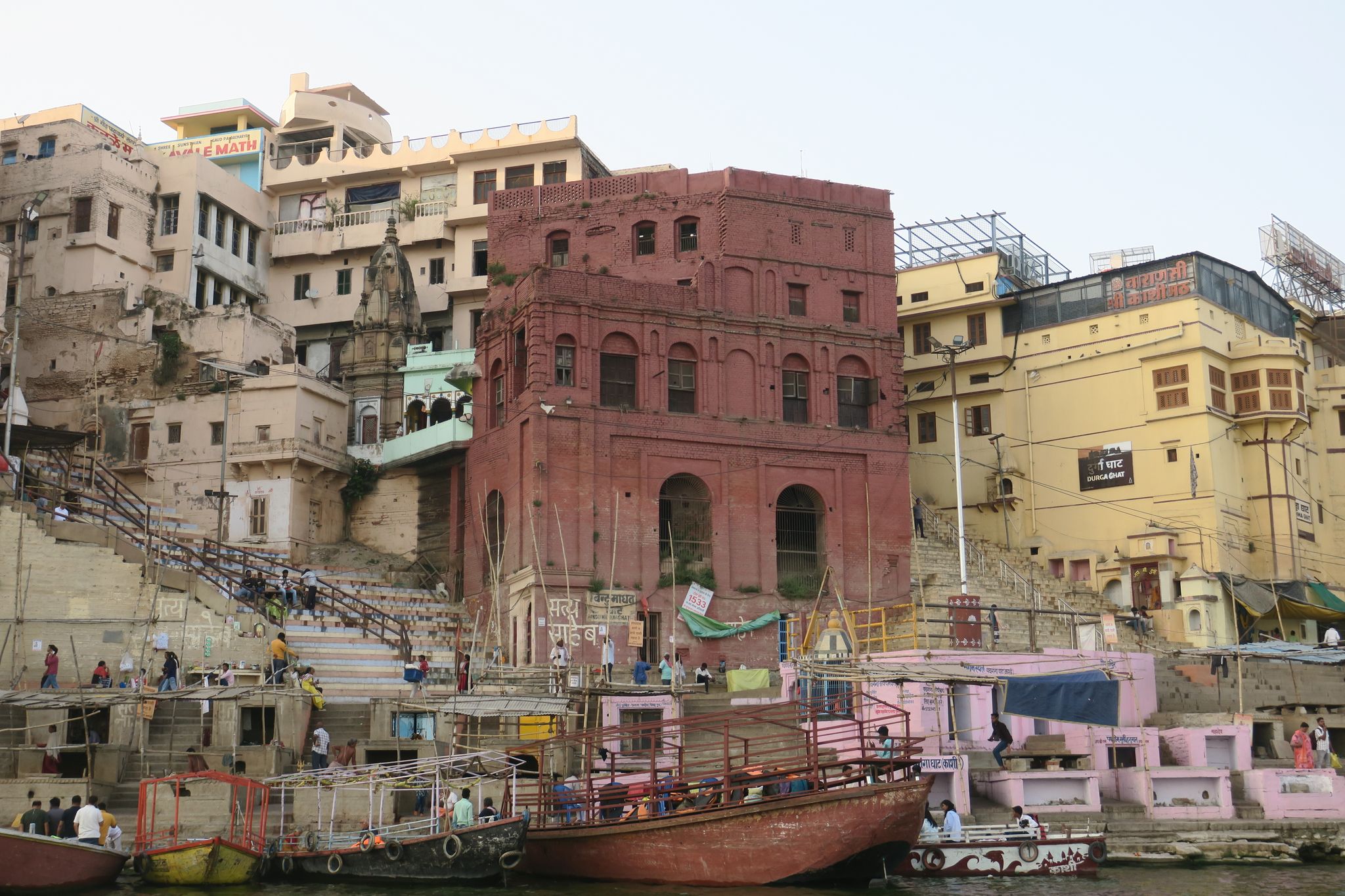
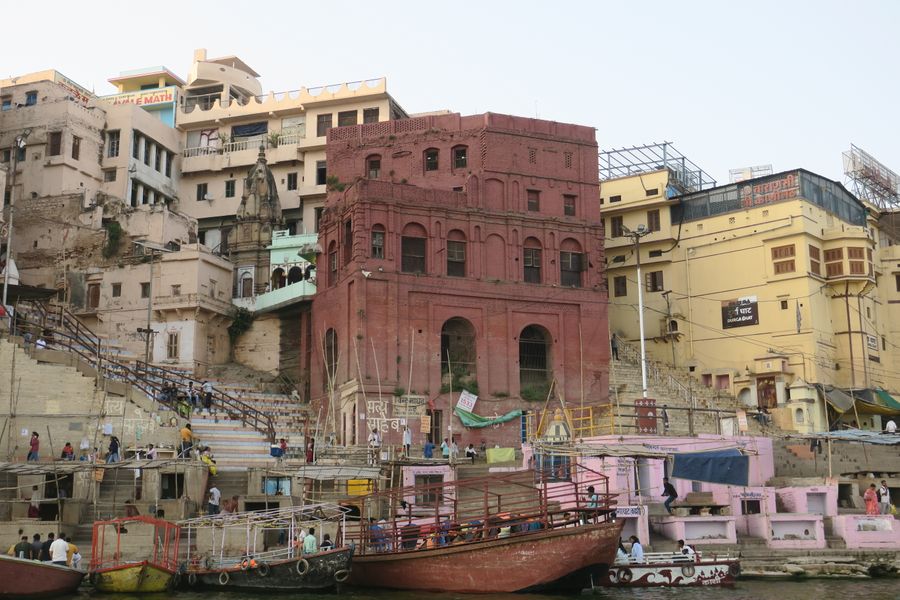
- 8Kashi Vishwanath (Varanasi) · Uttar PradeshShiva's own city, on the Ganga.
- 9Vaidyanath (Deoghar) · JharkhandDestination of the Shravani Mela, when kanwariyas walk from Sultanganj.
- 10Mallikarjuna (Srisailam) · Andhra PradeshIn the Nallamala forest above the Krishna river; also a Shakti Peetha.
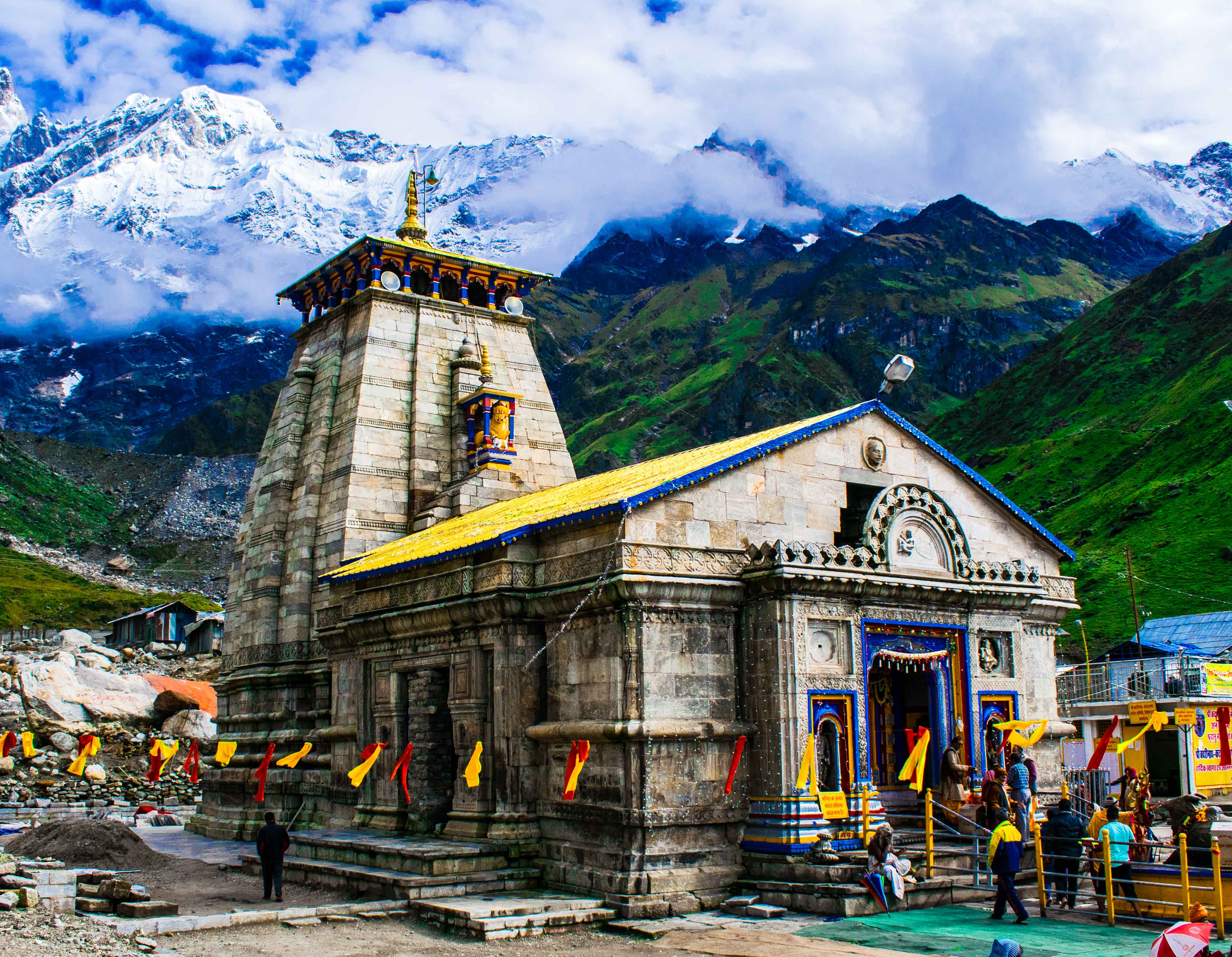
- 11Kedarnath · UttarakhandA rough conical rock at 3,583 m, reached on foot; also an Uttarakhand dham.
- 12Rameshwar (Rameswaram)The southernmost, installed by Rama before crossing to Lanka; also a Char Dham.
The Twelve JyotirlingasChecked
Pilgrimage route
A jyotirlinga is a "linga of light" — one of twelve places where Shiva is held to have manifested himself as a column of fire with no beginning and no end. They are the most sacred…
Best season
October to March
Avoid Shravan (July-August) unless you want the crowds.
Duration
25 to 30 days
End to end; best done in regional clusters over several trips.
How hard it is
Moderate — mostly level temple towns, except Kedarnath, which is a 16 km climb
Before you go
Twelve shrines, eight states, and roughly six thousand kilometres between the first and the last. This is the most geographically demanding circuit in Hinduism, and almost nobody completes it in one journey.
So let me give you the piece of advice that actually makes it possible: stop thinking of it as one trip. Think of it as five clusters, done over five holidays, over as many years as it takes. There is a cluster in Maharashtra with three of them. Two more in Madhya Pradesh, a morning apart. Two in Gujarat, next to each other. One in the deep south, one in the Himalaya, one on the Ganga, one in Jharkhand, one in Andhra. Take them a cluster at a time and each becomes a real journey through a real region, rather than a name ticked off between flights.
The other thing to know is about timing, and it is counterintuitive. Shravan — the monsoon month of July and August — is the holiest time to worship Shiva, and it is when these twelve temples matter most to devotees. It is also when they are almost impassable. At Deoghar, hundreds of thousands of kanwariyas walk more than a hundred kilometres in saffron carrying Ganga water on shoulder poles. If you want to see Shiva worship at its most intense, that is the month. If you want darshan without spending nine hours in a queue, come in winter.
Both are right. Just choose on purpose.
Along the way
The shrines and the country you cross to reach them.




The journey
What this journey actually is
A jyotirlinga is a "linga of light" — one of twelve places where Shiva is held to have manifested himself as a column of fire with no beginning and no end. They are the most sacred Shiva shrines in India, and they are scattered deliberately wide, from the Arabian Sea to the eastern plains and from the high Himalaya to the southern tip.
The twelve are Somnath in Gujarat; Mallikarjuna at Srisailam in Andhra Pradesh; Mahakaleshwar at Ujjain and Omkareshwar on the Narmada, both in Madhya Pradesh; Kedarnath in the Uttarakhand Himalaya; Bhimashankar, Trimbakeshwar and Grishneshwar in Maharashtra; Kashi Vishwanath at Varanasi; Vaidyanath at Deoghar in Jharkhand; Nageshwar near Dwarka; and Rameshwar at Rameswaram in Tamil Nadu.
Several belong to more than one great circuit at once. Kedarnath is one of the four Uttarakhand dhams. Rameswaram is one of the original all-India Char Dham. Somnath, Nageshwar and Dwarka sit within an hour or two of each other on the Saurashtra coast. That overlap is not accidental — it is how Indian pilgrimage has always been organised, in layers rather than in lines.
Doing all twelve is a serious undertaking. Doing three or four well is a genuinely good holiday.
Why pilgrims come
The story is one of the oldest arguments in Hindu myth. Brahma and Vishnu quarrelled over which of them was supreme, and Shiva appeared between them as an infinite column of light and challenged each to find its end. Vishnu went down as a boar, Brahma up as a swan. Neither reached it. Vishnu admitted failure honestly; Brahma claimed falsely to have found the top and was cursed for it. The twelve jyotirlingas mark the places where that column of light is held to have broken through the earth.
What makes them different from ordinary Shiva temples is that the linga is understood to be svayambhu — self-manifested, not installed by human hands. You are not looking at a made object.
Each has its own character. Mahakaleshwar at Ujjain is the only one of the twelve whose linga faces south, and the only one where the deity is anointed at dawn with ash — the Bhasma Aarti, performed in the small hours, and unlike anything else in Hindu ritual. Kedarnath is not a carved linga at all but a rough conical rock, said to be the hump of the bull Shiva became when he fled the Pandavas. Omkareshwar sits on an island in the Narmada shaped, tradition holds, like the syllable Om. Trimbakeshwar''s linga has three faces for Brahma, Vishnu and Shiva, and the Godavari rises beside it. Somnath has been destroyed and rebuilt repeatedly across a thousand years and stands again on the shore facing the open sea, with nothing between it and Antarctica.
Completing all twelve is believed to burn away the accumulated karma of lifetimes. Which, given that it takes most people several years, feels about right.
What a day looks like
Shiva temples run on a rhythm of openings, abhishekams and aartis, and the good hours are early.
Dawn is the hour
Most of the twelve open before five, and the first darshan of the day is both the calmest and the most atmospheric. At Ujjain, dawn is not a preference but the entire point: the Bhasma Aarti begins in the small hours, and it is the one ritual on this circuit that people travel across the country specifically to see.
Abhishekam
— the pouring of milk, water, honey and ghee over the linga — happens through the morning, and at most of the twelve pilgrims can participate by handing an offering to the priest at the sanctum. This is the characteristic act of Shiva worship and it is worth doing once, properly, rather than photographing.
Queues build from mid-morning
and are worst on Mondays, which are Shiva''s day, and on Pradosh and Shivaratri. If you have a choice of day, avoid Monday. If you cannot, be there at opening.
Afternoons
most large temples close for a few hours. Use them. This is when you visit whatever else is in the town — Ellora if you are at Grishneshwar, the ghats if you are at Kashi, the Narmada if you are at Omkareshwar.
Evening aarti
is the second good hour, and at Varanasi it merges into the Ganga aarti at Dashashwamedh, which is the single most photographed ritual in India and still worth every minute.
Maha Shivaratri
, in late winter, is the night of the year for all twelve. The temples stay open through the night, the crowds are immense, and the atmosphere is extraordinary. Go knowing what you are choosing.
Getting ready
Getting there, and getting around
Do not plan this as a line. Plan it as clusters, and give each cluster its own trip.
Maharashtra — three, plus Shirdi
Trimbakeshwar is about half an hour from Nashik. Bhimashankar is roughly four hours from Pune, high in the Sahyadris inside a wildlife sanctuary. Grishneshwar is at Verul, a few minutes from the Ellora caves and about half an hour from Chhatrapati Sambhajinagar. Nashik, Pune and Aurangabad airports serve these, and a week covers all three comfortably with Ellora, Ajanta and Shirdi added.
Madhya Pradesh — two, a morning apart
Mahakaleshwar at Ujjain and Omkareshwar on the Narmada are both within reach of Indore, which has the airport. Ujjain is about two hours from Indore, Omkareshwar around two and a half. Three days does both properly, and Maheshwar nearby is worth a night.
Gujarat — two, plus a dham
Somnath on the Saurashtra coast and Nageshwar near Dwarka, about four hours apart, with Dwarka itself in between. Diu, Junagadh and Girnar are all close. Rajkot, Diu and Jamnagar are the airports. Five days.
The far ones, each their own journey
Kedarnath in Uttarakhand — a sixteen-kilometre climb, open only May to October, with mandatory state registration; see the Char Dham Yatra guide. Kashi Vishwanath in Varanasi, easy to reach and best given three nights for the city itself. Vaidyanath at Deoghar in Jharkhand, with Jasidih the railhead and Deoghar''s own small airport. Mallikarjuna at Srisailam in Andhra, about five hours from Hyderabad through the Nallamala forest. Rameshwar at Rameswaram in Tamil Nadu, four hours from Madurai across the Pamban bridge.
If you have one week and want the best of it,
take Maharashtra: three jyotirlingas, the Ellora caves, and Shirdi, in one manageable loop.
How to prepare
Cluster it, and give up on completing it quickly
This is the whole strategy. Twelve shrines across eight states cannot be done well in one push, and pilgrims who try describe a blur of airports. Take Maharashtra''s three, or Madhya Pradesh''s two, or Gujarat''s two, and do them with the region around them.
Decide about Shravan
July and August are the holiest weeks for Shiva and the hardest for travel — monsoon, and crowds at a scale most visitors have never seen. At Deoghar the Shravani Mela brings enormous numbers of kanwariyas walking over a hundred kilometres from Sultanganj carrying Ganga water. It is one of the great sights of religious India and it is not a comfortable one. Winter is the practical season.
For the Bhasma Aarti at Ujjain, arrange it well in advance
Entry into the sanctum for the pre-dawn ash ritual is limited and handled through the temple administration ahead of the day, and there are dress requirements — traditionally a dhoti for men and a saree for women for sanctum entry during the aarti. Turning up on the morning and hoping is the commonest disappointment on this circuit. Sort it weeks ahead.
For Kedarnath, treat it as a mountain expedition, not a temple visit
Sixteen kilometres uphill above three thousand metres, open only in season, with mandatory Uttarakhand registration. Six weeks of walking beforehand. The Char Dham Yatra (Uttarakhand) guide covers it in full.
Avoid Mondays where you can
Shiva''s day, and the queues reflect it.
Understand that some sanctums restrict entry
At several of the twelve, entry into the inner sanctum to touch or bathe the linga yourself is limited — sometimes to those in traditional dress, sometimes by a separate arrangement, sometimes not at all during busy hours. Darshan from outside the sanctum is the normal experience and is not a lesser one.
Carry the offering, or buy it at the gate
Bilva leaves, milk, water from a holy river, flowers. Stalls outside every temple sell the standard tray. Handing it to the priest at the sanctum is how you take part.
Ordinary fitness is enough for eleven of the twelve
Bhimashankar involves some steps and a hill; Kedarnath is in a different category entirely.
Read the story of the jyotirlingas before you go
Twelve Shiva temples with no context become repetitive by the fourth. With the myth in your head, each one is a different chapter.
What to pack
Simple and light — these are mostly warm, level temple towns.
Cotton clothes, modest, shoulders and knees covered
For Ujjain''s Bhasma Aarti specifically, traditional dress is required for sanctum entry — a dhoti for men, a saree for women — so either carry it or arrange it in Ujjain, where it is easily done.
Slip-on footwear
, removed at every temple, often at a stand well away from the sanctum. Nothing you would mind losing, and socks for hot stone.
A cloth bag, not leather
Many sanctums do not permit leather. Check your belt and wallet too.
A small towel and a change of shirt
Abhishekam is a wet business and so is Rameswaram.
Phone pouch or a plan for leaving your phone
Several of the twelve — Kashi Vishwanath among them — do not permit phones or cameras inside and have deposit counters. Travel light through the gate.
Sun protection
Hat, sunscreen, sunglasses. Somnath''s seafront and Srisailam''s approach are exposed.
A torch,
for pre-dawn starts, which will be most mornings.
Water bottle, rehydration salts, basic medical kit
and your own prescriptions.
For Kedarnath, an entirely separate mountain kit
thermals, fleece, waterproof shell, broken-in trekking shoes, poles, warm hat and gloves, headtorch, and the Uttarakhand registration QR.
For a Shravan or Shivaratri visit, add patience, a small bag you can keep in front of you, and the acceptance that you will move slowly
On the ground
How to behave at the shrines
Shiva temples are generally warm and unfussy places, but the sanctums are strictly kept.
Shoes off well before the temple
, at the stand where everyone else has left theirs. Leather belts, wallets and bags are frequently prohibited past a certain point — leave them behind rather than argue at the gate.
Dress modestly
For entry into some sanctums, and for the Bhasma Aarti at Ujjain, traditional dress is required rather than merely preferred.
Go clockwise around the sanctum
— though note that at Shiva temples the circumambulation is traditionally not completed in a full circle, because the channel that carries the abhishekam water away from the linga is not crossed. Watch what others do; they will turn back at the channel and go round the other way.
Offer, do not touch
Hand your bilva leaves, milk or water to the priest at the sanctum rather than reaching past him, unless you have been invited to perform the abhishekam yourself. Where sanctum entry is permitted, follow the priest''s instructions exactly.
Photography is prohibited inside
, and at several of the twelve phones must be deposited at the entrance. There are counters. Use them rather than trying to carry the phone in.
Your darshan will be brief
, especially at Kashi Vishwanath, Somnath and Mahakaleshwar, where the crowds are constant. Guards will move you along. This is normal and happens to everyone.
Take prasad and vibhuti with your right hand
Sacred ash is offered at most Shiva temples; the customary gesture is to take a pinch and apply it to your forehead.
Do not step over anyone seated or prostrate,
and do not point your feet at the sanctum.
At Varanasi especially, be firm and courteous with the approach
Kashi Vishwanath''s lanes are dense with people offering guiding, garlands, priestly services and shortcuts. Some are legitimate. Decide beforehand what you want, and decline the rest with a smile.
Non-Hindus are welcome at most of the twelve
, though sanctum access may be restricted for everyone at busy times, and a few temples apply their own rules. Behave as the person beside you behaves and you will be fine.
If it is your first time
The Bhasma Aarti at Ujjain is the thing to plan the whole trip around
Before dawn, in near darkness, the linga is bathed and then anointed with sacred ash to drums and bells and a room full of people who have waited months to be there. There is nothing else quite like it in Hindu practice. Entry is limited and arranged in advance through the temple, and there are dress requirements. Sort it weeks ahead — this is the single most common regret on this circuit.
Do not attempt all twelve in one trip
I have said it twice already and it is still the main thing. Five clusters, five holidays.
Skip Monday if you have the choice
And Shivaratri, unless the crowd is the point.
Grishneshwar and Ellora are the same morning
The twelfth jyotirlinga is minutes from one of the greatest rock-cut monuments on earth, and many pilgrims do the temple and leave without seeing the Kailasa temple at Ellora — a single building carved downward out of one piece of rock. Do not be one of them.
Omkareshwar is worth an overnight
Most people come for the darshan and go. The island in the Narmada, the parikrama path around it, and the river at dusk are the reason to stay.
Bhimashankar is a forest, not just a temple
It sits inside a wildlife sanctuary in the Western Ghats, and the drive up and the walk around it are half the value. Go in the days after monsoon when the Sahyadris are green.
Somnath faces the open ocean
with no land between it and the Antarctic — there is a marker on the seafront that says so. Stand there at sunset.
Deoghar in Shravan will overwhelm you
If you go then, go knowing that you are joining several hundred thousand people, many of whom have walked more than a hundred kilometres barefoot in the rain. It is one of the most extraordinary things you will see in India, and it is not a sightseeing trip.
And do not be disappointed by the darshan itself
A jyotirlinga is usually a small, dark, unspectacular stone in a small, dark room, and you will see it for a few seconds. That is what it is. The weight of it is in what people bring to it — and in the eleven others, in eight states, that you are slowly connecting into one shape.